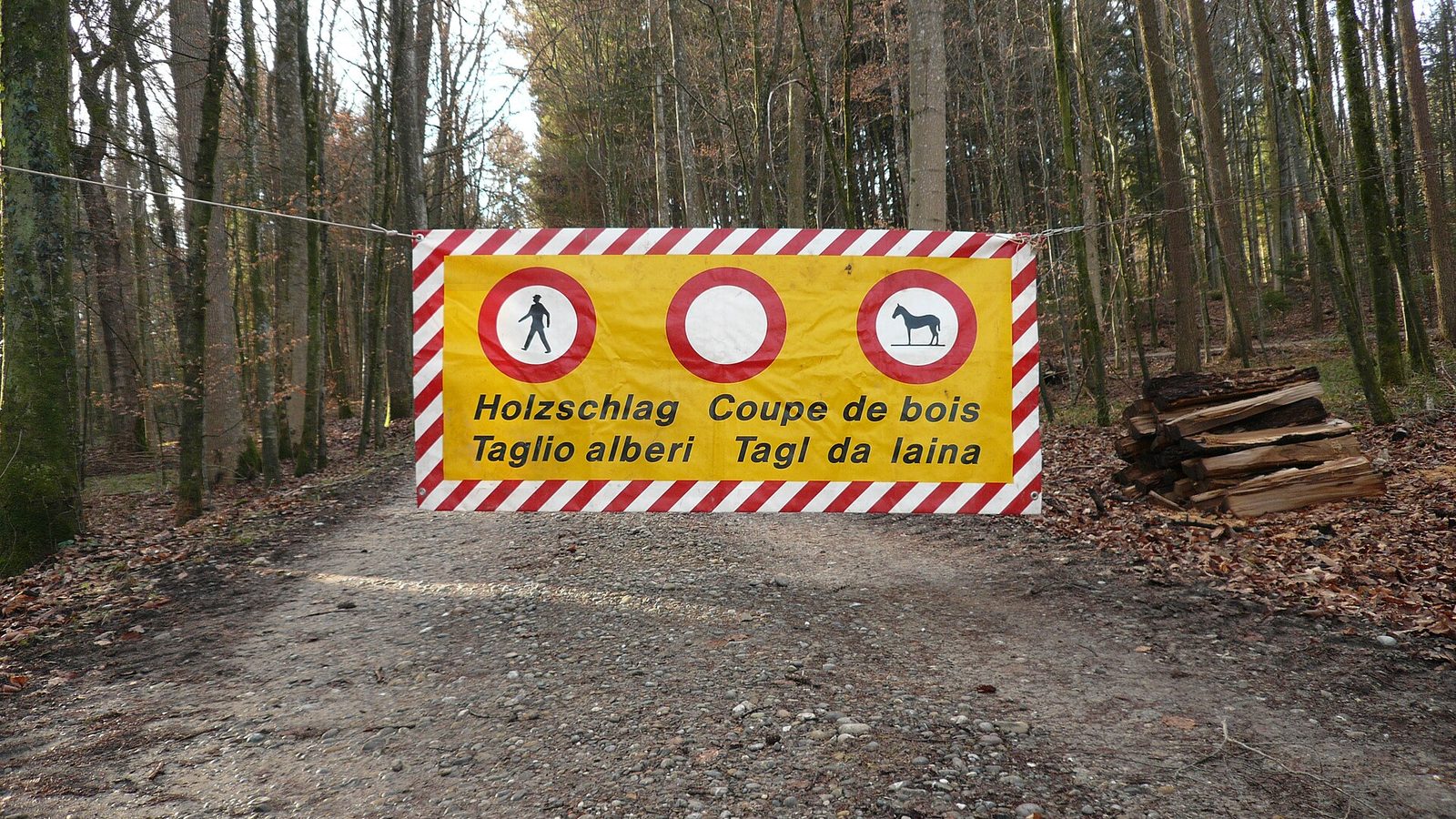
Switzerland has four national languages: German, French, Italian and Romansh. About 62% of people name German or Swiss German as a main language, 23% French, 8% Italian and just 0.5% Romansh. So if you’re asking what language they speak in Switzerland, the honest answer is: it depends on which side of the hill you’re standing on.
Here’s the twist most guides skip. The Swiss languages don’t make the Swiss multilingual. Most people live, work and vote in one language, and many speak a second one only so-so. Switzerland is multilingual the way an orchestra is musical. Each player has one instrument, and the music happens together.
This guide explains how that works, where each language is spoken, why the most common one is never written down, and why English is quietly becoming the fifth.
Sources: Federal Statistical Office (2020 main languages; 2023 languages at work).
The Swiss languages in one chart
Start with the numbers. The chart below shows the main languages of people living in Switzerland, from the Federal Statistical Office. Two surprises jump out straight away.
Main languages in Switzerland, 2020
Share of residents aged 15 and over. Select a bar for the story behind the number.
Source: Federal Statistical Office, structural survey 2020. Since 2010, people can name more than one main language, so the total exceeds 100%.
First, English now beats Romansh by a mile, even though it has no official status at all. Second, the total adds up to well over 100%. Since 2010, people can name more than one main language, and many do. That alone tells you something about modern Switzerland.
National, official, or just spoken?
The labels confuse almost everyone, so let's sort them out. All four Swiss languages are national languages. At federal level, however, only German, French and Italian are fully official. Federal laws are published in all three, and each version carries equal legal weight. Romansh is official only in dealings with Romansh speakers, a status it won in 1996.
English, Portuguese and Albanian are none of these things. Even so, you'll hear them on any tram in Zurich or Geneva.
A multilingual country made of monolingual places
Here's the part that surprises visitors most. In Switzerland, language belongs to the place, not to the person. Lawyers call it the territoriality principle. Each canton chooses its official language, and each commune usually follows suit.
So if you move from Lausanne to Zurich, your children switch school language too. Even the gift-bringer changes: the Christkind in Zurich, Père Noël in Lausanne, as our guide to Swiss Christmas traditions explains. Nobody offers a French-language state school in Zurich, and nobody expects one. You adapt to the place. In return, the place never has to fight for its language.
Of the 26 cantons, 17 are German-speaking, four are French-speaking and one, Ticino, is Italian-speaking. Bern, Fribourg and Valais are bilingual. Graubünden is the only trilingual canton. Our guide to the 26 Swiss cantons shows them all on one map.
Where the language changes in a few steps
The line between German and French runs from the Jura hills down through Biel/Bienne, Fribourg and the Valais. In places, it follows a river, such as the Sarine in Fribourg, which German speakers call the Saane. Even the river has two names.
That border also shows up at the ballot box. When German and French speakers vote differently, journalists talk about the Röstigraben, or "rösti ditch". It's a joke, but the voting maps behind it are very real.

Fribourg shows how two languages can share one town without becoming one. Many street signs are bilingual, yet the two names don't always mean the same thing. The French Grand-Rue is simply "main street". Its German twin, Reichengasse, isn't a translation at all. Word for word, it reads more like "rich lane". Two languages, two ways of seeing the same street.
Swiss German: the language you hear but never read
Now for the strangest of the Swiss languages, and arguably the most important. Swiss German isn't one language but a family of Alemannic dialects. Bern sounds different from Zurich, and the Valais dialects are hard work even for other Swiss.
Most German-speaking Swiss switch between two forms every day. They speak dialect at home, at work, on the radio and in parliament corridors. But they write in Standard German, which children learn properly at school, almost like a foreign language. Linguists call this diglossia.
Writing without rules
Because Swiss German has no official spelling, people simply write it as they hear it. Teenagers text in dialect, and so do their parents. As a result, the same word can appear in five spellings in one family chat.
Swiss Standard German has its own quirks too. It never uses the letter ß, writing "ss" instead. The Neue Zürcher Zeitung dropped it back in 1974. It also borrows freely from French. Swiss Germans ride a Velo rather than a Fahrrad, and they say merci far more often than danke.
Can you guess these everyday words? Most Germans can't.
Swiss German or not? Six words to crack
Score: 0 / 6What is a Chuchichäschtli?
A kitchen cupboard. Swiss Germans use this word to test whether foreigners can handle the throaty "ch" sound.
What do you eat at Znüni?
A mid-morning snack. The name means "at nine". Its afternoon cousin is the Zvieri, "at four".
What is a Velo?
A bicycle. Swiss German borrowed it from French vélo. Germans say Fahrrad.
What does Exgüsi mean?
Excuse me. Another French loan, from excusez, squeezed into Swiss German shape.
What is a Natel?
A mobile phone. It began as the name of the national car-phone network and stuck for decades.
What is a Rüebli?
A carrot. Aargau is famous for its Rüeblitorte, a carrot cake.
French in Switzerland: count to 99 without the maths
French is the second of the Swiss languages, spoken by about a quarter of the country. Its heartland is the west, known as Romandy. Swiss French sounds a little slower and softer than Parisian French. It also has one famous advantage: its numbers are far more logical.
In France, 97 is quatre-vingt-dix-sept, literally "four twenties plus seventeen". In Switzerland, it's simply nonante-sept. Try the converter below to see how the words change from region to region.
Count like a Swiss French speaker
Move the slider to see how one number changes as you cross the border.
There are more differences beyond numbers. In Romandy, déjeuner is breakfast, dîner is lunch and souper is the evening meal. A mobile phone is a natel, just as it is in German-speaking Switzerland. Small words, but they make a Parisian blink.
Italian: the language of Ticino and four valleys
Italian is the third of the Swiss languages, spoken by about 8% of residents. Its home is the canton of Ticino, plus four valleys of southern Graubünden. Italian speakers also live all over the country, including many families whose grandparents came north to build tunnels and dams.
Swiss Italian has borrowed from its neighbours too. A special offer in a Ticino supermarket is an azione, from the German Aktion, rather than the Italian offerta. Visitors from Milan notice that straight away.
For Italian speakers, being Swiss often means switching languages to get things done. That's why many speak excellent German or French, and why the federal government takes Italian very seriously, from bank notes to train announcements.
Romansh: the smallest of the Swiss languages
Romansh is the most fragile and, for many, the most loved of the Swiss languages. It descends from the Latin spoken in the Alps after the Roman conquest. Today fewer than 40,000 people use it as a main language, almost all of them in Graubünden.
There isn't one Romansh, either. There are five regional idioms, from Sursilvan in the Rhine valley to Vallader in the Lower Engadine. In 1982, linguists created a shared written form, Rumantsch Grischun. Some villages embraced it, while others pushed back hard.

The vote that saved a language
On 20 February 1938, Swiss voters made Romansh the fourth national language. Some 91.6% voted yes, and every canton agreed. The timing mattered. Fascist Italy claimed that Romansh was merely an Italian dialect, and the vote sent a calm, very Swiss reply.
I find that moment moving. A whole country stood up for a language most of its voters couldn't speak.
How Switzerland got four languages: a timeline
Explore the 1938 vote and the other turning points below.
How Switzerland got four languages
Tap a year, or use the arrow keys. Red dots mark the turning points.
The first equal languages
French troops create the Helvetic Republic. For the first time, a Swiss state treats German, French and Italian as equals. Before that, the old Confederacy ran its affairs in German.
Three national languages
The first federal constitution names German, French and Italian as the national languages of the new federal state.
Romansh gains a foothold
Graubünden recognises Romansh as one of its official languages, next to German and Italian.
The fourth language
On 20 February, 91.6% of voters make Romansh a national language. Every canton says yes. It is also a quiet answer to fascist Italy, which claimed Romansh as an Italian dialect.
One Romansh for all
Linguist Heinrich Schmid designs Rumantsch Grischun, a written standard that blends the five regional idioms.
Partly official
Voters approve a new language article with 76%. Romansh speakers can now deal with the federal government in their own language.
The Languages Act
Parliament passes a law to promote all four national languages and understanding between the language communities. It takes effect in 2010.
The French question
After Zurich, St. Gallen and Appenzell Ausserrhoden push French out of primary school, the Federal Council proposes a law to protect early lessons in a second national language. The consultation ends on 5 October 2026.
English: the unofficial fifth language
Now for the newcomer. In law, English isn't one of the Swiss languages at all, yet it's everywhere. In 2023, about 6% of residents named it as a main language, up from 4% in 2010. Meanwhile, roughly 23% of workers use it on the job, not far behind French.
Why? Partly because of global companies and research hubs in Zurich, Basel, Geneva and Lausanne. But there's a quieter reason too. When a Swiss German and a Swiss French speaker meet, English is sometimes simply easier for both.
The early French debate
That's exactly what worries many politicians. In several German-speaking cantons, children learn English before French. Recently, Zurich, St. Gallen and Appenzell Ausserrhoden went further and decided to move French out of primary school.
In June 2026, the Federal Council responded with a draft law to protect early lessons in a second national language. The consultation closes on 5 October 2026, and Parliament will decide after that. Whatever happens, the debate shows how seriously the Swiss take their languages. To many, losing early French feels like losing a bridge.
How do the Swiss understand each other?
If most people stick to one of the Swiss languages, how does the country hold together? The answer is a habit you could call polite passive bilingualism. In a typical meeting in Bern, a German speaker talks German, a French speaker replies in French, and everyone understands enough to follow. Nobody has to perform in a weaker language, so nobody loses face.
The state does the rest. Every Swiss banknote carries text in all four Swiss languages. Coins dodge the problem entirely by using Latin, which is also why Switzerland is "CH". Meanwhile, the national broadcaster runs radio and TV services for all four language regions.
Does it always work? Not quite. Young Swiss from different regions increasingly fall back on English, and the Röstigraben still splits votes. But for a country with no shared mother tongue, the arrangement has held since 1848. That's a remarkable record.
Say it like a local
You don't need to master four Swiss languages to get by. Still, a few words in the local language go a long way, especially outside the big cities. Pick a phrase below.
Say it like a local
Pick a phrase to see it in all four Swiss languages.
Romansh forms follow Rumantsch Grischun. Each valley idiom has its own variants.
One tip: in German-speaking Switzerland, greet people with Grüezi rather than the German Guten Tag. Shop staff will smile, and some may even switch to English to help you.
So, what language should you speak in Switzerland?
My advice is simple. Match the place, not the country. Use German in Zurich, Bern, Lucerne and Interlaken. Switch to French in Geneva, Lausanne and Montreux, and to Italian in Lugano and Locarno. In the Engadine, try Allegra and watch faces light up.
Moving here for good? Then learn the language of your canton first, even if your office runs in English. Language skills are also a legal condition for Swiss citizenship, and neighbours open up the moment you try. If German is your target, ask for lessons that include some dialect, or you'll understand the newspaper but not the bakery.
If you're only visiting, English works almost everywhere. Just don't assume that a Swiss person speaks all four Swiss languages. Most don't, and they're perfectly happy that way. The system works because each region keeps its own voice and respects the others.
That same instinct shows up all over Swiss life, from Swiss direct democracy to the country's refusal to name an official capital of Switzerland. For the bigger picture, explore our interactive Swiss history timeline.
FAQ: Swiss languages
What language do they speak in Switzerland?
Switzerland has four national languages: German, French, Italian and Romansh. About 62% of residents name German or Swiss German as a main language, 23% French, 8% Italian and 0.5% Romansh. Most people speak the language of their region.
How many official languages does Switzerland have?
At federal level, German, French and Italian are official languages. Romansh is a national language and partly official: Romansh speakers can deal with the federal government in their own language.
Is English widely spoken in Switzerland?
Yes, especially in cities, business and tourism. English has no official status, but about 6% of residents use it as a main language and more than one in five workers use it on the job.
What language is spoken in Zurich, Geneva and Lugano?
Zurich speaks Swiss German, Geneva speaks French and Lugano speaks Italian. Bern and Interlaken are German-speaking too, while Lausanne and Montreux are French-speaking.
Is Swiss German the same as German?
No. Swiss German is a group of Alemannic dialects that Germans often struggle to understand. The Swiss write in Standard German, with a few local words and no ß, but speak dialect in daily life.
Where is Romansh spoken?
Romansh is spoken in parts of Graubünden, including the Surselva, the Engadine and the Val Müstair. It has five regional idioms and a common written standard, Rumantsch Grischun.
Sources and further reading
- Federal Statistical Office: Languages
- swissinfo.ch: English and other foreign languages on the rise in Switzerland (2025)
- swissinfo.ch: Can the ballot box help save Romansh?
- Fedlex: Federal Act on the National Languages (Languages Act)
- blue News: Federal Council steps in on early French (June 2026)
- Lia Rumantscha: the Romansh language organisation
Last updated 2 October 2026. Featured photo: Ramessos, Wikimedia Commons, public domain.