Swiss Christmas traditions start weeks before 25 December, and the loudest ones have little to do with Christmas Day. On 6 December, Samichlaus visits children with his dark-robed helper, Schmutzli. In mid-December, Geneva celebrates a 1602 battle by smashing chocolate cauldrons. And in Appenzell, men in costumes weighing up to 30 kilos ring in the New Year twice.
Christmas Eve itself, by contrast, is quiet. It means family, candles and, in a surprising number of homes, a pot of fondue chinoise.
That contrast is what this guide to Swiss Christmas traditions is about. In Switzerland, Christmas is not one day. It’s a relay of traditions that runs from late November to 13 January, and each region carries the baton differently.
Sources: Geneva Tourism, House of Switzerland, St. Nicholas Center.
Swiss Christmas traditions are a relay, not a day
If you arrive in Switzerland on 24 December expecting parades, you'll find empty streets instead. Most public Swiss Christmas traditions happen before or after that date. Think of the season as six stages:
- Late November: Advent markets open and villages start their Advent windows.
- 5 and 6 December: Samichlaus arrives, with noisy parades the night before.
- Mid-December: Geneva celebrates the Escalade.
- 24 December: the quiet family evening, and the real Christmas for most Swiss.
- 31 December and 13 January: the Silvesterchläuse of Appenzell, twice.
- 6 January: the Three Kings cake decides who rules for a day.
Your Swiss Christmas calendar for 2026–27
Tap through the calendar below to see what happens on each date and where.
The Swiss Christmas calendar, 2026–27
Tap a date. Red dots mark the days with the biggest public customs.
Christmas markets and Advent windows
Markets open in Basel, Zurich, Montreux and Einsiedeln. From 1 December, villages light a new Advent window each evening.
Where: All over Switzerland
Klausjagen in Küssnacht am Rigi
After dark, hundreds of men parade with glowing Iffelen, whips, horns and cowbells.
Where: Küssnacht am Rigi, canton of Schwyz
Samichlaus Day
Samichlaus and Schmutzli visit homes and schools. Children recite a Värsli and get mandarins, nuts and a Grittibänz.
Where: German-speaking Switzerland
Fête de l'Escalade
Costumed parades, vegetable soup, fifes and drums, and chocolate marmites to smash.
Where: Geneva old town
The quiet family evening
Shops close early, presents appear and many families share a fondue chinoise.
Where: At home, everywhere
Christmas and St Stephen's Day
Church, long lunches and family visits. 26 December is a holiday in many cantons.
Where: Everywhere
Silvesterchlausen, part one
From dawn, costumed groups walk from farm to farm, ringing bells and singing wordless yodels.
Where: Urnäsch and nearby villages
Dreikönigskuchen
Whoever finds the plastic king in the sweet bread ring wears the paper crown.
Where: Bakeries everywhere
Silvesterchlausen, part two
Urnäsch celebrates New Year's Eve again, following the old Julian calendar.
Where: Urnäsch, Appenzell Ausserrhoden
5 and 6 December: Samichlaus and Schmutzli
For Swiss children, 6 December matters almost as much as Christmas Eve. That's when Samichlaus, the Swiss Saint Nicholas, comes to visit. He wears a bishop's robe or a red cloak, carries a big book and usually brings a donkey.
His book is the scary part, though. In it, Samichlaus has noted how each child behaved over the year. Children answer by reciting a short poem, or Värsli, and then receive a bag of mandarins, peanuts, gingerbread and chocolate. Many also get a Grittibänz, a sweet bread shaped like a little man with raisin eyes.
In many towns, families can book a home visit through a local Samichlaus society or parish. Volunteers play the roles, and some have worn the beard for decades. So for many Swiss children, the visit feels personal. Samichlaus knows their name, their teacher and, worryingly, what happened at school in October.
Schmutzli: the helper with the soot-black face
Next to Samichlaus stands Schmutzli, dressed in a dark brown or black robe. Traditionally, he carried a bundle of twigs for naughty children and a sack big enough to take them away. Today he mostly carries the presents. Still, ask Swiss adults, and many will tell you that Schmutzli scared them far more than Samichlaus ever did.
I find this pairing fascinating. Swiss Christmas traditions rarely hide the dark side. Reward and punishment arrive together, at the same door.
The night of the Iffelen in Küssnacht
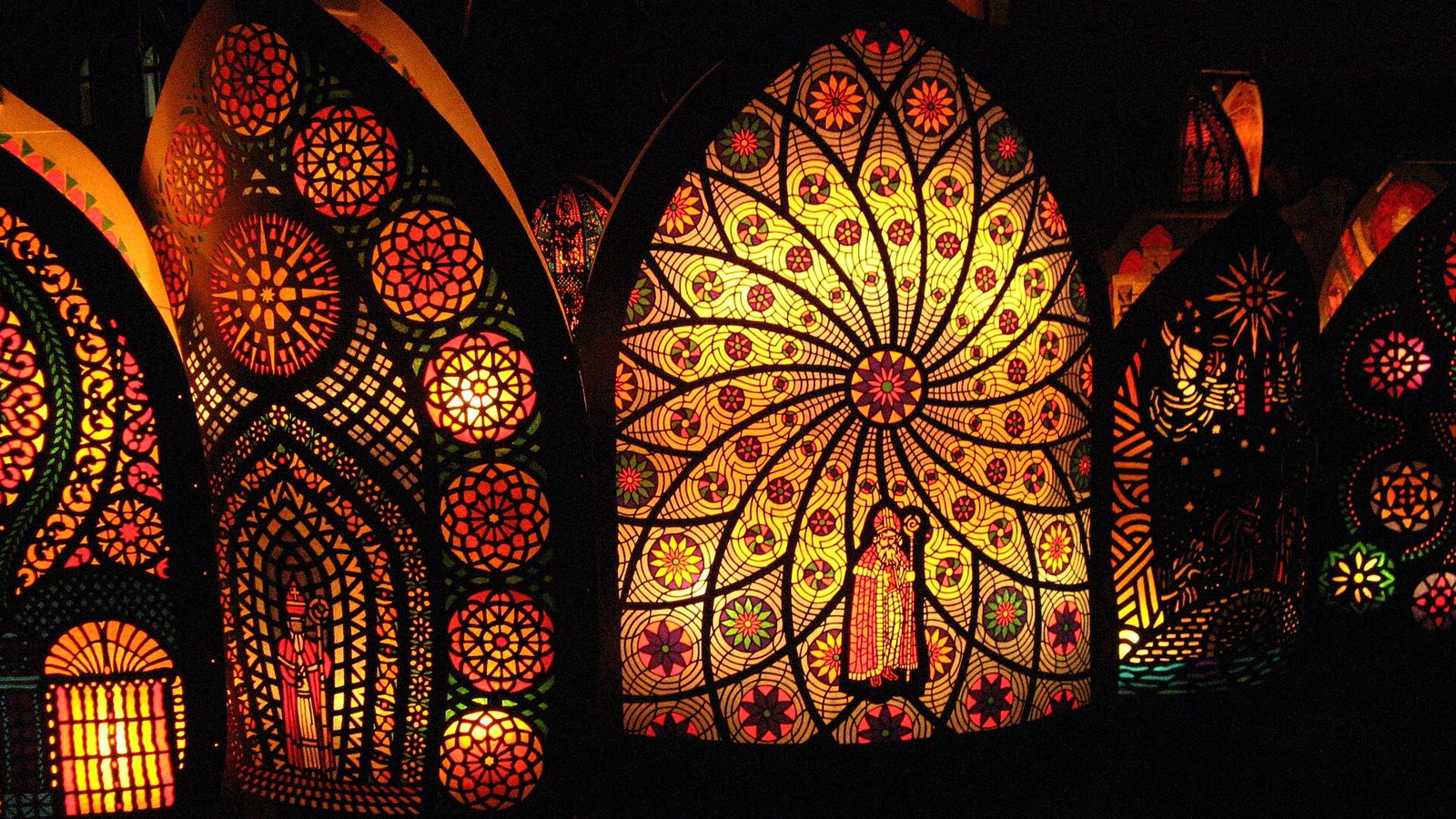
The evening before, Küssnacht am Rigi stages one of Switzerland's wildest customs: the Klausjagen. Hundreds of men march through the dark town wearing Iffelen, giant bishop's mitres cut from paper and lit from inside. Others crack long whips, blow horns and ring heavy cowbells in a rhythm that shakes the streets.
The custom mixes Christian and much older elements. Noise to chase away winter spirits is an ancient idea in the Alps. Saint Nicholas joined the party later. In 2026, 5 December falls on a Saturday, so expect large crowds.
Mid-December: the Escalade, Geneva's chocolate battle
Geneva adds one of the Swiss Christmas traditions that no other canton shares. On the night of 11 to 12 December 1602, troops of the Duke of Savoy tried to climb the city walls and take Geneva by surprise. The citizens fought them off.
According to legend, a woman known as Mère Royaume poured a pot of boiling soup over the attackers. That pot is why Genevans still buy a chocolate cauldron, or marmite, filled with marzipan vegetables every December. The youngest and the oldest person at the table smash it together, saying: "Ainsi périssent les ennemis de la République!" Roughly: "Thus perish the enemies of the Republic!"

In 2026, the Escalade festival with its costumed parades runs from 11 to 13 December. The city also hosts a huge fun run, the Course de l'Escalade, on 5 and 6 December. If you want to understand why Geneva still sees itself as a proud republic, read our guide to the 26 Swiss cantons, which explains its very own public holidays.
Advent the Swiss way: windows, Guetzli and markets
Back in the rest of the country, Advent is about light and baking. Many villages organise Adventsfenster, or Advent windows. Each evening, a different household decorates a window with a number from 1 to 24 and often invites neighbours for mulled wine or tea.
The Guetzli tradition
Then there's the baking, the sweetest of all Swiss Christmas traditions. Families make Guetzli, small Christmas biscuits, by the tin. The classics include:
- Mailänderli, buttery lemon biscuits cut into stars and hearts;
- Brunsli, chocolate and almond biscuits from Basel;
- Zimtsterne, cinnamon stars with a white glaze;
- Chräbeli, aniseed biscuits that grow little feet as they bake;
- Spitzbuben, two biscuits glued with jam.
Quick caveat: every Swiss grandmother believes her recipe is the correct one. Don't argue.
Christmas markets
Swiss Christmas markets are smaller than the giant German ones, and that's part of their charm. Basel fills two squares in its old town, Barfüsserplatz and Münsterplatz. Zurich hosts one of Europe's largest indoor markets inside its main railway station. Montreux sets up stalls along Lake Geneva, while Einsiedeln holds a market around its huge baroque abbey. Most open in late November and close just before Christmas.
24 December: why Swiss Christmas Eve is so quiet
Here's the part that surprises visitors. For most Swiss families, Christmas Eve is the main event, and it's a private one. Shops close early, streets go silent and families gather at home.
Who brings the presents?
The answer depends on where you are. In German-speaking Switzerland, the Christkind, a childlike angel figure, traditionally brings the presents. French-speaking families wait for Père Noël instead. Over in Ticino, children hope for Gesù Bambino or Babbo Natale. Meanwhile, Samichlaus has already done his job on 6 December.
That split follows the map of the Swiss languages and the country's wider divide, which we explore in our piece on the Röstigraben. Even Christmas has two sides of the ditch.
The Christmas meal: fondue chinoise
Many people expect cheese fondue at a Swiss Christmas. In fact, the favourite festive dish in countless homes is fondue chinoise. Everyone dips thin slices of meat into hot broth at the table and eats them with sauces. It's sociable, slow and easy for the cook, which explains its popularity. Others serve ham, roast or a festive cheese platter. For the cheeses worth putting on it, see our guide to Swiss cheese varieties.
Between the years: Silvesterchlausen and the second New Year
If 24 December is the quietest of all Swiss Christmas traditions, the last day of the year in Appenzell Ausserrhoden is the loudest. In Urnäsch and nearby villages, groups of men called Silvesterchläuse walk from farm to farm from early morning.

There are three kinds. First come the Schöne, or beautiful ones, who wear huge headdresses with tiny carved village scenes. The Wüeschte, or ugly ones, hide behind masks made of fur, branches and leaves. In between stand the Schö-Wüeschte, decorated with moss, pine and snail shells. Costumes can weigh 20 to 30 kilos, and the lead figures carry 13 large bells on their bodies.
At each farm, the group stops and sings a Zäuerli, a wordless yodel, three times. Then they move on, bells swinging.
Why New Year's Eve happens twice
Here's the strangest detail. Urnäsch celebrates on 31 December and again on 13 January. The second date is New Year's Eve under the old Julian calendar, which the village kept using long after its neighbours switched. Rather than choose, Urnäsch simply kept both.
6 January: the Three Kings cake
The relay of Swiss Christmas traditions ends with cake. On 6 January, bakeries sell the Dreikönigskuchen, a ring of sweet bread balls around a larger centre. One of them hides a small plastic king. Whoever finds it wears a paper crown and rules the household for the day.
The custom almost died out. Bread historian Max Währen revived it in the 1950s, and today it's a fixture in almost every Swiss bakery in early January. Do check your slice before you bite.
What Swiss Christmas traditions say about Switzerland
Step back from the dates, and three patterns appear. In my view, they explain the country better than any brochure.
Noise against the dark
First, the loudest Swiss Christmas traditions fall in the darkest weeks of the year. Whips crack in Küssnacht, drums beat in Geneva, and huge bells swing in Urnäsch. Folklorists often link such noise customs to the old wish to scare off winter and its spirits. Whatever the origin, the effect is the same: a village making itself heard in the cold.
Every custom belongs to one place
Second, almost none of these customs is national. The Klausjagen belongs to Küssnacht, the Escalade to Geneva and the Silvesterchlausen to a handful of Appenzell villages. There's no national Christmas parade, just as there's no official capital of Switzerland. Local pride comes first, and the country is the sum of its villages.
Public edges, private centre
Finally, the Swiss keep the heart of the season private. The parades happen on 5 December, in mid-December and on 13 January. On 24 December itself, the doors close and the candles come out. For a country that values discretion, that feels exactly right.
How to experience Swiss Christmas traditions in 2026
If you're planning a trip around Swiss Christmas traditions, the calendar above gives the exact dates. My advice is simple: skip 24 and 25 December for sightseeing and aim for the edges of the season. The Klausjagen in Küssnacht, the Escalade weekend in Geneva and the Silvesterchlausen in Urnäsch show a side of Switzerland that postcards rarely capture.
Test what you've learned with the quiz below. Then, if winter traditions fascinate you, read our guide to Swiss traditional music and folklore, or browse our interactive Swiss history timeline to see how old some of these customs really are.
Samichlaus or Santa? The quick comparison
| Samichlaus | Santa Claus | |
|---|---|---|
| When he comes | 6 December, often the evening before | Night of 24 to 25 December |
| Where he lives | In the forest, close by | The North Pole |
| Travels by | On foot, with a donkey | Sleigh and reindeer |
| Companion | Schmutzli, in a dark robe | Elves, mostly off-stage |
| How he knows | A big book of good and bad deeds, read aloud | A list, checked twice, kept private |
| Children must | Recite a short poem, the Värsli | Leave milk and cookies |
| Gifts | Mandarins, nuts, gingerbread, a Grittibänz | Toys under the tree |
Quiz: how well do you know Swiss Christmas traditions?
Six questions on Swiss Christmas traditions
Score: 0 / 6Who brings the presents on Christmas Eve in Zurich?
The Christkind. In German-speaking Switzerland, a childlike angel figure traditionally brings the gifts. Samichlaus came earlier, on 6 December.
What is Schmutzli's traditional job?
Carrying the sack and the twigs. He once threatened naughty children. Today he mostly carries the presents.
What do Genevans smash every December?
Chocolate marmites. It recalls the soup pot of Mère Royaume during the Escalade of 1602.
Why does Urnäsch celebrate New Year's Eve twice?
Because of the old Julian calendar. 13 January was New Year's Eve under the old system, and the village kept both dates.
What is a favourite Christmas Eve dish in many Swiss homes?
Fondue chinoise. Diners cook thin slices of meat in hot broth at the table. Cheese fondue is more of a winter weekend dish.
What hides inside a Dreikönigskuchen?
The little king. Whoever finds it wears the paper crown on 6 January.
FAQ: Swiss Christmas traditions
What are the most famous Swiss Christmas traditions?
The best known Swiss Christmas traditions are Samichlaus Day on 6 December, the Klausjagen in Küssnacht, Geneva's Escalade, Advent windows, Guetzli baking, the quiet family evening on 24 December, the Silvesterchlausen of Appenzell and the Three Kings cake on 6 January.
Which Swiss Christmas traditions can visitors join?
Visitors are welcome at the Klausjagen in Küssnacht, the Escalade parades in Geneva, the Christmas markets and the Silvesterchlausen in Urnäsch. Dress warmly, give the costumed groups space and use public transport, because roads and parking fill up fast.
When does the Christmas season start in Switzerland?
In practice, in late November, when Christmas markets open. Advent windows begin on 1 December, and Samichlaus visits on 6 December. The season only really ends on 6 January, or even 13 January in Urnäsch.
Who brings the presents in Switzerland?
It depends on the language region. The Christkind brings them in German-speaking Switzerland, Père Noël in the French-speaking west and Gesù Bambino or Babbo Natale in Ticino. Samichlaus brings small treats earlier, on 6 December.
What do the Swiss eat at Christmas?
Many families share fondue chinoise on Christmas Eve, dipping thin slices of meat into hot broth at the table. Others serve ham or a roast. In December, homes also fill with Guetzli, small Christmas biscuits such as Mailänderli and Brunsli.
Is 26 December a public holiday in Switzerland?
Yes, in many cantons. St Stephen's Day is a public holiday in much of Switzerland, but the rules differ from canton to canton.
What is Samichlaus?
Samichlaus is the Swiss Saint Nicholas. On or around 6 December, he visits children with his helper Schmutzli. He reads from a book of good and bad deeds and hands out mandarins, nuts and gingerbread.
What is the Escalade in Geneva?
The Escalade marks Geneva's victory over the troops of the Duke of Savoy on the night of 11 to 12 December 1602. Today it means parades, soup and chocolate cauldrons. In 2026, the festival runs from 11 to 13 December.
Sources and further reading
- Geneva Tourism: Fête de l'Escalade
- House of Switzerland: Urnäsch's magical double New Year's Eve
- St. Nicholas Center: Saint Nicholas customs in Switzerland
- Federal Office of Culture: Living traditions in Switzerland
- Cuisine Helvetica: The Swiss Three Kings cake
Last updated 2 October 2026. Dates refer to the 2026–27 season and can change; check local listings before you travel. Featured photo: GabrielleMerk, Wikimedia Commons, CC BY-SA 4.0.