Switzerland is made up of 26 Swiss cantons, and each one works like a small state. Every canton has its own constitution, parliament, government, courts, police and tax rates. Six of them count as “half-cantons”. The oldest, Uri, Schwyz and Unterwalden, sealed an alliance in 1291. The youngest, Jura, only became a canton in 1979.
And the map is still moving. On 1 January 2026, the town of Moutier left the canton of Bern and joined Jura, after a local vote. Very few countries redraw internal borders by referendum. Switzerland just did.
This guide covers all 26 Swiss cantons: where they are, when they joined, which languages they speak and why they still matter so much. Start with the interactive map, then dig into the stories behind it.
Sources: Federal Constitution, Federal Statistical Office (population at the end of 2024).
What is a Swiss canton, really?
A canton is not a province. That's the first thing to understand. French regions and English counties exist because the central state created them. With Swiss cantons, it's the other way round. The cantons came first, and they created Switzerland.
The federal constitution still says so. Its third article declares the cantons sovereign, except where the constitution limits their power. Anything not handed to Bern stays with them. In practice, that covers a surprising amount of daily life.
What cantons control
Swiss cantons run their own schools, hospitals and police forces. They also set most income and wealth taxes. On top of that, each canton decides which public holidays you get, how churches are funded and when shops can open. It even issues your car's number plate, which is why every Swiss plate starts with a two-letter canton code.
Below the cantons sit around 2,100 communes, which also set their own tax rates. So two neighbours on either side of a cantonal border can pay very different taxes, send their children to different school systems and even celebrate different holidays.
All 26 Swiss cantons on one interactive map
The map below arranges the Swiss cantons roughly as they sit on the ground. Select any canton to see its capital, languages, population and one fact worth knowing. You can also switch the colours to show when each canton joined.
Tap a canton
Zurich
ZH- Capital
- Zurich
- Joined
- 1351
- Languages
- German
- Population
- 1,619,499
- Area
- 1,729 km²
The most populous canton, home to Switzerland's biggest city.
Schematic layout, not to scale. Population at the end of 2024 (Federal Statistical Office), before Moutier moved from Bern to Jura.
Two things jump out. First, the German-speaking cantons dominate the north and centre. Second, the old founding cantons cluster around Lake Lucerne, far from the big cities of today.
How the Swiss cantons came together, from 1291 to 1979
Switzerland did not appear in one go. It grew over nearly 700 years, one alliance at a time. The chart shows how the number of cantonal votes climbed from three to 23.
From 3 to 23: how the Swiss Confederation grew
The old Confederacy: 13 cantons by 1513
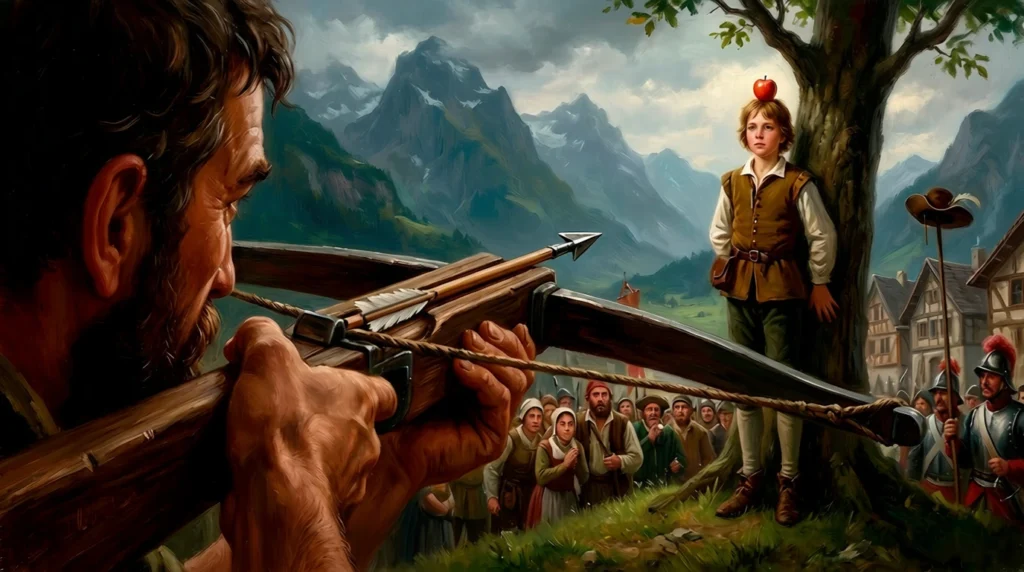
It began in 1291, when Uri, Schwyz and Unterwalden swore to help each other. The legend of that oath, and of William Tell, is the subject of our piece was William Tell real? Lucerne joined in 1332, then Zurich, Glarus, Zug and Bern by 1353.
Growth then stalled for over a century. City cantons and rural cantons distrusted each other. In 1481, a hermit named Niklaus von Flüe reportedly helped broker the Stans Agreement, which let Fribourg and Solothurn join. Basel and Schaffhausen followed in 1501, and Appenzell in 1513.
Napoleon's cantons and the 1815 map
Then came an outsider. In 1803, Napoleon's Act of Mediation turned former subject lands into six new cantons: St. Gallen, Graubünden, Aargau, Thurgau, Ticino and Vaud. After his fall, Valais, Neuchâtel and Geneva joined in 1815. That gave Switzerland 22 cantons and roughly its modern borders.
Here's a detail most people don't know. Until 1848, Neuchâtel was both a Swiss canton and a principality belonging to the King of Prussia. Prussia only gave up its claim in 1857, after a standoff that nearly led to war.
The half-canton puzzle
Six Swiss cantons are officially "cantons with half a cantonal vote". People still call them half-cantons. Each pair has a different origin story.
- Obwalden and Nidwalden grew out of old Unterwalden, whose two valleys had long managed their affairs separately.
- Appenzell Innerrhoden and Ausserrhoden split in 1597 over religion. The inner part stayed Catholic, while the outer part became Protestant.
- Basel-Stadt and Basel-Landschaft split in 1833 after armed clashes between the city and the countryside.
The split still matters in national votes. Each half-canton carries half a vote in the double majority, which our guide to Swiss direct democracy explains. Meanwhile, the Basel wound has never fully healed. In 2014, voters in Basel-Landschaft firmly rejected a plan to explore a reunion with the city.

Appenzell Innerrhoden is also the smallest canton by population, with fewer than 17,000 people. It was the last canton to let women vote on local matters, in 1991, as we tell in our story of Swiss women's suffrage.
Four languages, 26 Swiss cantons
Language is the other great divide. Seventeen Swiss cantons are German-speaking only. Geneva, Vaud, Neuchâtel and Jura are French-speaking. Ticino is the only canton with Italian as its sole official language.
Then there are the mixed ones. Bern, Fribourg and Valais are officially bilingual, in French and German. Graubünden goes one step further, with three official languages: German, Romansh and Italian. It's the only place where Romansh has official status at canton level.
That language map shapes Swiss politics far more than party labels do. When French and German speakers vote differently, journalists talk about the Röstigraben, the "potato ditch" running through Fribourg and Valais.
How the Swiss cantons shape everyday life
For residents, the cantons are not an abstract idea. You notice them at tax time, at school and on public holidays.
Taxes: a real competition
Each canton sets its own tax rates, and the differences are large. Central cantons such as Zug and Schwyz are famous for low taxes, which helps explain why so many companies register there. Geneva and Vaud sit at the other end of the scale. This constant competition is a quiet engine of the Swiss economy, and also a source of resentment.
Your passport names a commune, not a birthplace
Here's the strangest part, at least for outsiders. Swiss citizenship is not only national. Every Swiss citizen also holds the citizenship of a commune and of a canton, called their "place of origin". It appears on the passport instead of a place of birth. Many people have never lived in their place of origin, because they inherited it from their father or mother.
The same three layers apply to anyone who wants to become Swiss. Bern sets the minimum rules, but the Swiss cantons and communes add their own tests and residence rules. So two people with identical lives can face quite different paths, depending on where they live. In some small communes, local residents still have a say on each application.
Schools: 26 systems in one country
Education shows the same pattern. Each canton runs its own school system, from the age children start school to the way teachers are trained. In 2006, voters approved a new education article with 85.6%, asking the cantons to align key points. Many cantons then signed a joint school agreement, known as HarmoS. Not all of them did, though, and the differences remain real.
Holidays you won't get next door
Public holidays vary too. Only 1 August, the national day, is a federal holiday by law. Neuchâtel celebrates its republic on 1 March. Geneva takes a day off for a fast in September and marks the Restoration of the Republic on 31 December. Move 30 kilometres, and your calendar changes. Few things show the power of Swiss cantons as clearly as a day off that stops at the border.
Test yourself: guess the number plate
Every Swiss car carries its canton's code. Can you match these six plates? Two of them trip up most visitors.
Guess the canton from the number plate
Score: 0 / 6A car plate starts with GR. Where is it registered?
Graubünden. The code comes from its German name, Graubünden. Glarus uses GL.
A plate starts with AI. Where is it from?
Appenzell Innerrhoden. Its neighbour, Appenzell Ausserrhoden, uses AR.
A plate starts with TI. Where is it from?
Ticino, the Italian-speaking canton south of the Alps. Thurgau uses TG.
A plate starts with NW. Where is it from?
Nidwalden, one half of old Unterwalden. There is no Swiss canton called Neuwald.
A plate starts with VS. Where is it from?
Valais. The code comes from its Latin name, Vallesia. Vaud uses VD.
A plate starts with JU. Where is it from?
Jura, the newest canton. Since 2026, cars from Moutier carry JU plates too.
Moutier 2026: a town that changed canton by vote
The newest canton is also the most dramatic story. For more than a century, French-speaking Catholics in the Jura hills lived under the mostly German-speaking, Protestant canton of Bern. They had been handed to Bern in 1815, and many never accepted it.
After years of protests and even bomb attacks, a series of votes in the 1970s let the northern districts break away. The canton of Jura was born on 1 January 1979. The southern districts, however, chose to stay with Bern.
One town, three votes
Moutier sat right on that fault line. In 2017, its voters chose Jura, but the result was annulled over irregularities. In 2021, they voted again, and 54.9% backed the move. On 1 January 2026, the town of about 7,000 people officially became part of Jura.

Moutier also proves a quieter point. The borders between Swiss cantons are not sacred. If local voters, the cantons involved and the federal parliament all agree, the lines can move.
I find this story oddly moving. Elsewhere in Europe, border questions like this one led to violence for decades. Switzerland settled its own with ballots, a court case and a lot of patience. Messy? Absolutely. But it worked.
All 26 Swiss cantons: the full table
For quick reference, here are all the Swiss cantons with their codes, capitals, entry years, languages, populations and areas. Select a column heading to sort.
| ZH | Zurich | Zurich | 1351 | German | 1,619,499 | 1,729 |
| BE | Bern | Bern | 1353 | German, French | 1,070,898 | 5,960 |
| LU | Lucerne | Lucerne | 1332 | German | 437,838 | 1,494 |
| UR | Uri | Altdorf | 1291 | German | 38,265 | 1,077 |
| SZ | Schwyz | Schwyz | 1291 | German | 168,906 | 908 |
| OW | Obwalden | Sarnen | 1291 | German | 39,660 | 491 |
| NW | Nidwalden | Stans | 1291 | German | 45,343 | 276 |
| GL | Glarus | Glarus | 1352 | German | 42,364 | 685 |
| ZG | Zug | Zug | 1352 | German | 133,723 | 239 |
| FR | Fribourg | Fribourg | 1481 | French, German | 346,589 | 1,671 |
| SO | Solothurn | Solothurn | 1481 | German | 289,731 | 790 |
| BS | Basel-Stadt | Basel | 1501 | German | 201,333 | 37 |
| BL | Basel-Landschaft | Liestal | 1501 | German | 301,280 | 518 |
| SH | Schaffhausen | Schaffhausen | 1501 | German | 88,650 | 298 |
| AR | Appenzell Ausserrhoden | Herisau | 1513 | German | 56,688 | 243 |
| AI | Appenzell Innerrhoden | Appenzell | 1513 | German | 16,732 | 172 |
| SG | St. Gallen | St. Gallen | 1803 | German | 539,944 | 2,031 |
| GR | Graubünden | Chur | 1803 | German, Romansh, Italian | 206,111 | 7,105 |
| AG | Aargau | Aarau | 1803 | German | 735,619 | 1,404 |
| TG | Thurgau | Frauenfeld | 1803 | German | 299,442 | 992 |
| TI | Ticino | Bellinzona | 1803 | Italian | 358,877 | 2,812 |
| VD | Vaud | Lausanne | 1803 | French | 854,912 | 3,212 |
| VS | Valais | Sion | 1815 | French, German | 371,184 | 5,224 |
| NE | Neuchâtel | Neuchâtel | 1815 | French | 179,496 | 802 |
| GE | Geneva | Geneva | 1815 | French | 530,999 | 282 |
| JU | Jura | Delémont | 1979 | French | 74,822 | 839 |
What the numbers reveal
Notice how uneven the numbers are. Zurich has about 97 times as many people as Appenzell Innerrhoden. Graubünden is almost 200 times the size of Basel-Stadt. Yet in the Council of States, the upper house, every full canton sends two members, no matter its size.
Why the Swiss cantons still matter
It's tempting to see the cantons as folklore: flags, dialects and local pride. That would be a mistake. The Swiss cantons are the reason Switzerland has no powerful capital, the reason for its low-tax hotspots and the reason national votes need a double majority.
They also explain why the federal city is modest. Our article on the capital of Switzerland shows how the cantons refused to crown any single city. And the 1847 Sonderbund War shows what happened when cantons pulled in opposite directions.
To see every canton's entry year in the wider story, explore our interactive Swiss history timeline. You'll see the same pattern each time: local first, national second.
FAQ: Swiss cantons
How many cantons does Switzerland have?
Switzerland has 26 cantons. Six of them, Obwalden, Nidwalden, Basel-Stadt, Basel-Landschaft, Appenzell Ausserrhoden and Appenzell Innerrhoden, have half a cantonal vote each. So in national votes, the cantons cast 23 votes in total.
What is the largest Swiss canton?
By area, Graubünden is the largest, at about 7,105 square kilometres. By population, Zurich is the largest, with about 1.6 million people at the end of 2024.
What is the smallest Swiss canton?
Basel-Stadt covers only about 37 square kilometres, making it the smallest by area. Appenzell Innerrhoden has the fewest people, with fewer than 17,000 residents.
What is the newest Swiss canton?
Jura is the newest canton. It was created on 1 January 1979 after a series of votes. On 1 January 2026, the town of Moutier also moved from Bern to Jura.
Why are some Swiss cantons called half-cantons?
They are pairs that split from a single older canton. Unterwalden divided into Obwalden and Nidwalden, Appenzell split over religion in 1597, and Basel split in 1833 after fighting between city and countryside.
Which language is spoken in each canton?
Seventeen cantons speak German. Geneva, Vaud, Neuchâtel and Jura speak French, and Ticino speaks Italian. Bern, Fribourg and Valais are bilingual, while Graubünden has three official languages: German, Romansh and Italian.
Sources and further reading
- Fedlex: Federal Constitution of the Swiss Confederation (Articles 1 and 3)
- Federal Statistical Office: Population statistics
- City Population: Swiss cantons, population at 31 December 2024
- Le News: Swiss town marks its move from Bern to Jura
- swissinfo.ch: Moutier to join canton Jura
- ch.ch: The Swiss political system and the cantons
Last updated 2 October 2026. Featured photo: JoachimKohler-HB, Wikimedia Commons, CC BY-SA 4.0.