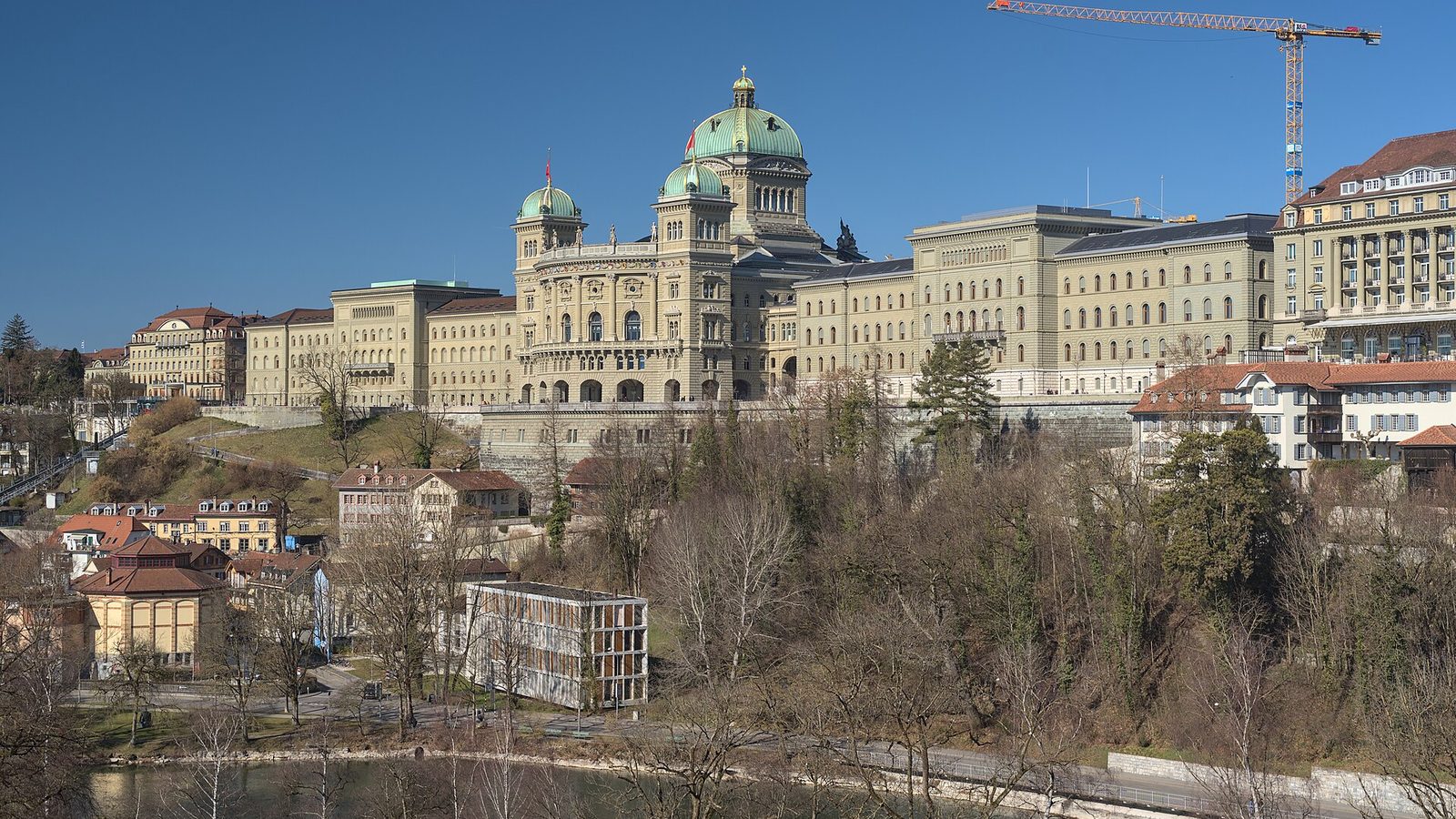
What is the capital of Switzerland? In everyday speech, it’s Bern, where the government and parliament sit. Legally, though, the capital of Switzerland does not exist. The federal constitution never names one. Instead, Bern holds a humbler title: the “federal city”, or Bundesstadt in German. It has been the seat of the federal government since 1848.
That’s not a technicality. It’s a clue to how the whole country works. The Swiss chose Bern precisely because it was the least threatening option, and then they handed out the other big institutions to rival cities as consolation prizes.
So this is a myth-busting story with a twist. The myth is not that Bern is the capital. The myth is that Switzerland wanted a capital at all.
Sources: Federal Constitution, Swiss National Museum, swissinfo.ch.
The capital of Switzerland, legally speaking: nowhere
Open the Swiss federal constitution and search for the word "capital". You won't find it. The text lists the cantons, sets out the rights of citizens and defines the powers of the state. It never says where that state lives.
The term "federal city" only appears in ordinary federal laws. As the historian André Holenstein told swissinfo.ch, "By not choosing a capital city, the federal parliamentarians were taking into account the mood in the conservative Catholic cantons." Those cantons had just lost a civil war. A grand capital would have looked like the victors planting a flag.
Why the word matters
In most countries, "capital" means more than an address. It implies a centre that outranks the rest. That idea clashes with the Swiss model, where the cantons came first and still guard their power jealously. Our guide to the Swiss cantons explains why they're closer to small states than to provinces.
So when people ask about the capital of Switzerland, the most accurate answer is two-sided. Bern is the seat of government. However, it was never crowned.
Bern's quiet campaign for the title
Bern knows what it's missing. In 2010, cantons, cities and communes around Bern founded an association called Hauptstadtregion Schweiz, or "Capital Region Switzerland". Its job is to promote the region as the political heart of the country.
In other words, the region brands itself as the capital of Switzerland, even though the law never uses the word. Zurich, with its bigger economy, has never seen the need. That little gap between branding and law sums up the whole debate rather neatly.
Before Bern: the forgotten capitals of Switzerland
Here's something even many Swiss have forgotten. Bern was not the first capital of Switzerland, and it was not the second.
In 1798, French armies invaded and set up the Helvetic Republic, a centralised state on the French model. Its first capital was little Aarau, a town of about 2,500 people. Locals were so thrilled that they began digging foundations for new government buildings within weeks, before anyone had drawn detailed plans.
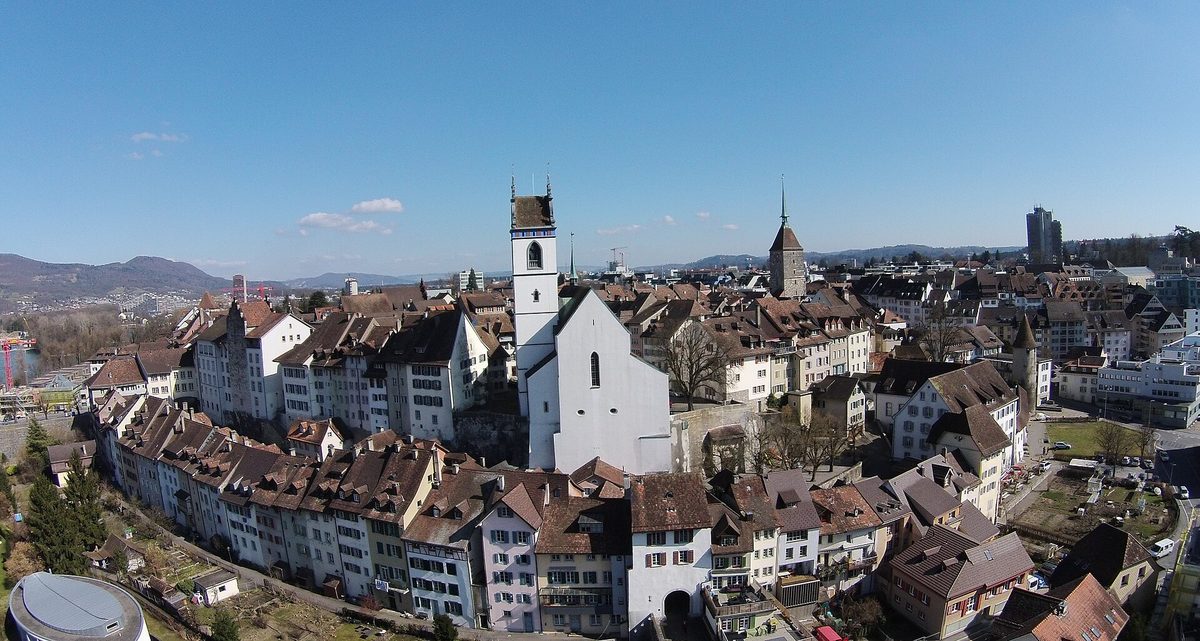
The glory lasted about five months. In August 1798, parliament voted to move to Lucerne, and the government then settled in Bern the following year. Then the Helvetic Republic itself collapsed.
A capital on wheels, 1803 to 1848
After 1803, Switzerland solved the capital question by avoiding it. The job of leading the Confederation rotated between cities. At first, six "directorial" cantons took turns each year. From 1815, only Zurich, Bern and Lucerne took turns, every two years. The diplomats, the archives and the seals simply moved with them.
Tap through the timeline to follow the capital around the country.
Switzerland's moving capital, 1798 to 1902
Tap a year. Red dots mark the moments the capital question changed.
Aarau, capital of the Helvetic Republic
In April 1798, the French-backed Helvetic Republic picks little Aarau as its capital. Locals start digging foundations within weeks.
Moving to Lucerne
In August 1798, parliament votes to move to Lucerne. Aarau's reign ends after about five months.
Bern, for the first time
The Helvetic government settles in Bern in 1799. Four years later, the republic itself collapses.
Six cities take turns
Under Napoleon's Act of Mediation, six directorial cantons lead the Confederation in turn, one year each.
Zurich, Bern and Lucerne
After Napoleon, only Zurich, Bern and Lucerne rotate, every two years. The archives travel with them.
Bern becomes the federal city
On 28 November 1848, parliament picks Bern as the seat of government, on condition that it pays for the buildings.
Bern buys its freedom
Bern pays 500,000 francs to end its duty to house the federal government. Lausanne gets the new Federal Supreme Court.
The Federal Palace opens
The domed Federal Palace we know today opens in 1902, joining two older wings into one building.
1848: how Bern won the capital of Switzerland race
The real capital of Switzerland question only returned after the Sonderbund War of 1847 and the new federal constitution of 1848. At last, the modern state needed a permanent home. Three cities wanted it: Bern, Zurich and Lucerne.
On 28 November 1848, the new Federal Assembly voted. Bern won comfortably in the first round, with 58 votes in the National Council and 21 in the Council of States.
Why Bern, and not Zurich?
Zurich had the money and the ambition. That was exactly the problem. Many members feared that a rich, Protestant, industrial Zurich would dominate the new state. Lucerne, meanwhile, had led the losing Catholic side in the civil war, so it was politically impossible.
Bern offered a compromise, and a very Swiss one. For a country wary of any capital of Switzerland worth the name, it was the safe choice. It sat near the language border, between German- and French-speaking Switzerland. It was powerful, but not dazzling. Crucially, it also agreed to provide the land and buildings for the federal government free of charge.
The price of winning
That promise cost Bern dearly. The first federal building, finished in 1857, cost around two million francs. The city borrowed heavily and raised extra taxes. In 1874, it paid a lump sum of 500,000 francs to be released from any further duty to house the federal government.
I think that detail says everything about the Swiss view of power. Bern did not receive the title as an honour. It paid for the privilege.
The consolation prizes: where Swiss power really sits
The other cities did not go home empty-handed. Zurich got the Federal Institute of Technology, today's ETH, in 1855, and later the Swiss National Museum. Lausanne got the Federal Supreme Court. Lucerne got the Federal Insurance Court in 1917.
That habit of sharing never stopped. Today, federal power is spread across the map on purpose. Select a city below to see what it hosts.
Where Swiss federal power actually sits
Select a city. The red dot marks Bern, the federal city.
Bern
Federal Council, parliament and most federal offices. Also one of the Swiss National Bank's two head offices.
Simplified outline of Switzerland. City positions are approximate.
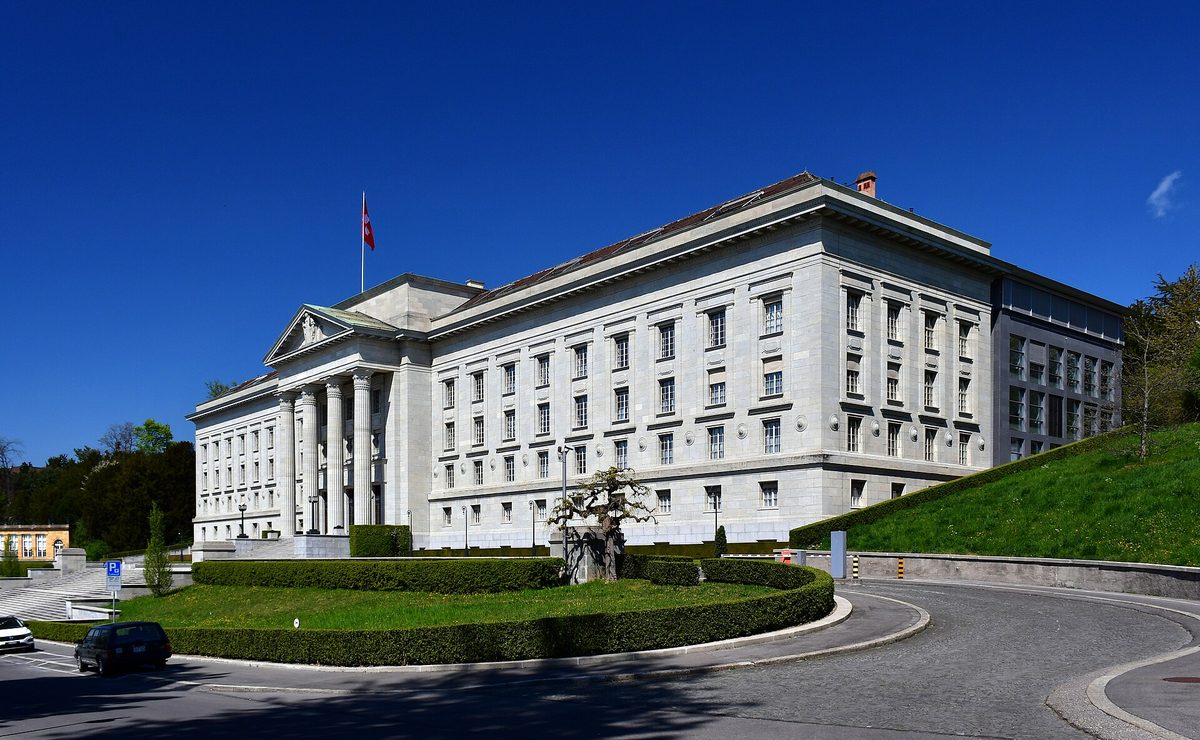
Seen this way, the capital of Switzerland is less a city than a network of cities. Bern makes the laws, Lausanne judges them, Zurich funds much of the economy, and Geneva talks to the world. That split would feel odd in Paris or London. In Switzerland, it feels natural.
The sharing goes on: federal offices outside Bern
The spreading did not stop in the 19th century. In recent decades, Switzerland has kept moving federal bodies out of Bern, often on purpose to share jobs and prestige. In 1998, the Federal Statistical Office moved to Neuchâtel. Biel/Bienne, right on the language border, hosts the Federal Office of Communications. And the Federal Office of Sport trains athletes above Lake Biel, in Magglingen.
The courts followed the same logic. The Federal Criminal Court opened in Bellinzona in 2004, giving Italian-speaking Ticino a national institution. In 2012, the Federal Administrative Court moved from Bern to St. Gallen, in the east. Each move sends the same quiet message: no single city owns the state.
Countries with no capital, or too many
Switzerland is unusual, but not alone. Several countries split their capital functions, or name one city in law and govern from another. The table compares a few of them.
| Country | Capital in law | Where the government sits | The twist |
|---|---|---|---|
| Switzerland | None named | Bern, the "federal city" | Top courts sit in Lausanne, Lucerne, Bellinzona and St. Gallen |
| Netherlands | Amsterdam | The Hague | New monarchs are sworn in in Amsterdam |
| Bolivia | Sucre | La Paz | The supreme court stayed in Sucre |
| South Africa | Three capitals | Pretoria (government) | Parliament meets in Cape Town, the appeal court sits in Bloemfontein |
| Malaysia | Kuala Lumpur | Putrajaya | Ministries moved to a new planned city from 1999 |
| Côte d'Ivoire | Yamoussoukro | Mostly Abidjan | The capital moved on paper in 1983 |
What makes the Swiss case special is the silence. Other countries either name a capital or divide the roles on paper. Switzerland just avoids the question, which, if you know the Swiss, is itself an answer.
Myth or reality? Test yourself
Now that you know the story, try this quick quiz. Even many Swiss get the Aarau question wrong.
Capital of Switzerland: myth or reality?
Score: 0 / 6The Swiss constitution names Bern as the capital.
Myth. The constitution never names a capital. Bern is the seat of government, called the federal city.
Aarau was the first capital of modern Switzerland.
Reality. In 1798, the Helvetic Republic made Aarau its capital, for about five months.
Zurich almost won in 1848 and lost by a handful of votes.
Myth. Bern won comfortably in the first round, with 58 votes in the National Council.
Bern had to pay for the federal buildings itself.
Reality. Hosting the government was the condition. In 1874, Bern paid 500,000 francs to end the duty.
Switzerland's highest court sits in Bern.
Myth. Lausanne hosts the Federal Supreme Court, with two divisions in Lucerne.
The Federal Palace dome says “One for all, all for one” in Latin.
Reality. The motto Unus pro omnibus, omnes pro uno runs around the inside of the dome.
A capital of Switzerland named after a bear
There's one more twist, and it's the best-loved story in Bern. According to legend, Duke Berthold V of Zähringen founded the town in 1191. He promised to name it after the first animal he killed on the next hunt. It was a bear, and so the town became Bern.
Historians treat the tale with a raised eyebrow. Still, the bear stuck. It appears on the canton's flag, on fountains all over the old town and, very much alive, in the BärenPark by the Aare. The city has kept live bears in one form or another for centuries.
It fits the wider story, too. Bern never had the grandeur of a royal capital. Its symbol is a bear, its government is a committee of seven, and its title is "federal city". For the unofficial capital of Switzerland, that modesty is the whole point.
Visiting the federal city: Bern, with this story in mind
Knowing that Bern is not officially the capital of Switzerland changes how the city feels. There's no grand boulevard and no presidential palace. The Federal Palace sits on the edge of a medieval old town, with a view of the Aare river and, on clear days, the Alps.
A few things are worth doing with the history above in mind:
- Take a free tour of the Federal Palace. Look up at the dome, where the Latin motto Unus pro omnibus, omnes pro uno reads "One for all, all for one".
- Walk the UNESCO-listed old town, which our guide to the cultural treasures of Switzerland covers in more detail.
- Visit the Einstein House on Kramgasse, where Albert Einstein lived while working at the Bern patent office.
- Watch the Zytglogge clock tower strike the hour, a show that has run for centuries.
For more places to add to the trip, see our list of the best places to visit in Switzerland.
So, what is the capital of Switzerland?
Here's my verdict. If a crossword asks for the capital of Switzerland, write BERN and move on. If a friend asks, give the longer answer. Switzerland has a federal city, not a capital, and that choice was deliberate.
What if Switzerland named a capital tomorrow?
Legally, very little would change. The government would stay in Bern, the courts would stay where they are, and the trains would still run on time. Symbolically, though, it would be a small earthquake.
To name a capital of Switzerland, the country would almost certainly have to amend the constitution. That means a national vote with a double majority of people and cantons. I can't imagine Zurich, Geneva or Ticino voting to crown Bern, and I can't imagine Bern campaigning for it either. So the silence will likely last, and honestly, I think that's for the best.
The missing title reflects the same instinct you'll find in Swiss direct democracy and in the country's seven-member government with no real president. The Swiss don't like putting anyone, or any city, above the rest. To see where 1848 fits into the bigger picture, explore our interactive Swiss history timeline.
FAQ: the capital of Switzerland
What is the capital of Switzerland?
In practice, Bern. The Swiss government and parliament sit there. Legally, though, Switzerland has no official capital. The constitution never names one, and Bern is officially called the federal city.
Is Zurich the capital of Switzerland?
No. Zurich is the largest city and the main financial centre, but it has never been the capital. In 1848, parliament chose Bern partly because many feared that Zurich would dominate the new state.
Why is Bern the capital and not Zurich?
Bern was a compromise. It sat near the border between German- and French-speaking Switzerland, it seemed less threatening than wealthy Zurich, and it agreed to provide the federal buildings free of charge.
Is Geneva the capital of Switzerland?
No. Geneva is Switzerland's most international city and hosts the UN's European headquarters and the Red Cross. However, the Swiss government sits in Bern.
What was the first capital of Switzerland?
Aarau. In 1798, the Helvetic Republic chose it as its capital, but only for about five months. The seat then moved to Lucerne and, in 1799, to Bern.
What is Bern called in Switzerland's other languages?
Bern is Bern in German, Berne in French and Berna in Italian and Romansh. In English, both Bern and Berne are correct.
Sources and further reading
- Swiss National Museum: How Berne became the seat of government
- swissinfo.ch: Why Switzerland hasn't got a capital city
- Swiss National Museum: When Aarau became the capital city
- swissinfo.ch: Lucerne, the capital city that never was
- Fedlex: Federal Constitution of the Swiss Confederation
Last updated 2 October 2026. Featured photo: August Geyler, Wikimedia Commons, CC BY-SA 4.0.