Swiss direct democracy lets ordinary citizens overrule their own parliament. With 100,000 signatures, anyone can force a national vote to change the constitution. With 50,000, they can challenge almost any new law. As a result, the Swiss vote on national questions about four times a year, on everything from pensions and fighter jets to the horns of cows.
That sounds chaotic. In practice, Swiss direct democracy produces one of the most stable political systems on earth. The secret, as you’ll see, is not that voters decide everything. It’s that politicians know they might.
Sources: Swiss Federal Constitution, Federal Chancellery, swissinfo.ch.
Swiss direct democracy in one minute: the three tools
Switzerland does not run on votes alone. It has a parliament, a government and courts, like any other country. On top of that, though, Swiss direct democracy gives citizens three powerful tools.
- A committee of 7 to 27 citizens drafts a change to the constitution.
- It collects 100,000 valid signatures within 18 months.
- The government and parliament say yes or no. They may also offer a milder version.
- The whole country votes, often years after the launch.
- It passes only with a majority of voters and of cantons.
Since 1891, only about one initiative in ten has passed. Even so, many shape the law through counter-proposals.
- Parliament passes a new federal law or treaty.
- The law is published and a 100-day countdown starts.
- Opponents collect 50,000 signatures, or eight cantons demand a vote.
- The whole country votes on the law.
- A simple majority of voters decides. Cantons do not count.
Most laws never face a referendum. Still, the threat of one shapes almost every law parliament writes.
- Parliament approves a change to the constitution.
- Or it wants to join a military alliance or a body like the EU.
- No signatures are needed. A national vote is automatic.
- It passes only with a majority of voters and of cantons.
This is why joining NATO or the EU could never happen without a national vote.
The popular initiative: the citizen's proposal
First, the popular initiative. Any group can draft a change to the federal constitution. If it collects 100,000 valid signatures within 18 months, the whole country votes on it. Parliament can recommend a no, and it can offer a softer counter-proposal. However, it cannot block the vote.
Most initiatives fail. Since 1891, only about two dozen have passed. Yet in Swiss direct democracy, losing is often the point. An initiative forces a topic onto the agenda, and parliament frequently answers with a counter-proposal that takes some of the ideas on board.
The optional referendum: the citizen's veto
Next, the optional referendum. Once parliament passes a new law, opponents have 100 days to gather 50,000 signatures. If they succeed, voters decide whether the law takes effect. Eight cantons can also trigger this vote, although that almost never happens.
The mandatory referendum: no shortcut allowed
Finally, some decisions always go to the people. Every change to the constitution needs a national vote. So does joining a collective security organisation, such as NATO, or a supranational community like the EU. That's why the fight over the new EU treaties is partly a fight over which kind of vote applies.
Where Swiss direct democracy came from
It's tempting to think the Swiss have always voted on everything. They haven't. Swiss direct democracy grew in stages, and most of it is younger than the railway.
The roots lie in the old rural cantons, where free men met in open-air assemblies. However, the modern system began with the federal constitution of 1848. It required a national vote on every change to the constitution. That was the first building block.
From 1874 to 1891: the people get their tools
Then came a wave of protest in the 1860s. It began in Zurich. There, in 1869, citizens won the right to call votes on cantonal laws. The idea spread fast. In 1874, a revised federal constitution added the optional referendum against new national laws. In 1891, citizens gained the popular initiative to change the constitution.
Here's an uncomfortable fact. The first initiative that ever passed, in 1893, banned the kosher slaughter of animals. It was aimed squarely at Switzerland's small Jewish community. So from the very start, Swiss direct democracy showed both its power and its dark side. Animal welfare kept returning to the ballot, most notably in 1992, when voters ended up voting to enshrine the “dignity of the creature” into the Swiss Federal Constitution.
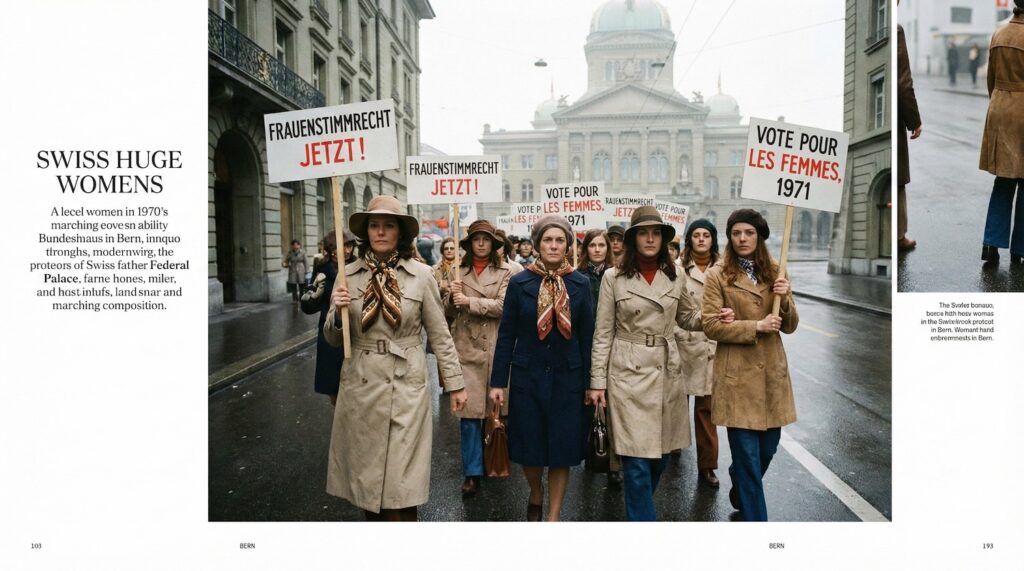
Later reforms kept adding pieces. Since 1921, voters can challenge some international treaties. In 1971, women finally joined the electorate, which doubled the number of voters. Six years later, the signature thresholds rose to today's 100,000 and 50,000.
The double majority: when cantons outvote the people
Here's the rule of Swiss direct democracy that trips up most outsiders. For some votes, winning the people is not enough. You also need most of the cantons. This rule applies to every initiative and to every change to the constitution.
Each of the 20 full cantons counts as one vote. The six so-called half-cantons, such as Basel-Stadt and Basel-Landschaft, count as half a vote each. That makes 23 cantonal votes in total, so a proposal needs at least 12 of them.
The day 50.7% was not enough
On 29 November 2020, the Responsible Business Initiative won 50.7% of the national vote. It wanted Swiss multinationals to answer in Swiss courts for human rights abuses abroad. On most weekends, that would be a win. Not this time. Only 8.5 cantonal votes backed it, so the initiative failed.
Critics call that unfair. After all, one voter in tiny Appenzell Innerrhoden carries far more weight than one in Zurich. Defenders reply that the rule keeps small, rural and minority-language regions from being flattened by the big cities. Honestly, both sides are right, and that tension is built into Swiss federalism on purpose.
Try it yourself below. Move the sliders, or load a real vote, and see how often the two majorities disagree.
Double majority simulator
Set the national yes vote and the number of cantonal votes in favour, or load a real result.
Needs more than 50% to win the popular majority.
Needs at least 12 of 23. Six half-cantons count as half a vote.
2020 Responsible Business Initiative: more than half the voters said yes, yet it still failed.
What the Swiss actually vote on
Because anyone can launch an initiative, the Swiss ballot is wonderfully unpredictable. Some votes shape the country for decades. Others make the international news for a week, mostly for being strange. That mix is Swiss direct democracy at its most human.
In 1971, men finally voted to give women the vote, with 65.7% in favour, as we explain in our story of Swiss women's suffrage. In 2018, a mountain farmer named Armin Capaul forced a national vote on paying farmers who let their cows keep their horns. He lost with 45.3%, then shrugged: "We got more than a million yeses."
Guess how Switzerland voted
Think you can read the Swiss mind? Try these six real votes. Most people get the basic income one wrong.
Six real Swiss votes: passed or failed?
Score: 0 / 61971: Give women the right to vote in national matters?
Passed, with 65.7% yes. Swiss men finally said yes, more than 50 years after Germany and Austria.
2009: Ban the building of new minarets?
Passed, with 57.5% yes. The government and parliament had urged a no. The result drew criticism around the world.
2012: Six weeks of paid holiday for every worker?
Failed, with 66.5% no. Voters sided with business groups that warned about costs and jobs.
2016: A basic income for every resident, with no conditions?
Failed, with 76.9% no. It was the first national vote on the idea anywhere in the world.
2018: A bonus for farmers who let their cows keep their horns?
Failed, with 54.7% no. Still, one farmer's campaign won more than a million votes.
2024: A 13th monthly payment for every state pensioner?
Passed, with 58.2% yes. It won despite a no from the government, parliament and business groups.
Notice a pattern? Swiss voters are cautious with money and wary of big promises. However, Swiss direct democracy can still surprise the political class. The 2024 vote for a 13th monthly pension payment passed against the advice of the government, parliament and business groups.
Landsgemeinde: Swiss direct democracy in the open air
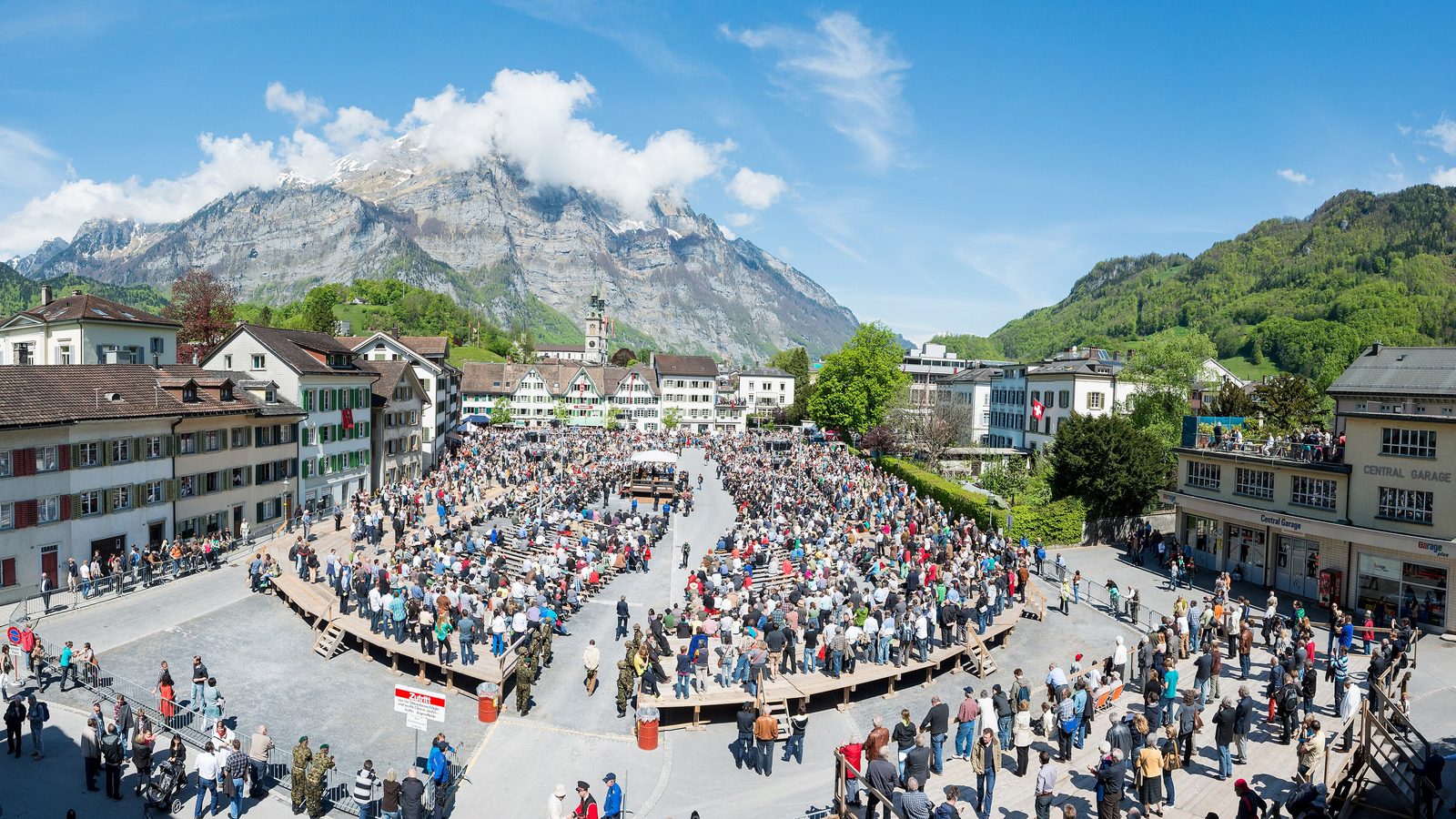
If you want to see Swiss direct democracy at its purest, go to Glarus on the first Sunday in May. Thousands of citizens stand in the town square and vote on cantonal laws by raising their hands. There are no ballot papers and no secret votes.
Only two cantons still hold a Landsgemeinde: Glarus and Appenzell Innerrhoden, where it takes place on the last Sunday in April. In Appenzell, men may still show a sword or army bayonet instead of a voting card. It's a leftover from the days when only armed men could take part.
Old form, radical results
Don't mistake tradition for timidity, though. In 2006, the Glarus assembly ignored its own government's plan and voted to merge 25 villages into just three large municipalities. The merger took effect in 2011. In 2007, Glarus also became the first and only canton to let 16-year-olds vote.
Yet the same format also caused Switzerland's most famous delay. Appenzell Innerrhoden only let women vote on local matters in 1991. Even then, it took an order from the country's top court.
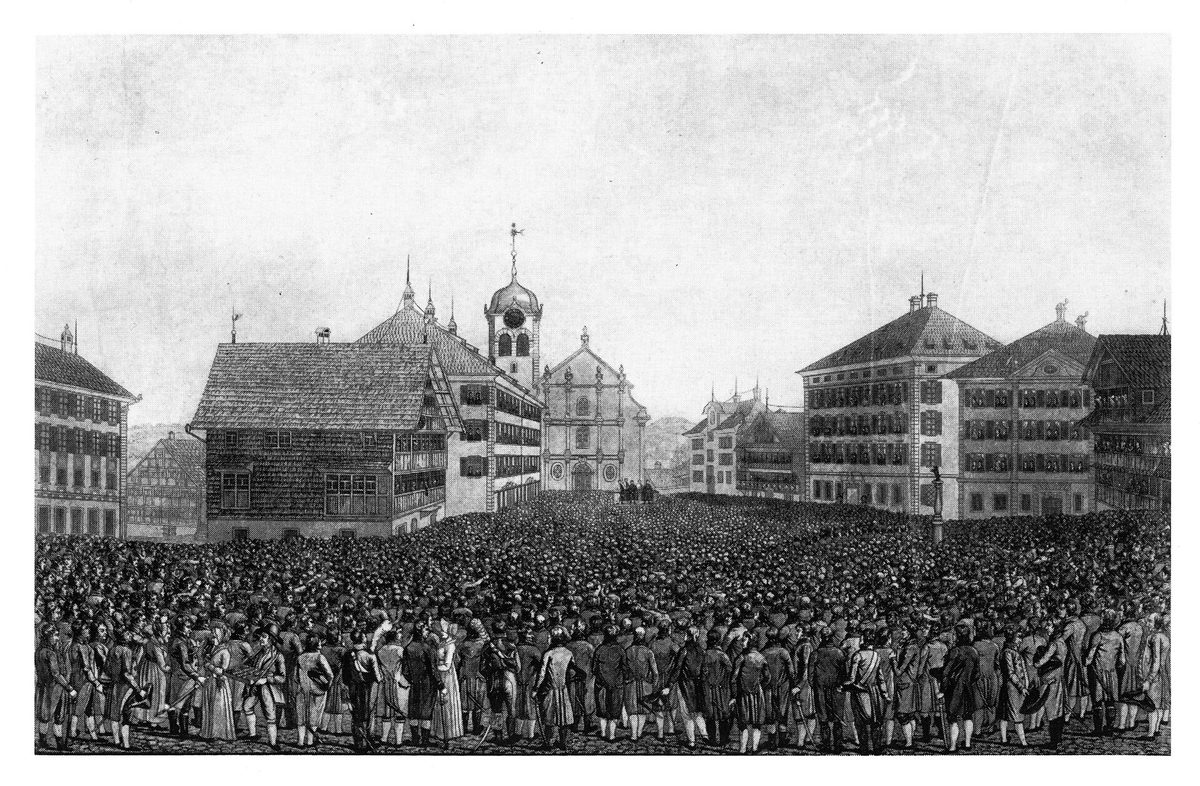
Most cantons dropped the open-air vote long ago. Nidwalden dropped it in 1996, Appenzell Ausserrhoden in 1997 and Obwalden in 1998. For many Swiss, though, Glarus and Appenzell remain the soul of the system.
How a Swiss voting Sunday actually works
For most citizens, Swiss direct democracy arrives in the post. A few weeks before each vote, every voter receives an envelope with the ballots and a booklet. The booklet explains each proposal, with arguments from the government and from the committee that launched it.
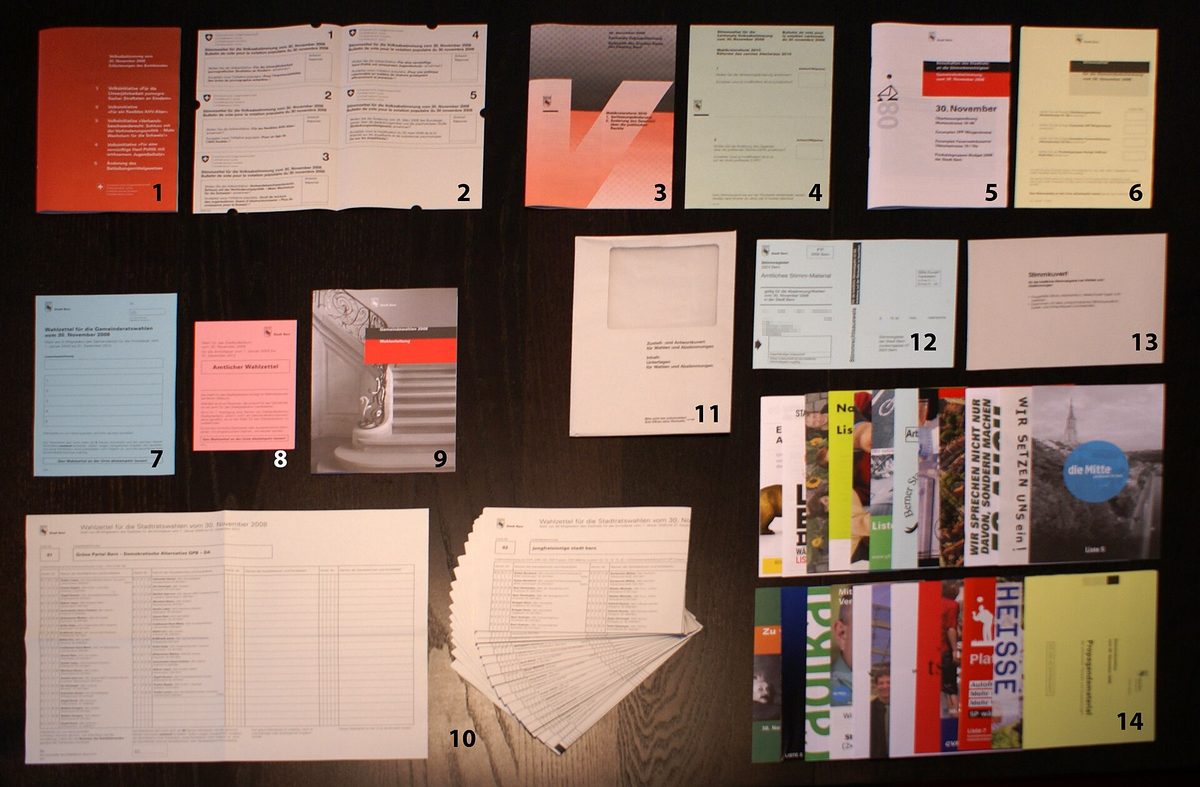
Most people then vote by post from home. Four voting dates are fixed each year, usually in February or March, in May or June, in September and in November. On the Sunday itself, the polls close around noon. By early evening, the results are out.
A few cantons, including Basel-Stadt, St. Gallen and Thurgau, have been testing online voting again since 2023. Still, most Swiss do it the old way: a pen, a kitchen table and a paper envelope.
The hidden power of Swiss direct democracy: the threat
This is the part I think most explainers miss. Swiss direct democracy works less through votes than through the fear of them.
Every time parliament drafts a law, it knows that any group with 50,000 signatures can drag it to the ballot box. So lawmakers consult widely before they finish. Business groups, unions, cantons and parties all get a formal say. By the time a law passes, it has usually been sanded down into a compromise that no one hates enough to fight.
That same logic explains the government itself. Since 1959, the biggest parties have shared the seven seats of the Federal Council under a "magic formula". Our piece on whether Switzerland has a president explains how it works. In short, it's safer to share power than to face a referendum from every party you left out.
Does Swiss direct democracy actually work? The honest downsides
Mostly, yes. But Swiss direct democracy has real flaws, and pretending otherwise would be dishonest.
- Low turnout. Turnout usually sits between 40% and 50%. So a law can pass with the active support of barely a quarter of voters.
- Minority rights. Majorities can vote against minorities. The 2009 ban on new minarets passed with 57.5%, and women waited until 1971 for the national vote.
- Slow change. Reforms can take decades. Pension reform, for example, failed at the ballot box again and again before a small step passed in 2022.
- Money. Rich campaigns can flood the country with posters. Since 2023, though, campaigns that spend more than CHF 50,000 must disclose their funding, along with any donation above CHF 15,000.
Even so, I wouldn't trade Swiss direct democracy for any other system. Voters make mistakes, but so do parliaments. The difference is that in Switzerland, the people who have to live with a decision also get the final word.
What's on the Swiss ballot next
The next national vote falls on 29 November 2026. Voters will decide four questions. Should VAT rise to fund the state pension? Do fireworks need new limits? Should married couples pay federal tax in a new way? And should Swiss arms be easier to re-export?
That last one shows Swiss direct democracy reaching into foreign policy. It ties straight into the debate on Swiss neutrality, where voters just rejected a strict neutrality initiative by about 70%. Further out, the new EU treaty package is likely to reach the ballot in 2027 or 2028.
To see how 700 years of Swiss history led to this system, from the first alliance of 1291 to the voting Sundays of today, explore our interactive Swiss history timeline. And to understand the 26 players behind the double majority, read our guide to the Swiss cantons.
The civic myths behind the system are older than any vote. The oath on the Rütli and the story of William Tell are both tales of free communities, yet the earliest known version of the apple shot is Danish. Our guide to William Tell separates the legend from the record.
FAQ: Swiss direct democracy
How often do Swiss people vote?
There are four national voting dates each year, and each one can include several questions. On top of that, cantons and communes hold their own votes, often on the same Sunday. In a busy year, voters decide on a dozen or more national questions.
Who can vote in Switzerland?
Swiss citizens aged 18 and over can vote, including those who live abroad. Foreign residents cannot vote in national votes. Still, some cantons, such as Neuchâtel and Jura, and many communes let them vote on local matters. In Glarus, you can vote on cantonal matters from age 16.
What is the difference between an initiative and a referendum?
An initiative asks for something new. It needs 100,000 signatures and changes the constitution. A referendum reacts to parliament. With 50,000 signatures, people can force a vote on a law that parliament just passed. An initiative needs most voters and most cantons. A referendum on a law only needs most voters.
How many popular initiatives have passed?
Very few. From the first vote in 1891 to 2024, only 26 popular initiatives were accepted. Recent examples include the 2024 vote for a 13th monthly state pension payment. An earlier one, the 1994 Alpine Initiative, requires transit freight to cross the Alps by rail, the job the Gotthard Base Tunnel was built for.
Is voting compulsory in Switzerland?
Only in one canton. Schaffhausen still has compulsory voting, with a small fine for people who skip a vote without a good reason. Everywhere else, voting is voluntary, and turnout usually sits between 40% and 50%.
What is a Landsgemeinde?
A Landsgemeinde is an open-air assembly where citizens vote on cantonal laws by a show of hands. Only Glarus and Appenzell Innerrhoden still hold one. Glarus meets on the first Sunday in May, and Appenzell on the last Sunday in April.
Sources and further reading
- swissinfo.ch: How Swiss direct democracy works
- Swiss Federal Chancellery: Chronology of popular votes
- swissinfo.ch: No bonuses for horned cows, decide Swiss voters
- swissinfo.ch: Visiting one of Switzerland's historic open-air assemblies
- Canton of Glarus: The 2011 municipal merger
- ch.ch: Transparency in political funding
Last updated 2 October 2026. Featured photo: Kanton Glarus / Samuel Trümpy Photography, Wikimedia Commons, CC BY 2.0.