Is Switzerland in the EU? No. Switzerland is not a member of the European Union, and it never joined the European Economic Area either. It pays in Swiss francs, not euros. And yet it sits inside the Schengen zone, trades freely with the EU through dozens of treaties, and signed a big new deal with Brussels in March 2026.
In other words, Switzerland is out of the EU, but deeply tied to it. The Swiss like to call it the “bilateral way”. Critics call it cherry-picking. Both have a point.
This guide explains how that odd setup came about, why Swiss voters keep saying no to membership, and what the new treaty package means for the next vote. Along the way, you’ll see the ballot result that nearly changed everything, by a margin of about 24,000 votes.
Is Switzerland in the EU? The quick status check
The honest answer depends on which club you mean. Europe has several overlapping ones, and Switzerland belongs to some but not others.
Tap to check: EU, EEA, Schengen and more
Tap any item below to see where the Swiss stand.
Is Switzerland in…?
Green means yes, red means no, amber means partly. Select an item for the details.
Select an item above
Each answer comes with the date and the vote behind it.
The EU: no. Switzerland asked to join in May 1992, froze the request and withdrew it in 2016.
The EEA: no. Voters rejected it on 6 December 1992 with 50.3% against.
EFTA: yes. A founding member since 1960, with Norway, Iceland and Liechtenstein.
Schengen: yes. Approved in 2005. No routine passport checks at land borders since December 2008.
The euro: no. Switzerland pays in Swiss francs (CHF). Some shops take euros but give change in francs.
Customs union: no. Border checks on goods remain, and duty-free limits apply.
Single market: partly. Access in specific sectors through the bilateral deals, not across the board.
Free movement: yes. Since 2002, EU and Swiss citizens can live and work in each other’s countries.
Horizon Europe: yes. Fully associated again from 1 January 2025.
Erasmus+: from 2027. A 2025 agreement plans Swiss membership of the student scheme from 2027.
EU budget: partly. No membership fee, but a cohesion payment of CHF 350 million a year from 2030.
Dublin rules: yes. Joined together with Schengen, so asylum claims are coordinated with EU states.
See the pattern? Switzerland joins the parts of Europe that help trade, travel and research. It skips anything that puts EU law above Swiss voters.
The day Switzerland almost joined: 6 December 1992
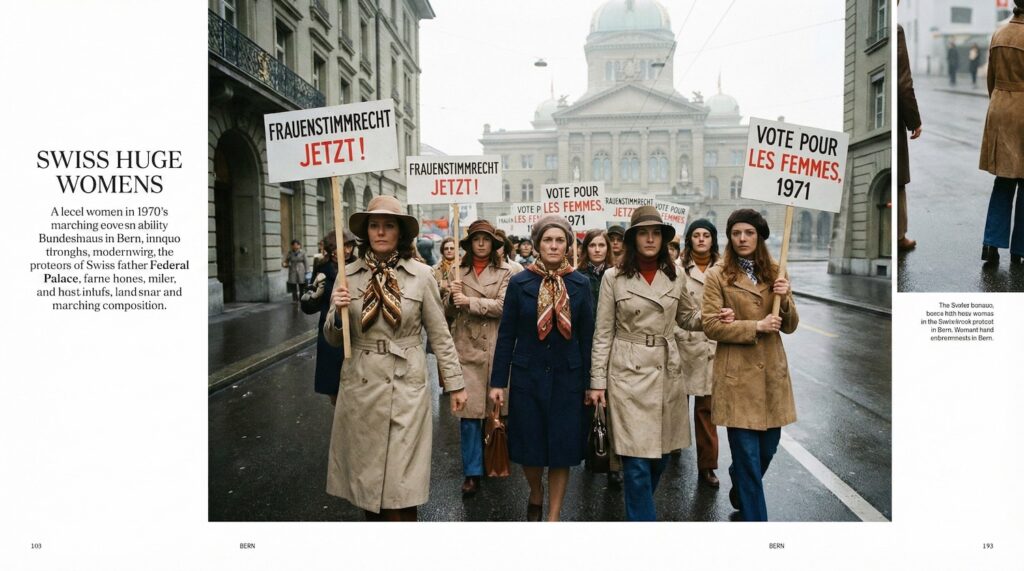
To understand why Switzerland is not in the EU, start with one grey Sunday in December 1992.
At that time, the Federal Council wanted in. In May 1992, it signed the treaty on the European Economic Area. A few weeks later, on 20 May, it even sent Brussels a formal request to join the European Community. Most politicians and business leaders backed the plan.
Voters had other ideas. Turnout hit 78.7%, one of the highest in modern Swiss history. The EEA treaty failed with 50.3% against, a gap of about 24,000 votes out of 3.5 million. Most cantons said no as well.
A country split down the middle
The map told an even sharper story. The French-speaking cantons voted yes, often by big margins. Most German-speaking cantons, together with Italian-speaking Ticino, voted no. Journalists dusted off an old word for the gap: the Röstigraben.
Leading the no campaign was Christoph Blocher, a chemicals boss turned politician. He framed the vote as a fight for Swiss independence. And, frankly, he won the argument for a generation.
The letter that sat in a drawer for 24 years
Here’s a detail most people have never heard. After the EEA defeat, nobody withdrew the membership request. It simply sat in a Brussels drawer, frozen. Only in 2016 did parliament ask the government to take it back formally. By then, even most Swiss had forgotten it existed.
Plan B: Europe à la carte
With membership off the table, Bern switched to a new method. Instead of one big treaty, it would sign many small ones, sector by sector. That became the bilateral way.
Both sides signed the first package, known as Bilaterals I, in 1999. Voters approved it in May 2000 with 67.2%, and it came into force in 2002. It covered seven areas, including air and road transport, farm trade, research and, most importantly, the free movement of people. The road deal, for instance, let Switzerland charge a fee on heavy lorries, and that money helps pay for new rail tunnels such as the Gotthard Base Tunnel.
The guillotine clause
There was a catch, and the EU designed it on purpose. The seven agreements came with a “guillotine clause”. If Switzerland cancelled one, all seven would fall. So a vote against free movement would also cut off market access for Swiss exporters. That clause still shapes every Swiss debate about migration.
A second package followed in 2004. Its best-known part brought Switzerland into Schengen and the Dublin asylum system. Voters approved that in 2005 with 54.6%. Since December 2008, there have been no routine passport checks on land borders with Switzerland’s EU neighbours.

However, Schengen does not mean the border has disappeared. Switzerland is not in the EU customs union. Customs officers can still stop your car and check what you’re carrying, especially cheese, meat and wine above the duty-free limits. Anyone who has driven from Basel into Germany with a full boot knows the feeling.
Why the Swiss keep saying no to EU membership
On paper, the case for joining looks strong. The EU is by far Switzerland’s biggest trading partner. Around half of Swiss goods exports go there, and roughly 400,000 people cross the border from EU countries to work in Switzerland every day.
So why is Switzerland not in the EU? In my view, it comes down to three things, and money is the least important of them.
1. Direct democracy would shrink
This is the big one. Swiss citizens vote on national issues about four times a year. EU membership would put EU law above many of those decisions. For a country where direct democracy is part of national identity, that feels like surrender.
2. Neutrality and sovereignty
Second, many Swiss see EU membership as a threat to their independence and to Swiss neutrality. The EU is not a military alliance. Still, its common foreign policy would limit how freely Bern can act.
3. The Swiss are already doing fine
Finally, there’s the simple fact that Switzerland is richer than almost every EU member. Wages are higher, public debt is lower, and the Swiss franc is one of the world’s safe-haven currencies. Many voters ask a blunt question: why fix what works?
Fifty years of Swiss votes on Europe
The result shows up clearly at the ballot box. In 2001, an initiative called “Yes to Europe” asked for immediate membership talks. Voters crushed it with 76.8% against, and not a single canton supported it. Since then, no serious party has pushed for membership.
Fifty years of Swiss votes on Europe: the share for the pro-Europe side
Blue means the pro-Europe side won. For anti-EU initiatives, the bar shows the “no” vote.
Look closely at the chart, though. The Swiss say no to membership, but they usually say yes to practical deals with the EU. That split is the whole story of Swiss European policy.
The free movement fights
If the bilateral way has a weak spot, it’s immigration. Free movement lets EU citizens live and work in Switzerland, as long as they have a job or enough money. It also lets the Swiss do the same across the EU.
For many voters, though, the growth feels too fast. In February 2014, they approved the “Against mass immigration” initiative with just 50.3%. It demanded quotas for EU workers, which the EU rejected outright. Parliament eventually passed a soft version that favours local job seekers without breaking the treaty.
Two more tests followed. In 2020, voters rejected a plan to end free movement by 61.7%. Then, in June 2026, they turned down the “No to ten-million Switzerland” initiative, with 54.8% voting no. Each time the result was closer than Brussels would like, and each time the treaties survived.
Quick caveat here. None of these votes was really about the EU as such. They were about housing, traffic and crowded trains. Yet Brussels hears every one of them as a vote on Europe.
From broken talks to the 2026 deal
By the 2010s, the EU had grown tired of managing Switzerland through more than a hundred separate deals. It wanted one framework that would update Swiss rules as EU law changed. Talks on an “institutional framework agreement” dragged on for seven years.
Then, on 26 May 2021, the Swiss government walked away. The EU hit back. It had already let the equivalence of the Swiss stock exchange lapse in 2019. Now it downgraded Switzerland in the Horizon Europe research programme, and some trade deals stopped being updated.
A second try: the Switzerland–EU package
Both sides returned to the table in 2024. Talks closed in December 2024, and the two sides signed the new package, often called Bilaterals III, on 2 March 2026. Here’s what it does:
- it keeps the existing market-access deals up to date with EU law, but with Swiss exceptions;
- it sets up a dispute system, with an arbitration panel and a role for the EU Court of Justice on questions of EU law;
- it adds a safeguard clause that lets Switzerland limit immigration in serious cases;
- it creates new agreements on electricity, food safety and health;
- it brings Switzerland back into EU research programmes, including Horizon Europe from 2025 and Erasmus+ from 2027.
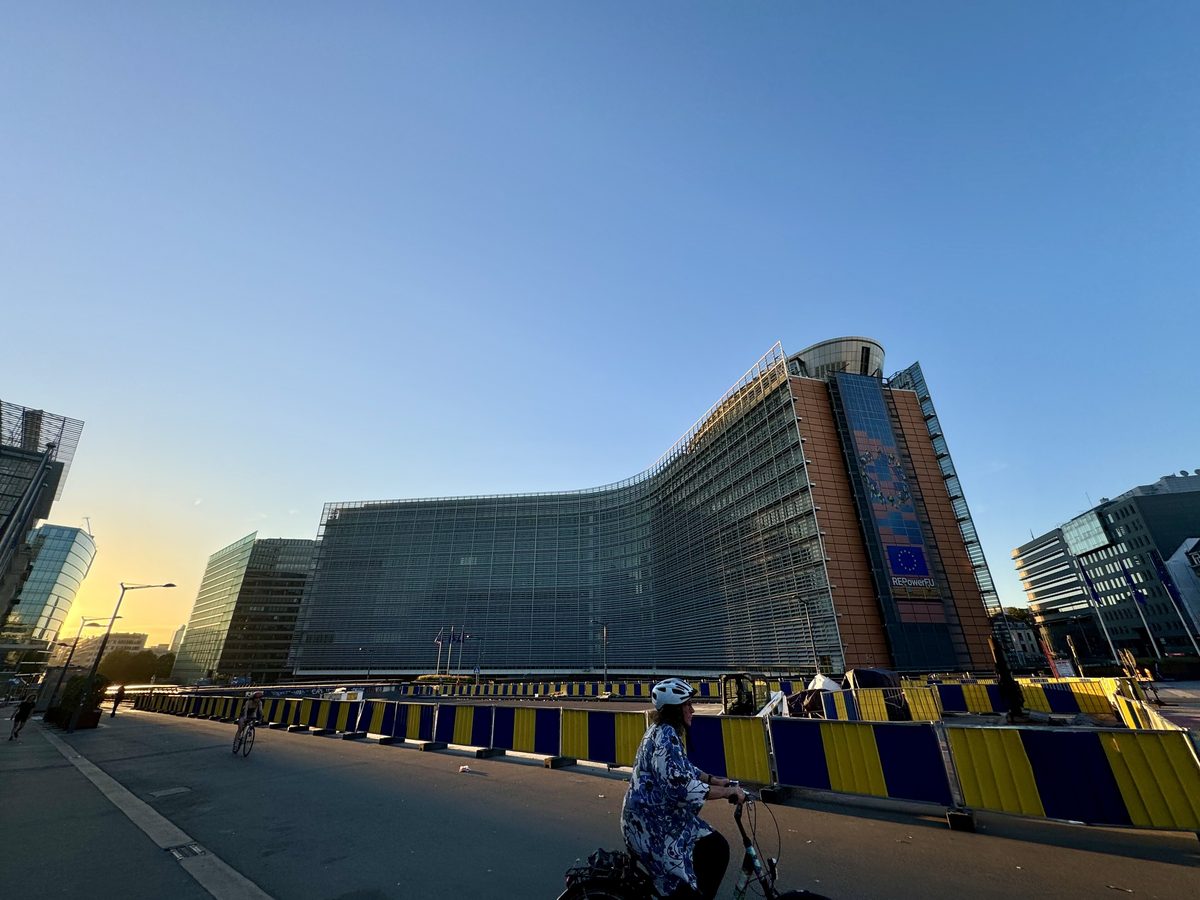
In return, Switzerland pays more toward the EU’s poorer regions. The Swiss contribution rises to CHF 350 million a year for 2030 to 2036, up from CHF 130 million a year in the transition period.
The fight over the vote
Now the battle moves home. The Council of States began its big debate on the package on 28 September 2026. Parliament is unlikely to finish before early 2027.
The key fight is about the kind of vote. Bern’s government wants an optional referendum, where a simple majority of voters decides. By contrast, the Swiss People’s Party wants a mandatory one, which would also need a majority of cantons. That rule could let small rural cantons block the deal. Most observers expect a national vote in 2027 or 2028.
Switzerland, Norway or the UK: three ways to live next to the EU
Switzerland is not the only European country that stays outside. Norway joined the EEA instead, while the UK left the EU in 2020 and now relies on a trade deal. Here’s how the three models compare with full membership.
| Feature | Switzerland (bilateral deals) | Norway (EEA) | United Kingdom (trade deal) | EU member, e.g. Austria |
|---|---|---|---|---|
| EU member | No | No | No, left in 2020 | Yes |
| Single market | Partly, sector by sector | Yes, most of it | No, tariff-free trade only | Yes |
| Customs union | No | No | No | Yes |
| Schengen | Yes | Yes | No | Yes |
| Free movement of people | Yes | Yes | No | Yes |
| Takes on EU law | In covered sectors | Most single-market law | No | All of it |
| Pays toward the EU | Cohesion contribution | EEA grants | Programme fees only | Full budget share |
| Votes on EU laws | No | No | No | Yes |
| Currency | Swiss franc | Norwegian krone | Pound sterling | Euro |
Seen side by side, the Swiss model sits in the middle. It gets more market access than the UK, but less than Norway. It also keeps more control than Norway, at the cost of constant negotiation. That trade-off is the price of staying out.
Will Switzerland ever join the EU? My verdict
Not in the foreseeable future. Surveys such as ETH Zurich’s yearly security study keep finding the same thing: the Swiss want close economic ties with the EU, without joining it. No major party campaigns for membership. Even the most pro-European Swiss politicians now focus on making the bilateral way work, not on replacing it.
The real question is smaller, and more urgent. Will voters accept Bilaterals III? If they do, Switzerland stays out of the EU but locks in close ties for years. If they refuse, the old treaties will slowly age, and the relationship will drift.
My guess? The deal passes, narrowly, and the Swiss keep doing what they’ve always done: staying independent on paper while living as Europeans in practice.
For more on the forces behind that choice, read our history of why Switzerland is neutral and our explainer on how Swiss direct democracy works. Our Swiss history timeline also puts every EU vote in context, alongside 700 years of Swiss history. And if you’re curious how an EU gun law ended up on a Swiss ballot, see our piece on Swiss gun laws.
Frequently asked questions: is Switzerland in the EU?
Is Switzerland part of the EU?
No. Switzerland is not an EU member and has never been one. Instead, it works with the EU through around 20 main agreements and more than 100 smaller ones. A new package of deals, signed in March 2026, now awaits approval by parliament and voters.
Does Switzerland use the euro?
No. The official currency is the Swiss franc (CHF). Many shops, hotels and stations near the border accept euros, but they set their own rate and usually give change in francs.
Do I need a passport to enter Switzerland from the EU?
Switzerland is in Schengen, so there are no routine passport checks on land borders with its EU neighbours. Still, you must carry a valid passport or ID card. Customs officers can also stop you and check your goods.
Can EU citizens live and work in Switzerland?
Yes. Under the free movement agreement in force since 2002, EU citizens can move to Switzerland if they have a job or enough money to live on. They must register with their local commune and take out Swiss health insurance.
Why did Switzerland not join the EU?
Mainly to protect direct democracy and independence. Voters rejected the EEA in 1992 and crushed an initiative for membership talks in 2001. Many Swiss also feel their country already does well outside the EU.
Is Switzerland in the EEA or EFTA?
Switzerland belongs to EFTA, which it co-founded in 1960, but not to the EEA. Its EFTA partners Norway, Iceland and Liechtenstein are all in the EEA.
When will the Swiss vote on the new EU deal?
Probably in 2027 or 2028. The Council of States began debating the package on 28 September 2026, and parliament is not expected to finish before early 2027. A key open question is whether the deal will also need a majority of cantons.
Sources and further reading
- FDFA Europe Division: The Switzerland–EU package (Bilaterals III)
- Swiss European policy: popular votes and chronology (FDFA)
- swissinfo.ch: The vote on European membership that ignited the Swiss People’s Party
- Federal Council factsheet: The Swiss contribution (March 2026)
- FDFA: Agreement on Swiss participation in EU programmes
- bluewin.ch: The major debate on the new EU treaties begins in the Council of States
Last updated 2 October 2026. Featured photo: Tony Webster, Wikimedia Commons, CC BY 2.0.