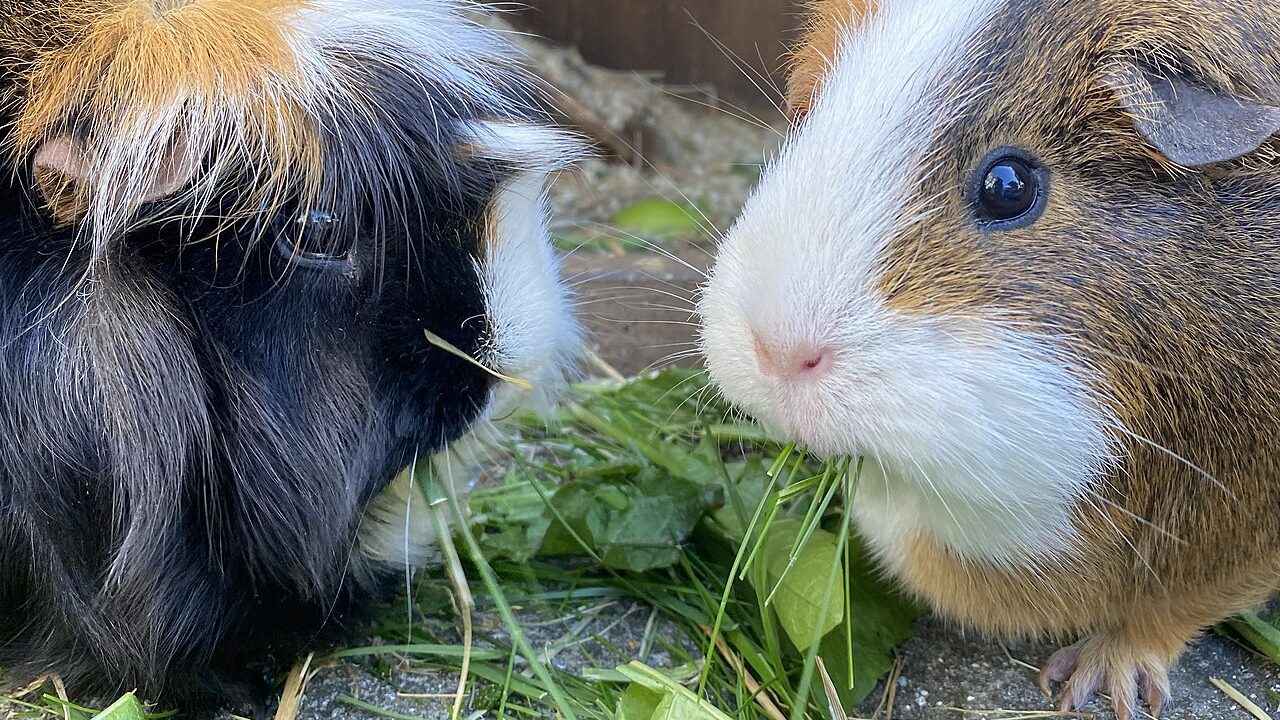
Picture two guinea pigs called Fluffy and Bruno. They share a hutch, a hay rack and a lifetime of squeaking whenever the fridge door opens. One morning, Bruno, aged six, does not wake up. In most countries, that is simply a sad day. Under the Switzerland guinea pig law, it is also a legal problem, because Fluffy may not live alone.
The short answer
Yes. In Switzerland, keeping a single guinea pig breaks federal law.
Since 1 September 2008, the Animal Protection Ordinance (Tierschutzverordnung, TSchV) has required guinea pigs to live in groups of at least two. On top of that, Article 13 obliges owners of any social species to give their animals contact with their own kind. When one of a pair dies, the survivor needs a new companion. To break the endless cycle of buying young replacements, a breeder near Zurich was leasing out guinea pigs by 2011.
The obvious fix creates a new problem. Buy a young companion, and when Fluffy dies, the newcomer is alone in turn. Each replacement outlives the last, and the owner ends up in a loop that can run for decades. How Swiss owners escape it says a lot about the Switzerland guinea pig law, and about some of the world’s most detailed animal welfare rules.
Sources: Animal Protection Ordinance (TSchV), Annex 2; swissvotes.ch; Animal Protection Act (TSchG), Art. 28.
The Switzerland guinea pig law: what the ordinance says
The core of the Switzerland guinea pig law is short. Article 13 of the Animal Protection Ordinance, in force since 1 September 2008, tells owners to give animals of social species adequate social contact with their own kind. For guinea pigs, an annex then spells it out: "Die Tiere sind in Gruppen von mindestens 2 Tieren zu halten." The animals must live in groups of at least two.
The same annex sets the minimum flat. Two adult guinea pigs need an enclosure of at least 0.5 m², and each extra adult needs another 0.2 m². Raised platforms the animals can walk on count for up to a third of that floor. The enclosure also needs litter, a shelter big enough for all the animals at once and something to gnaw. Their diet must include hay or straw and food that contains vitamin C.
There is a quirk worth savouring here. The ordinance's list of domestic animals names rabbits, dogs and cats, but not guinea pigs. Legally, Fluffy therefore sits in the annex for wild animals, a few rows away from tenrecs and hamsters.
So can you own one guinea pig in Switzerland? Only as an exception. Article 14 allows departures from the keeping rules where medical reasons require them, for example while a sick animal recovers on its own. Otherwise, a single guinea pig breaks the law in Switzerland, however well you feed it.
Why guinea pigs, of all animals?
The choice is less eccentric than it looks. Guinea pigs descend from wild cavies of South America, which live in small groups, and the animals were domesticated in the Andes thousands of years ago. They talk constantly: the high "wheek" that greets a rustling bag of vegetables is only one of many calls they use with each other.
A human can feed a guinea pig, but cannot groom it, answer it in its own language or sleep pressed against it. That is the gap the law tries to close. It also explains why a rabbit, a very different animal, does not count as a substitute companion for a guinea pig, even though the two were once commonly kept together.
Dignity of the creature: the constitution behind the cage
The guinea pig rule did not come from nowhere. Swiss animal law grew in stages, often through the ballot box, and the Swiss system of direct democracy explains much of its shape.
The first stage is an uncomfortable one. In 1893, Swiss men voted on the first popular initiative under the right to amend the constitution introduced two years earlier, and 60.1% accepted a ban on slaughter without prior stunning. Historians see antisemitism behind the campaign, which targeted Jewish ritual slaughter. Eighty years later, in 1973, 84% of voters made animal protection a federal task, while the cantons kept the job of enforcing it.
The decisive step came in 1992. On 17 May, 73.8% of voters accepted a constitutional article on reproductive and gene technology. Almost in passing, it obliged lawmakers to take account of the "dignity of the creature" when regulating the genetic material of animals and plants. That phrase now sits in Article 120 of the Federal Constitution. According to the Foundation for the Animal in Law (TIR), Switzerland is the only country that protects animal dignity at constitutional level.
Lawmakers then gave the idea teeth, and the Switzerland guinea pig law grew out of it. Since 2003, the Civil Code has stated plainly that "animals are not objects". The Animal Protection Act of 2005 names dignity in its very first article and defines it as the animal's inherent worth. Pain is not the only violation: humiliation and excessive instrumentalisation count too. That is why loneliness can be a legal problem even when an animal is warm, fed and unhurt.
A short timeline of Swiss animal law
The guinea pig rule is the latest step in a long series. Tap through the years below.
From slaughter rules to guinea pigs
Tap a year to see how Swiss animal law grew.
The first popular initiative
Voters accept the first popular initiative under the new right to amend the constitution, 60.1% in favour, banning slaughter without prior stunning. Historians link the campaign to antisemitism, as it targeted Jewish ritual slaughter.
Animal protection becomes federal
With 84% in favour, voters make animal protection a federal task. The cantons keep the job of enforcing it.
The dignity of the creature
A constitutional article on gene technology, accepted by 73.8%, obliges lawmakers to take account of the “dignity of the creature” in animals and plants.
Animals are not things
The Civil Code adds Article 641a: “Animals are not objects.” Property law still applies where no special rule exists.
The new law takes effect
On 1 September, the Animal Protection Act and its ordinance enter into force. Guinea pigs and budgies must now live in groups.
Rent-a-pig makes headlines
A breeder near Zurich who leases guinea pigs to owners whose pet has lost its partner makes headlines around the world.
AMICUS for dogs
A national database, AMICUS, replaces the old system for registering microchipped dogs.
Lobsters get stunned
From 1 March, crustaceans must be stunned before they are killed, and live lobsters may no longer travel on ice.
Courses return in Zurich
From 1 June, Zurich requires a practical course for almost every dog and a theory course for first-time owners. The federal government had dropped its own courses in 2017.
Rent-a-pig: the matchmaker of Hadlikon
The 2008 rules left owners like Fluffy's with an awkward choice. Priska Küng, a primary school teacher and hobby breeder, offered a third way. In 2011, she chaired IG Meerschweinchen, the umbrella body of the Swiss guinea pig breeding clubs, and kept about 80 guinea pigs at home in Hadlikon, a village in the municipality of Hinwil near Zurich. She was already leasing out companions for lonely widowers, and when the Tages-Anzeiger reported on the service that year, she received ten calls within a few days.
As Der Spiegel and the dpa news agency reported that year, the arrangement worked like this:
- The owner contacted her when one of a pair died.
- She chose a companion to suit the survivor. A lively youngster can tire an elderly guinea pig, so she sometimes chose an older animal.
- The owner paid 50 francs for a castrated male or 60 for a female, which she called a deposit.
- When the survivor died, the companion went back to her herd, and the owner got half the money back.
Küng never passed leased animals on to other customers. They stayed with her for the rest of their lives, or they moved permanently to a new home. She admitted that the hobby cost her more than it earned. Even so, the idea of "rent-a-pig" soon travelled from Swiss newspapers to Der Spiegel, ABC News and, two years later, American public radio.
We could not reach the service's website in October 2026, so it may no longer operate. The problem it solved has not gone away. Owners can still ask breeders or rescues for an older companion, or pair their survivor with another single guinea pig that needs a home.
Solving the widow problem today
The leasing idea points to a better habit. Instead of buying a baby as a reflex, owners can look for an animal close in age to the survivor, so that both reach old age together. Breeders and rescues sometimes have adult or older guinea pigs that need a home, and two single survivors can sometimes be paired with each other.
Introductions take some care. Guinea pigs usually meet best on neutral ground, with enough space and hiding places for both, and a vet can advise on health checks first. None of this is written into the ordinance. It simply follows from the rule that a guinea pig needs company, for the rest of its life.
Beyond guinea pigs: the social species list
The Switzerland guinea pig law is only the most famous case. The ordinance names other animals that may not live alone, and it softens the rules for some popular pets. This table compares the main ones.
| Species | Alone allowed? | What the rule says | Legal basis |
|---|---|---|---|
| Guinea pig | No | Groups of at least two; 0.5 m² for two, shelter for all, hay and vitamin C | TSchV Annex 2, Table 1 |
| Budgerigar and other parakeets | No | Groups of at least two; perches of different thickness, bird sand | TSchV Annex 2, Table 2 |
| Rabbit | Adults: only with contact | Young never alone before eight weeks; a lone adult must at least smell and hear other rabbits; groups recommended | TSchV Art. 13 and 64; BLV |
| Cat | Yes, with conditions | Daily contact with people, or visual contact with other cats | TSchV Art. 80 |
| Dog | Yes | Enough daily contact with people and, where possible, other dogs; microchip and AMICUS | TSchV Art. 70 |
| Horse, donkey, mule | Not in isolation | Must see, hear and smell one of its own kind (mules and hinnies count for both) | TSchV Art. 59 |
| Goldfish | Not named | General social-species rule; tank with cover and a day-night rhythm | TSchV Art. 13, Annex 2 Table 8 |
Based on the Animal Protection Ordinance (TSchV) as in force on 1 February 2026. Simplified summary, not legal advice.
Budgies, rabbits and goldfish
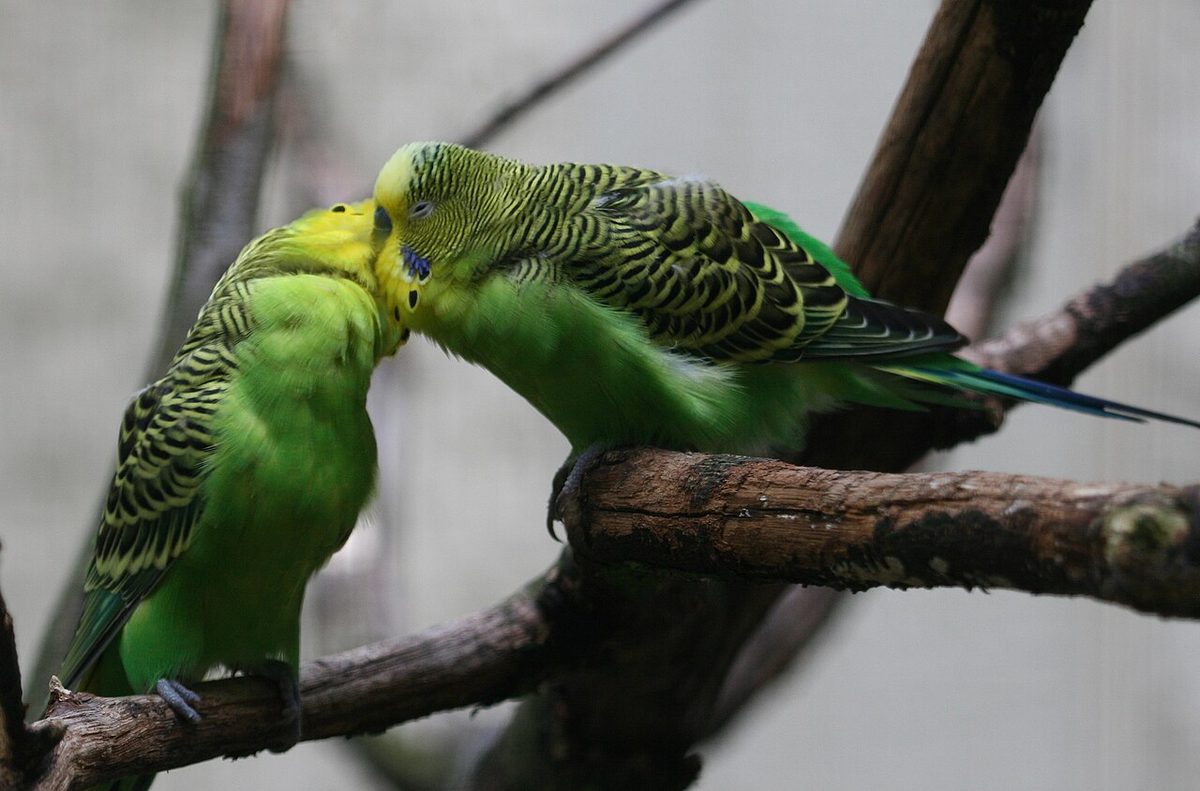
Budgerigars face exactly the same rule as guinea pigs: groups of at least two. For up to four birds, the cage needs at least 0.24 m² of floor and 0.12 m³ of space, plus springy perches of different thickness and bird sand.
Rabbits are a softer case. Owners may not keep young rabbits alone during their first eight weeks. The federal veterinary office reads the general rule strictly: an adult rabbit may live alone only if it can at least smell and hear other rabbits in the same room. It recommends groups wherever possible.
Goldfish appear nowhere by name. They are sociable shoaling fish, though, so the general rule in Article 13 arguably covers them. Indoor aquariums must also follow a day-night rhythm, offer cover and hiding places, and must not be visible from every side.
Cats, dogs and horses
The famous cat rule is milder than its reputation. Article 80 says that a cat kept on its own must have daily contact with people or visual contact with other cats. Nothing in the ordinance forces indoor cats to live in pairs. The ordinance does, however, ban declawing outright.
Dogs need enough contact with people every day and, where possible, with other dogs. Horses, donkeys and mules must be able to see, hear and smell another of their kind. A lone horse in a distant field therefore breaches Article 59.
Cat ladders, the steep wooden stairs that climb many Swiss facades, are not a legal requirement at all. They are a private answer to an urban problem, and the photographer Brigitte Schuster documented them in her book Arcatecture.

Is your pet living legally?
Test your own household against the ordinance. The checker covers seven common animals and the key rule for each.
Is your pet living legally in Switzerland?
Pick an animal, enter how many you keep and answer one question.
1. What do you keep?
3. Is it a young rabbit under eight weeks?
3. Do the fish have hiding places and a day-night light rhythm?
3. Does your cat get daily contact with people?
3. Is your dog in contact with people every day?
3. Can it see, hear and smell a suitable companion (for a horse: a horse, mule or hinny)?
Lobsters, fish and dogs: the newer rules
A decade after the guinea pig law took effect, Switzerland widened the circle again. Since 1 March 2018, crustaceans such as lobsters must be stunned before they are killed. They may not travel directly on ice or in ice water, and aquatic species must be kept in water. A 2025 revision narrowed the approved stunning method for crustaceans to a single one: electricity.
The rules already covered fish. Vertebrates may only be killed after stunning, and the ordinance lists suitable methods for fish, such as a strong blow to the head. Flushing a live fish down the toilet meets none of them.
Dogs carry the most paperwork. Each dog needs a microchip and an entry in AMICUS, the national dog database, which replaced the older register in 2016. Owners also pay an annual dog tax, usually to their municipality. Training rules show how cantonal independence shapes everyday laws across all 26 Swiss cantons. The federal course requirement disappeared in 2017. Since 1 June 2025, however, Zurich has required at least six practical lessons for almost every dog, plus a theory course for owners without recent experience with dogs.
Five myths about Swiss pet law
The guinea pig story travels well, and it tends to grow on the way. Here is what the law in Switzerland does and does not say.
Myth 1: you can go to prison for owning one guinea pig. Not for that alone. Under the guinea pig law in Switzerland, breaking the keeping rules is punished with a fine of up to 20,000 francs. Prison is reserved for cruelty, such as serious neglect.
Myth 2: Swiss voters banned lonely guinea pigs. They did not. Voters set the principle of animal dignity in 1992. Parliament then passed the Animal Protection Act in 2005, and the Federal Council, not the electorate, wrote the guinea pig rule into the ordinance in 2008.
Myth 3: indoor cats must live in pairs. No such rule exists. A single cat is fine if it has daily contact with people or can see other cats.
Myth 4: the animal protection rules name goldfish. They do not. Goldfish fall under the general rule for social species and the aquarium standards, but no provision of the ordinance mentions them by name.
Myth 5: every pet must be registered. Of the usual household pets, only dogs must go into a national register, AMICUS. Horses and donkeys are registered too, but small pets are not. Nobody keeps a list of Swiss guinea pigs, which is one more reason why enforcement depends on people noticing.
Who enforces it? Cantonal vets, not hutch patrols
No inspector knocks on doors to enforce the Switzerland guinea pig law by counting pets. Under the Constitution, the cantons enforce federal animal law, which in practice means each cantonal veterinary office, led by the cantonal vet (Kantonstierarzt). When an office finds animals neglected or kept in completely unsuitable conditions, the Animal Protection Act tells it to step in immediately. It can seize the animals, and it files a criminal complaint for punishable breaches, except in minor cases.
An office that finds a problem can order the owner to fix it within a deadline, for example by finding a companion or enlarging the enclosure. Fines come through separate criminal proceedings, which the authorities may skip in minor cases. For a lone guinea pig, the realistic outcome is not punishment but a second guinea pig.
The penalties are real. Breaking the rules on keeping animals can cost a fine of up to 20,000 francs. Intentional cruelty, which includes neglect and disregarding an animal's dignity, can bring up to three years in prison.
Most cases, however, start with a tip. Anyone can report a concern to the cantonal veterinary office, and in a country known for Switzerland's strict Sunday quiet hours and neighbour etiquette, neighbours do. Private vets, by contrast, have no general federal duty to report neglect. Their main duty to report concerns dogs that have seriously injured someone or show excessive aggression. Shops play a quieter role. Anyone who sells pets commercially must give buyers written information on the species' needs and the relevant law.
Swiss voters also know where to stop. In 2010, 70.5% of voters and every canton rejected an initiative that would have required each canton to appoint an animal-welfare lawyer. In 2022, a ban on factory farming failed, with 62.9% voting against.
What the Switzerland guinea pig law says about the Swiss
Seen from abroad, the Switzerland guinea pig law looks like a joke about bureaucracy. Read closely, it is something else: a society deciding that an animal's need for company counts, even though the animal can never file a complaint.
The same habit of shared responsibility runs through other Swiss rules. It shapes Swiss gun laws, and it explains the law that guarantees every resident a place in a nuclear shelter. None of these rules is sentimental. Each one simply asks the individual to carry a small cost for the sake of others.
There is also something quietly practical about it. A rule that costs owners a second hutch and a bag of extra hay prevents a great deal of invisible suffering, at almost no cost to the state.
For owners, the message is plain. Take a social animal into your home, and you take on its social life too. Fluffy, for one, would agree.
Frequently asked questions about the Swiss guinea pig law
Is it illegal to have one guinea pig in Switzerland?
Yes. The Swiss Animal Protection Ordinance requires guinea pigs to live in groups of at least two, and Article 13 requires social contact with other members of the species for all social animals. This rule has applied since 1 September 2008.
What happens if my guinea pig’s partner dies?
The survivor needs a new companion. Owners can adopt or buy another guinea pig, ask a rescue for a suitable older animal, or use a leasing arrangement like the one a breeder near Zurich was offering by 2011, where the companion returns after the survivor dies.
Can you rent a guinea pig in Switzerland?
A breeder in Hadlikon, in the municipality of Hinwil near Zurich, made headlines in 2011 by leasing guinea pigs as companions. Owners paid a deposit of 50 to 60 francs and got half back when they returned the animal. We could not confirm whether the service still runs.
What is the “dignity of the creature” in Swiss law?
It is a principle that voters wrote into the Federal Constitution in 1992, in an article on gene technology. The Animal Protection Act defines an animal’s dignity as its inherent worth, which is disregarded when an animal suffers strain that no overriding interest can justify.
Can I keep a single cat in Switzerland?
Yes. Under Article 80 of the Animal Protection Ordinance, a cat kept on its own must have daily contact with people or visual contact with other cats. There is no general rule that indoor cats must live in pairs.
Can I keep one budgie in Switzerland?
No. Budgerigars and other small parakeets must live in groups of at least two, in a cage or aviary with at least 0.24 m² of floor space for up to four birds.
Is boiling lobsters alive illegal in Switzerland?
Yes. Since 1 March 2018, crustaceans such as lobsters must be stunned before they are killed. They may not travel directly on ice or in ice water, and aquatic species must be kept in water.
What is the fine for breaking Swiss animal keeping rules?
Breaking the rules on keeping animals can bring a fine of up to 20,000 francs under Article 28 of the Animal Protection Act. Intentional cruelty, including neglect, can bring up to three years in prison.
Sources and further reading
Laws, votes and official pages
- Federal Constitution, Art. 80 and Art. 120 (Fedlex)
- Animal Protection Act (TSchG), SR 455 (Fedlex)
- Animal Protection Ordinance (TSchV), SR 455.1 (Fedlex)
- Civil Code, Art. 641a: animals are not objects (Fedlex)
- swissvotes.ch: the 1893 vote on slaughter without stunning
- swissvotes.ch: the 1973 vote on animal protection
- swissvotes.ch: the 1992 vote on reproductive and gene technology
- Foundation for the Animal in Law (TIR): animals in the Federal Constitution
- Canton of Zurich: rules for dog owners since 1 June 2025
- Identitas AG: AMICUS information flyer (2015)
- BLV fact sheet: social contact for rabbits (PDF, 2016)
Laws checked in October 2026 against the versions in force on Fedlex. Rules change, so check the current text before relying on it.
Reporting and further reading
- ABC News / Der Spiegel (2011): rent-a-guinea-pig service takes off
- Ärzte Zeitung / dpa (2011): rented guinea pigs cheer up lonely companions
- The World / PRI (2013): rent a guinea pig in Switzerland
- SRF (2018): lobsters may only be cooked after stunning
- swissinfo.ch (2025, in German): what the love of cat ladders says about the Swiss
- Colossal (2019): Brigitte Schuster’s book on Swiss cat ladders
This article is general information, not legal or veterinary advice.