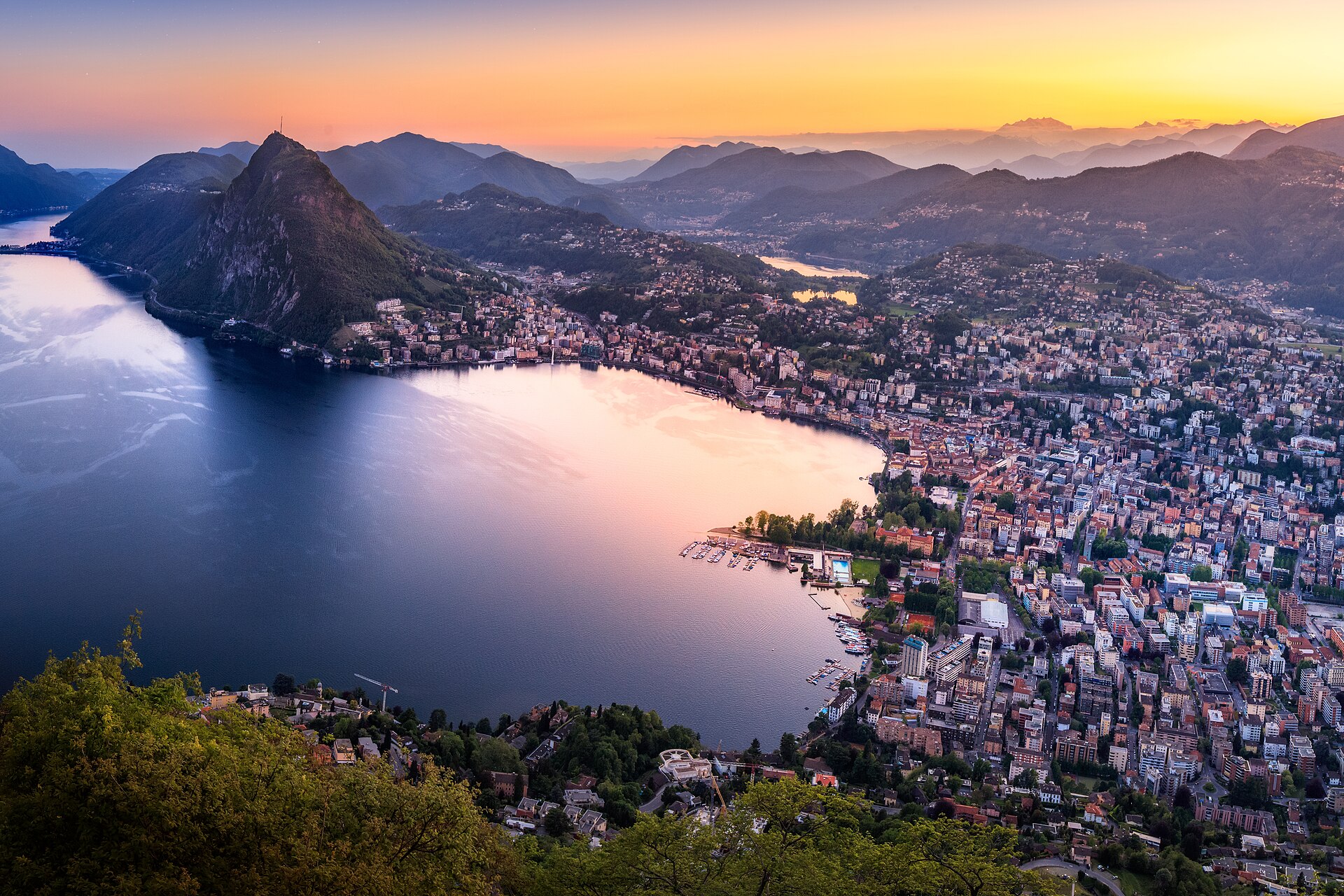
Lugano is not Switzerland pretending to be Italy. It is Ticino being itself: an Italian-speaking Swiss city where palms line an Alpine lake, stone villages cling to forested slopes and efficiency coexists with a slower public rhythm. The surprise is not that it feels southern. It is how unmistakably Swiss the southernness remains.
Quick answer: The clearest cultural contrast in Switzerland: Italian language, lake light and Alpine structure.
Allow: 2 full days. Best window: April–June and September–October. Main trade-off: Summer heat, seasonal boats and expensive lakefront rooms.
Language: Italian; German and English common in tourism. Car needed: No—the centre and every itinerary below work by foot and public transport.
What does Lugano cost in 2026?
Accommodation is the variable that changes the trip most. These are planning ranges in Swiss francs, not promises of availability. They were checked on 30 October 2026; festivals, fairs, weekends, views and cancellation terms can move the same room far outside the range.
| Accommodation type | Planning range per night | How to read it |
|---|---|---|
| Hostel / dorm bed | CHF 45–80 | Per person; supply varies |
| Budget private room | CHF 100–160 | Per room; usually outside the prime view |
| Typical mid-range double | CHF 170–260 | Per room; date and event sensitive |
| Upper-upscale / landmark | CHF 350–600+ | Views, major events and suites can exceed this |
Price evidence: Lugano hotel comparison, October 2026. The ranges above combine that benchmark with the city’s current accommodation mix; always price your exact dates.
Daily spending comparison, excluding the hotel
The chart is a planning model, not an average: economy assumes bakery or supermarket meals and mostly free sights; comfort includes a restaurant meal and one paid attraction; premium allows two restaurant meals, drinks and a major paid experience. Intercity trains and mountain railways are excluded.
Interactive Lugano trip-cost calculator
Formula: one room per two travellers (rounded up) × nightly room estimate, plus the daily per-person estimate above. Flights, intercity rail and major mountain excursions are not included.
Where to stay in Lugano
| Area | Best for | Trade-off |
|---|---|---|
| Centre | First visit and restaurants | Flat, convenient and polished |
| Paradiso | Lake views and San Salvatore | Resort hotels; short walk or bus |
| Cassarate | Value and Monte Brè access | Local feel east of centre |
| Castagnola | Quiet villas and views | Hilly and premium |
| Gandria | Atmosphere and retreat | Few services; seasonal transport matters |
The 10 best things to do in Lugano, ranked by meaning—not hype
Filter the reference table:
| # | Place or experience | Type | Time | Cost | Why it matters |
|---|---|---|---|---|---|
| 1 | Piazza della Riforma | Local History | 45 min | Free | The civic living room rather than a monument |
| 2 | Santa Maria degli Angioli | Art History | 45 min | Free | Luini's Renaissance fresco behind a plain facade |
| 3 | Parco Ciani | Outdoors Family | 1–2 h | Free | Palms, lake and mountains in one public park |
| 4 | Gandria | History Local | 3–5 h | Transport | Stone lanes that make old Ticino tangible |
| 5 | Monte Brè | Outdoors Family | 3–5 h | Paid | Fast access to ridge walks and village views |
| 6 | Monte San Salvatore | Outdoors Family | 3–5 h | Paid | The classic southern panorama |
| 7 | LAC | Art | 1–3 h | Mixed | The modern cultural counterpoint to the centre |
| 8 | Museo delle Culture | Art History | 2 h | Paid | Global collections in a lakeside villa setting |
| 9 | Lake boat | Outdoors Family | 1–4 h | Paid | The practical link to villages and viewpoints |
| 10 | Hermann Hesse Museum | History Art | Half day | Paid | A literary extension in nearby Montagnola |
Lugano history in five turning points
| Date | What changed |
|---|---|
| 9th century | Lugano appears in surviving written records |
| 1513 | The Swiss Confederates consolidate control of the region |
| 1803 | Lugano becomes part of the new canton of Ticino |
| 1882 | The Gotthard railway transforms north–south connections |
| 2015 | LAC opens, strengthening the city's cultural role |
A one-day Lugano itinerary that avoids backtracking
| Time | Plan | Why this order works |
|---|---|---|
| 08:30 | Piazza della Riforma and centre | Catch the arcades before they fill |
| 10:00 | Santa Maria and Parco Ciani | Join Renaissance art to lake landscape |
| 12:30 | Ticinese lunch | Choose polenta, risotto or seasonal dishes |
| 14:00 | Boat or path to Gandria | Leave the polished centre for old Ticino |
| 17:30 | Return by boat | See the city from its organising element |
| 19:30 | LAC area and dinner | Finish with contemporary Lugano |
How this page is designed to stay accurate
Stable heritage facts are separated from changing prices and access rules. Costs carry a check date and methodology; official source links remain beside the claim; seasonal services are described without pretending every departure runs daily. Before travel, verify opening hours and transport in the official links at the end of this guide.
Lugano in one line: Choose Lugano for lake light, Italian language and an urban base with immediate access to mountain paths. It offers the strongest cultural contrast in a multi-city Swiss trip.
Best length: one full day; two nights with an excursion. Best approach: on foot, with local public transport for the longer jump.
This is not a list assembled from star ratings. It is a route with a point of view: understand why Lugano became this particular kind of Swiss city, then see its famous places in that light. For the national comparison, start with our guide to the 10 must-visit cities in Switzerland.
Why Lugano feels different
Lugano passed through competing regional powers before joining the Swiss canton of Ticino in the 19th century. Later, finance reshaped its economy, but the older identity survives in arcaded squares, lakeside villages and food built from chestnuts, maize and mountain dairies rather than stereotypes of generic Italian cuisine.
The best things to do in Lugano in one day
Morning: begin with the story
Begin in Piazza della Riforma before cafe tables fill, then wander the compact centre to the church of Santa Maria degli Angioli for Bernardino Luini's Renaissance fresco. Continue through the gardens of Parco Ciani, where mountains frame the lake like stage scenery.
Afternoon: move beyond the postcard
Take the boat or lakeside path toward Gandria. The village is a vertical knot of stone lanes at the water's edge and makes Lugano's relationship with the lake feel older than the city-centre hotels. Return by boat if operating, or choose the funicular to Monte Bre for a high view and village walk.
Evening: see the city become local again
Visit LAC if an exhibition or performance appeals, then eat in the centre or in a grotto-style restaurant outside it. Lugano is at its best after day visitors leave: arcades cool, the lake darkens and the city sounds more Italian than it looks at noon.
Six places that explain Lugano
- Piazza della Riforma: The civic living room rather than a monument to photograph.
- Santa Maria degli Angioli: A major Renaissance fresco behind a restrained facade.
- Parco Ciani: Palms, lake and mountains in one of Switzerland's loveliest parks.
- Gandria: A waterside village that explains old Ticino better than a museum label.
- Monte Bre: A fast route from city streets to ridge paths and broad views.
- LAC Lugano Arte e Cultura: The modern cultural counterpoint to the old centre.
What to eat in Lugano
Look for polenta with braised meat, risotto, minestrone or chestnut desserts, ideally with a Ticino Merlot. A traditional grotto is a style of rustic local restaurant, not a guarantee of quality; choose by menu and local reputation rather than the stone benches alone.
The mistake most visitors make
Do not reduce Lugano to a two-hour lakeside stroll. The contrast between the polished centre and Gandria or the mountain slopes is the experience. Boat and funicular schedules vary by season, so verify the return before committing to a one-way walk.
Best day trip from Lugano
Bellinzona's three UNESCO-listed castles make the strongest history day. Morcote offers another beautiful lakeside village, while Monte San Giorgio is the geological choice.
When to visit Lugano
April to June and September to October bring comfortable walking weather. July and August can be hot and humid; winter is mild by Swiss standards but services and boats are reduced.
Continue through Switzerland's cities
Each city in this series represents a different Switzerland. Compare the other guides rather than collecting them all:
- Chur — Switzerland's oldest-city story
- Zurich
- Lucerne
- Bern
- Geneva
- Basel
- Lausanne
- St. Gallen
- Montreux
- Thun
Frequently asked questions about Lugano
Is Lugano worth visiting?
Yes. Lugano earns a place in a Swiss itinerary when its particular character matches your interests. This guide explains what makes it different from the other major city stops.
How long do you need in Lugano?
One full day covers the route in this guide without rushing. Stay two nights if you want a museum, a slower evening and the nearby excursion: Bellinzona's three UNESCO-listed castles make the strongest history day. Morcote offers another beautiful lakeside village, while Monte San Giorgio is the geological choice.
When is the best time to visit Lugano?
April to June and September to October bring comfortable walking weather. July and August can be hot and humid; winter is mild by Swiss standards but services and boats are reduced.
What should first-time visitors avoid in Lugano?
Do not reduce Lugano to a two-hour lakeside stroll. The contrast between the polished centre and Gandria or the mountain slopes is the experience. Boat and funicular schedules vary by season, so verify the return before committing to a one-way walk.
Sources and further reading
Facts checked 30 October 2026. Opening times, transport and access rules change; verify them with the linked official source before travelling.