Most lists of the best cities in Switzerland quietly mix cities, ski resorts and mountain villages, then describe every stop as “charming.” This guide makes a harder promise: ten genuinely urban places, ten different reasons to go and no suggestion that you should visit all of them.
Switzerland’s cities are small by global standards. That is their advantage. In a single day you can move from a medieval clock tower to a river swim, from a monastic library to a contemporary art installation, or from a Gothic cathedral to vineyards above a lake. The trick is choosing cities that reveal different versions of the country rather than repeating the same old-town photograph.
This is the hub page. Use it to decide which Swiss cities fit your trip; use the ten linked reference guides for neighbourhoods, costs, history, itineraries and attraction-level detail.
Fast answer: first-time visitors should usually combine Lucerne, Bern and Zurich. Culture-led travellers should prioritise Basel. For the largest contrast, add Lugano. For a Lake Geneva route, link Geneva, Lausanne and Montreux.
Swiss city comparison: time, hotel cost and the honest trade-off
| City | Ideal time | Typical mid-range room* | The reason to choose it | The trade-off |
|---|---|---|---|---|
| Zurich | 2 full days | CHF 245 | The strongest all-round urban break: art, design, nightlife, lake life and transport links | Switzerland's highest big-city prices |
| Lucerne | 1–2 full days plus a mountain day | CHF 230 | The easiest first Swiss city, combining an old town, lake and mountain day trips | Heavy day-trip crowds and expensive summer rooms |
| Bern | 1–2 full days | CHF 215 | Switzerland's most coherent historic centre and clearest lesson in Swiss federal identity | The Aare is powerful and never a casual swim |
| Geneva | 2 full days | CHF 240 | Diplomacy, humanitarian history, science and a genuinely local lake culture | Institution tours require planning; weekday hotel demand can spike |
| Basel | 2 full days | CHF 195 | Switzerland's deepest museum city, with architecture and Rhine life in equal measure | Art Basel week can multiply room prices |
| Lausanne | 1–2 full days | CHF 205 | A youthful, vertical city linking Gothic heritage, museums, the Olympics and Lavaux | Poor route planning means repeated steep climbs |
| Lugano | 2 full days | CHF 215 | The clearest cultural contrast in Switzerland: Italian language, lake light and Alpine structure | Summer heat, seasonal boats and expensive lakefront rooms |
| St. Gallen | 1–2 full days | CHF 170 | A quieter heritage city joining medieval manuscripts, Baroque architecture and textile design | Many visitors leave after the abbey and miss the textile story |
| Montreux | 1–2 full days | CHF 220 | Lake scenery, music history, Belle Époque hotels and Chillon Castle | Festival dates cause major price and crowd spikes |
| Thun | 1 full day; 2 nights as an Oberland base | CHF 200 | A relaxed small city with a castle, river culture and immediate lake access | Too often treated as a station on the way to Interlaken |
*Planning midpoint in CHF for a double room, not a live quote. Benchmarks were checked on 30 October 2026 using the city-level sources in each full guide. Major festivals, fairs, summer weekends and lake views can move prices sharply.
Typical mid-range double-room comparison
Interactive Swiss city matcher
Zurich
The strongest all-round urban break: art, design, nightlife, lake life and transport links
Plan: 2 full days · Mid room: ~CHF 245
Lucerne
The easiest first Swiss city, combining an old town, lake and mountain day trips
Plan: 1–2 full days plus a mountain day · Mid room: ~CHF 230
Bern
Switzerland's most coherent historic centre and clearest lesson in Swiss federal identity
Plan: 1–2 full days · Mid room: ~CHF 215
Geneva
Diplomacy, humanitarian history, science and a genuinely local lake culture
Plan: 2 full days · Mid room: ~CHF 240
Basel
Switzerland's deepest museum city, with architecture and Rhine life in equal measure
Plan: 2 full days · Mid room: ~CHF 195
Lausanne
A youthful, vertical city linking Gothic heritage, museums, the Olympics and Lavaux
Plan: 1–2 full days · Mid room: ~CHF 205
Lugano
The clearest cultural contrast in Switzerland: Italian language, lake light and Alpine structure
Plan: 2 full days · Mid room: ~CHF 215
St. Gallen
A quieter heritage city joining medieval manuscripts, Baroque architecture and textile design
Plan: 1–2 full days · Mid room: ~CHF 170
Montreux
Lake scenery, music history, Belle Époque hotels and Chillon Castle
Plan: 1–2 full days · Mid room: ~CHF 220
Thun
A relaxed small city with a castle, river culture and immediate lake access
Plan: 1 full day; 2 nights as an Oberland base · Mid room: ~CHF 200
Fast rail connections that make a sensible itinerary
| Connection | Typical direct-train time | Why combine them |
|---|---|---|
| Zurich ↔ Lucerne | about 41–50 min | The strongest first-trip pairing |
| Zurich ↔ Bern | about 56–70 min | Big-city energy plus UNESCO old town |
| Zurich ↔ Basel | about 53–65 min | Best two-city art route |
| Zurich ↔ St. Gallen | about 1 h | Eastern heritage route |
| Bern ↔ Thun | about 20 min | Easy small-city extension |
| Geneva ↔ Lausanne | about 35–50 min | International city plus youthful lake city |
| Lausanne ↔ Montreux | about 20–30 min | Museums, vineyards and Riviera |
| Zurich ↔ Lugano | about 2 h | Fastest route between language regions |
Times are planning ranges rather than timetable promises. Confirm the exact departure, engineering work and fare with SBB.
How to use this cluster as a reference
- Choose cities here by difference, not fame.
- Open the individual guide for the hotel-cost method, neighbourhood table and attraction filter.
- Use the one-day route as the geographic backbone, then add a second day only for museums, mountains or lake excursions.
- Recheck dynamic prices and opening hours at the official sources linked beside each claim.
Our first-trip trio: Lucerne + Bern + Zurich.
Best culture route: Basel + Zurich + St. Gallen.
Best lake route: Geneva + Lausanne + Montreux.
Best contrast: add Lugano to any German- or French-speaking itinerary.
The 10 must-visit cities in Switzerland at a glance
| # | City | Best for | What makes it different |
|---|---|---|---|
| 1 | Zurich | Best all-round city break | Roman foundations, Dada and lake-swimming culture |
| 2 | Lucerne | Best first Swiss city | Bridges, mountains and moving memorials |
| 3 | Bern | Best old town | UNESCO arcades and understated federal power |
| 4 | Geneva | Best for global ideas | Calvin, humanitarianism, diplomacy and CERN |
| 5 | Basel | Best for art | Museums, humanism, architecture and the Rhine |
| 6 | Lausanne | Best for energy and views | A Gothic hill city descending to the lake |
| 7 | Lugano | Best cultural contrast | Italian-speaking Switzerland with palms and peaks |
| 8 | St. Gallen | Best hidden heritage city | Medieval manuscripts and textile design |
| 9 | Montreux | Best for music and scenery | A Riviera resort with a global soundtrack |
| 10 | Thun | Best small city | Castle, river life and a lake without the rush |
How we chose the ten
A city earned its place by doing at least three things well: offering a distinct heritage story, rewarding a full day on foot and adding something another city could not. We also favoured places that work without a car and remain worthwhile when mountain weather closes in. That is why famous resorts such as Zermatt and Interlaken are not on the list: they belong in a guide to Swiss destinations, not a guide to cities.
1. Zurich: the all-round city break
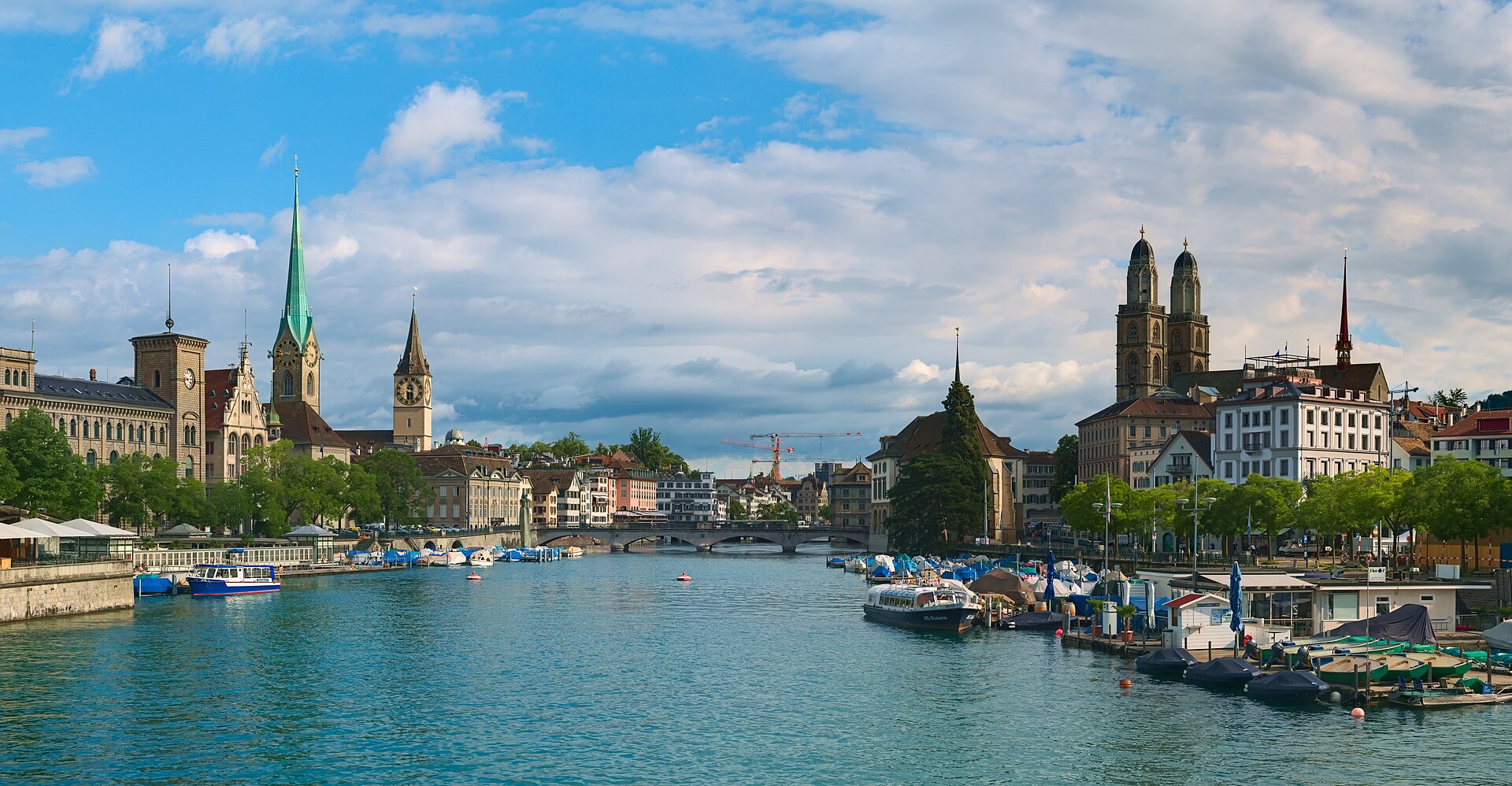
At first glance, Zurich can feel like a city designed by a risk committee: clean trams, discreet banks, immaculate shop windows. Then you notice the bathers carrying dry bags through the financial district, the birthplace of Dada squeezed into an old-town lane and a former shipbuilding hall full of restaurants. Zurich's real talent is not tidiness. It is reinvention without erasure.
Why choose it: Choose Zurich when you want the widest cultural range in one compact Swiss city: medieval lanes in the morning, major art at noon, a swim after work and a converted industrial quarter after dark. It is Switzerland's largest city, but the centre still works on foot.
The story most visitors miss: The Romans called the customs post by the Limmat Turicum. Centuries later, Huldrych Zwingli turned the Grossmuenster pulpit into an engine of the Reformation. In 1916, artists fleeing war answered that stern inheritance with Cabaret Voltaire and Dada: nonsense as protest. The same city that once regulated belief became a laboratory for breaking artistic rules.
A day that works: Start on Lindenhof before the shops open. The quiet terrace sits over the Roman settlement and gives the clearest reading of the old city: the Limmat below, the Grossmuenster towers opposite and guild houses lining the water. Cross to the Grossmuenster, then enter the Fraumuenster for Marc Chagall's jewel-coloured windows. Continue through the narrow Niederdorf lanes, but look up as often as you look into shopfronts; painted signs and upper storeys preserve the older city. Return by tram and walk the lake promenade at blue hour. For dinner, avoid treating Bahnhofstrasse as the city itself. Try Wiedikon for neighbourhood restaurants or Zurich-West for a louder evening. The contrast is the point: Zurich is best understood by moving between its polished and improvised halves.
2. Lucerne: the first swiss city

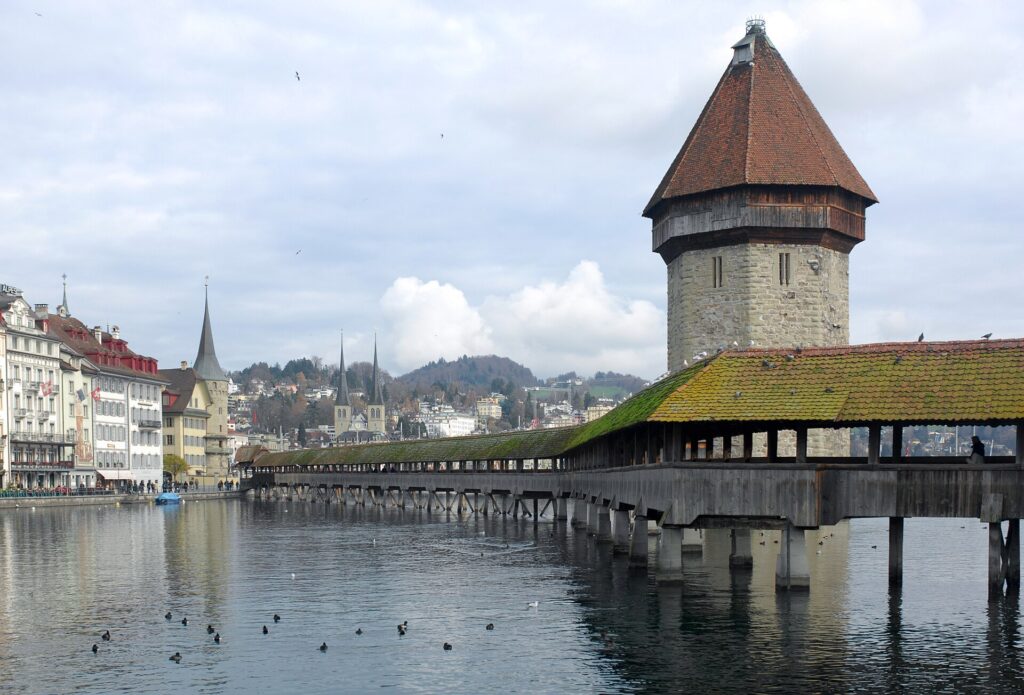
Lucerne looks almost suspiciously perfect: a lake narrowing into a river, painted facades, mountains arranged behind a covered bridge. Its beauty can make it feel like scenery. The way past the postcard is to notice the damage: the bridge rebuilt after fire, the medieval wall that outlived its military purpose and a dying lion carved for soldiers who never came home.
Why choose it: Choose Lucerne for Switzerland's most complete first-day experience. No other city combines a storybook old town, a navigable lake and mountain excursions so efficiently. It is crowded for the same reason it is irresistible, so timing matters.
The story most visitors miss: Lucerne grew where the Reuss leaves Lake Lucerne, on the route toward the Gotthard Pass. The Chapel Bridge became its emblem, but a fire in August 1993 destroyed much of the structure and many triangular paintings. The restored bridge is not a frozen medieval relic; it is a lesson in what a city chooses to rebuild.
A day that works: Arrive early and cross the Chapel Bridge before tour groups fill it. Pause at the Water Tower, then read the old town as a sequence of public rooms: Weinmarkt, Hirschenplatz and Kornmarkt, each framed by painted facades. Walk uphill to the Musegg Wall. Several towers open seasonally, but even from the path the wall gives perspective on the compact city below. Walk the quieter Spreuer Bridge and follow the river back toward the lake. If the weather is clear, take a short boat ride rather than rushing up a mountain; the moving shoreline explains Lucerne's geography beautifully. Finish along the Culture and Convention Centre, whose modern roof deliberately extends toward the water.
3. Bern: the old town

Bern does not announce power the way capitals usually do. There is no presidential palace at the end of a ceremonial avenue, because Switzerland has no single executive president and its constitution names no capital. Bern is the federal city: a compromise wrapped in sandstone, where parliament sits above a river people float down after work.
Why choose it: Choose Bern for the best-preserved urban ensemble in Switzerland and the most revealing lesson in how the country sees itself. It rewards walking slowly under its arcades, especially when rain turns them from architecture into everyday infrastructure.
The story most visitors miss: The old city occupies a loop of the Aare and was largely rebuilt in sandstone after a great fire in 1405. Its long, orderly streets, fountains and covered arcades helped earn UNESCO status. In the early 1900s, a patent clerk named Albert Einstein lived on Kramgasse while developing ideas that changed physics.
A day that works: Begin at the Rose Garden, before descending into the old city. From above, the Aare's loop makes Bern's defensive geography obvious. Walk toward the Bear Park, cross the Nydegg Bridge and follow Kramgasse beneath the arcades. Reach the Zytglogge a few minutes before the hour, but do not mistake the moving figures for the whole attraction: the clock tower once marked the city gate and the limits of Bern itself. Follow locals toward the Marzili quarter below parliament. In summer, experienced swimmers enter the fast Aare upstream and let the current carry them back; visitors should watch first, use official access points and never underestimate the river. Finish with sunset from the Rose Garden or a table in Matte, the low riverside quarter.
4. Geneva: the for global ideas

Geneva's skyline is modest, but its ambitions are not. From a strict Protestant republic it became a capital of diplomacy, humanitarian law and particle physics. Even its most photographed monument began as engineering: the Jet d'Eau was originally a pressure-release valve, not a work of civic theatre.
Why choose it: Choose Geneva when ideas interest you as much as scenery. The city layers Calvin, the Red Cross, the League of Nations, the United Nations and CERN around a lakefront that locals still use for an inexpensive swim and fondue.
The story most visitors miss: John Calvin's 16th-century Geneva shaped Reformed Protestantism across Europe. In 1863, Henry Dunant helped found the committee that became the International Committee of the Red Cross. The League of Nations arrived after the First World War, and the UN's European headquarters inherited the diplomatic role. Just outside town, CERN later became the birthplace of the World Wide Web.
A day that works: Start in the old town at Saint Pierre Cathedral and climb the tower if visibility is good. Walk to the Reformation Wall, where giant figures turn religious history into civic sculpture. Then descend through the Place du Bourg-de-Four toward the lake. The route compresses centuries: Roman archaeology, Calvin's pulpit and watch boutiques within a few streets. End at Bains des Paquis, the democratic counterweight to diplomatic Geneva. The public bath sits on a pier facing the Jet d'Eau and serves simple meals; in colder months, locals use the sauna and fondue tables. If you have more time, cross the river to Carouge, planned in the 18th century as a rival town with a southern, almost Mediterranean rhythm.
5. Basel: the for art
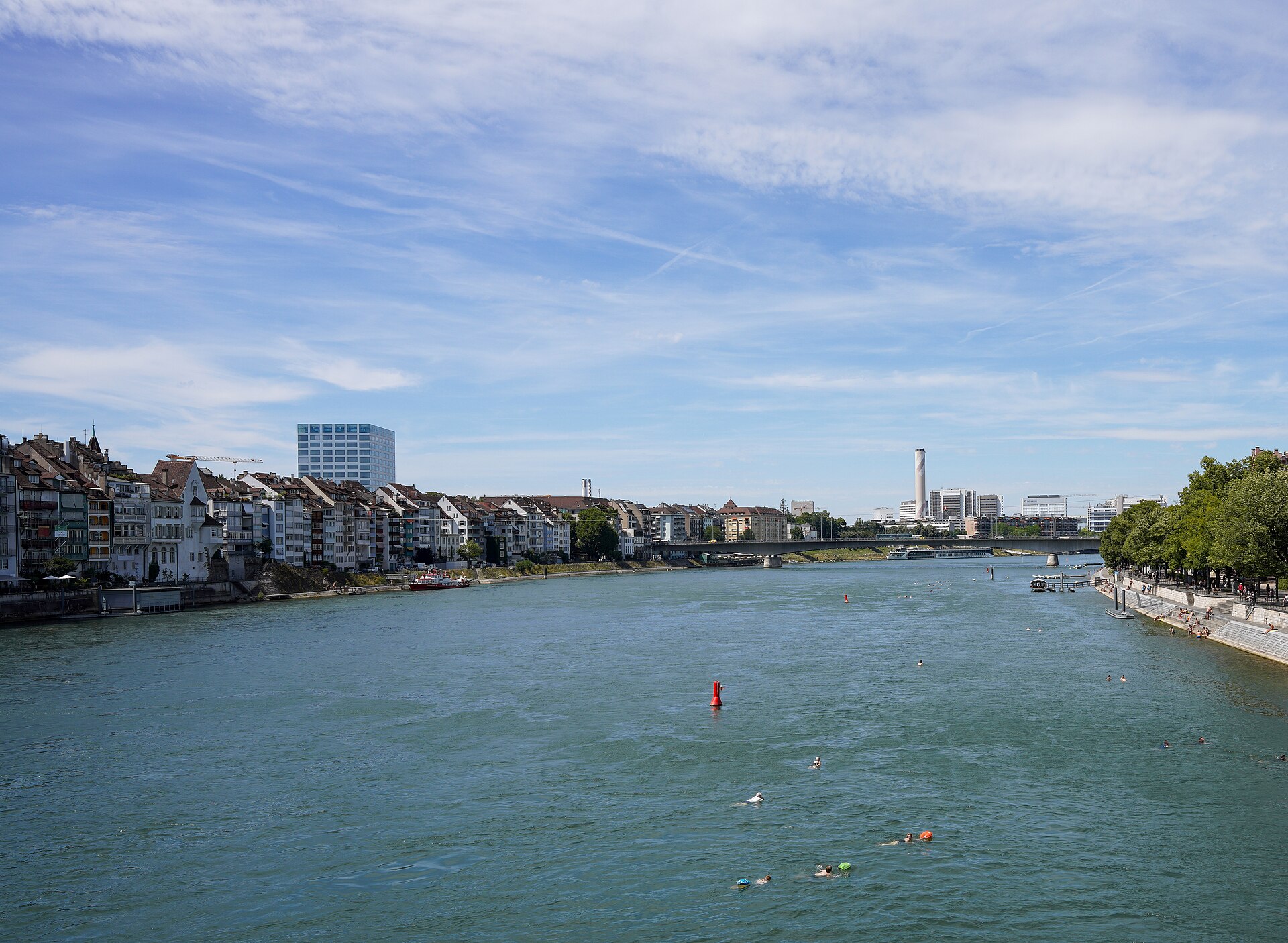
Basel sits where Switzerland touches France and Germany, and it has always behaved like a place with more than one horizon. Printers made it a centre of Renaissance humanism; chemical firms made it wealthy; collectors turned that wealth into museums. Through it all, the Rhine remained the city's moving main street.
Why choose it: Choose Basel if museums, design and architecture outrank mountain views on your list. It is Switzerland's strongest cultural city break, compact enough for one day but deep enough for three.
The story most visitors miss: Basel joined the Swiss Confederation in 1501, but its intellectual network was already European. Erasmus worked with its printers and was buried in the Minster. Later, industrial fortunes supported collections and institutions that now make art feel like part of the city's operating system rather than an attraction added for visitors.
A day that works: Begin at the red sandstone Town Hall on Marktplatz, then climb through the old lanes to the Basel Minster. Walk onto the Pfalz terrace behind it for the Rhine view. Cross the river on a small ferry: it has no engine and uses the current against a cable to move between banks, a miniature lesson in applied physics. In summer, watch swimmers enter the Rhine with bright waterproof Wickelfisch bags and drift downstream. Join only on an established route if you are a confident swimmer and understand the current. Otherwise, walk the Kleinbasel bank and cross the Mittlere Bruecke at dusk, when the city's two sides feel closest.
6. Lausanne: the for energy and views

Lausanne is a city built as a staircase. The cathedral commands the upper town; trains cut across the middle; Ouchy opens onto the lake far below. The hills are not an inconvenience to overcome but the plot of the place: every descent changes the architecture, the light and the kind of Lausanne around you.
Why choose it: Choose Lausanne for a younger, steeper and more energetic alternative to Geneva. It combines one of Switzerland's finest Gothic buildings with Olympic history, strong museums and immediate access to the Lavaux vineyards.
The story most visitors miss: The cathedral made medieval Lausanne a pilgrimage centre. Since 1915, the International Olympic Committee has given the city a second identity as the Olympic capital. Each night, a watchman still calls the hours from the cathedral tower, continuing a tradition that began when fire warnings mattered to a city of wood and narrow lanes.
A day that works: Start high at Lausanne Cathedral, then descend the wooden Escaliers du Marche toward Place de la Palud. The route is short but theatrical: rooflines close around the steps, then open into the market square. Wander through the old city before gravity and the metro pull you south. Walk the Ouchy waterfront and visit the Olympic Museum if the subject interests you; its gardens and lake setting work even for visitors who do not follow sport. At sunset, look east toward Lavaux. The terraced slope is not background scenery but a working wine landscape shaped over centuries.
7. Lugano: the cultural contrast
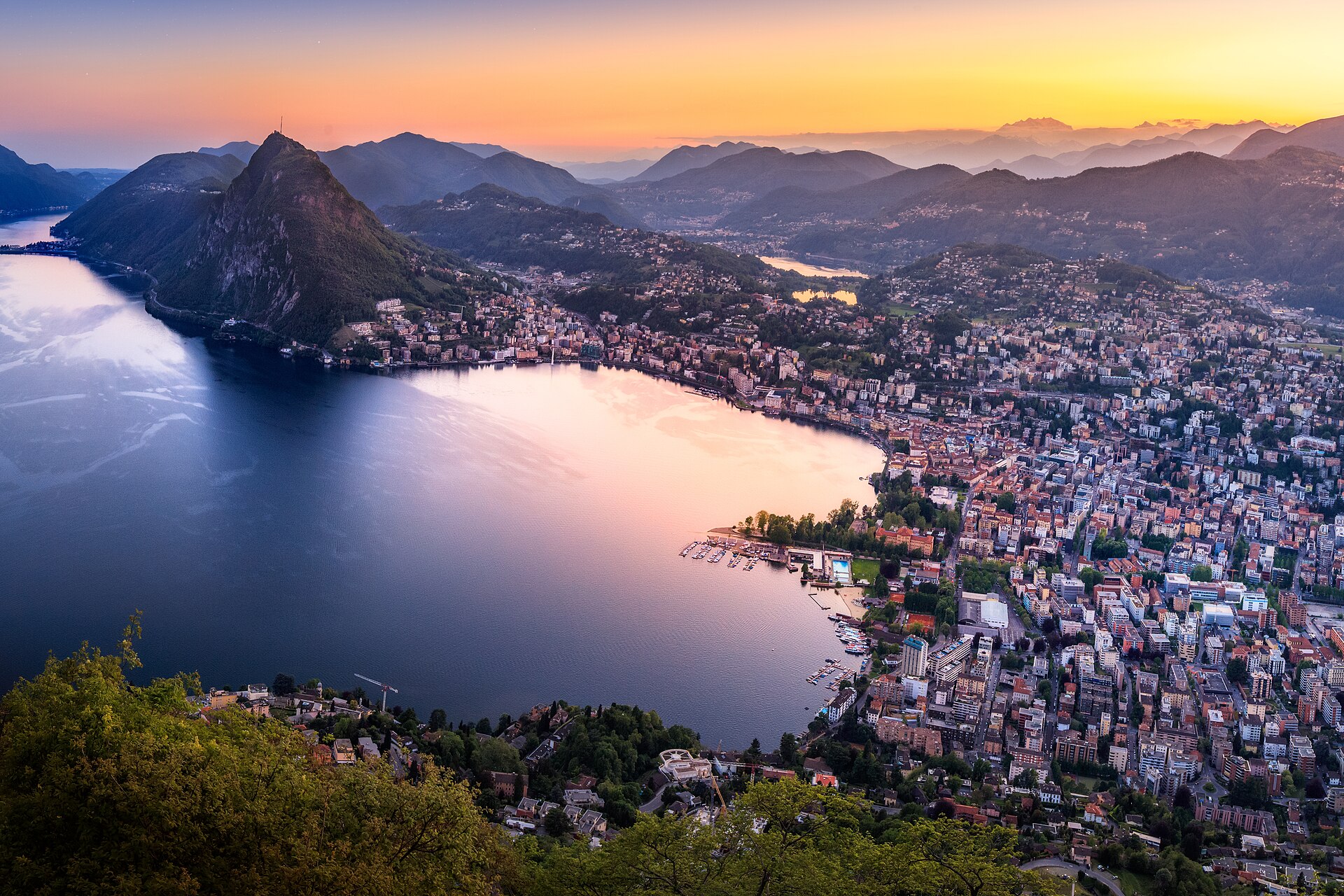
Lugano is not Switzerland pretending to be Italy. It is Ticino being itself: an Italian-speaking Swiss city where palms line an Alpine lake, stone villages cling to forested slopes and efficiency coexists with a slower public rhythm. The surprise is not that it feels southern. It is how unmistakably Swiss the southernness remains.
Why choose it: Choose Lugano for lake light, Italian language and an urban base with immediate access to mountain paths. It offers the strongest cultural contrast in a multi-city Swiss trip.
The story most visitors miss: Lugano passed through competing regional powers before joining the Swiss canton of Ticino in the 19th century. Later, finance reshaped its economy, but the older identity survives in arcaded squares, lakeside villages and food built from chestnuts, maize and mountain dairies rather than stereotypes of generic Italian cuisine.
A day that works: Begin in Piazza della Riforma before cafe tables fill, then wander the compact centre to the church of Santa Maria degli Angioli for Bernardino Luini's Renaissance fresco. Continue through the gardens of Parco Ciani, where mountains frame the lake like stage scenery. Visit LAC if an exhibition or performance appeals, then eat in the centre or in a grotto-style restaurant outside it. Lugano is at its best after day visitors leave: arcades cool, the lake darkens and the city sounds more Italian than it looks at noon.
8. St. Gallen: the hidden heritage city
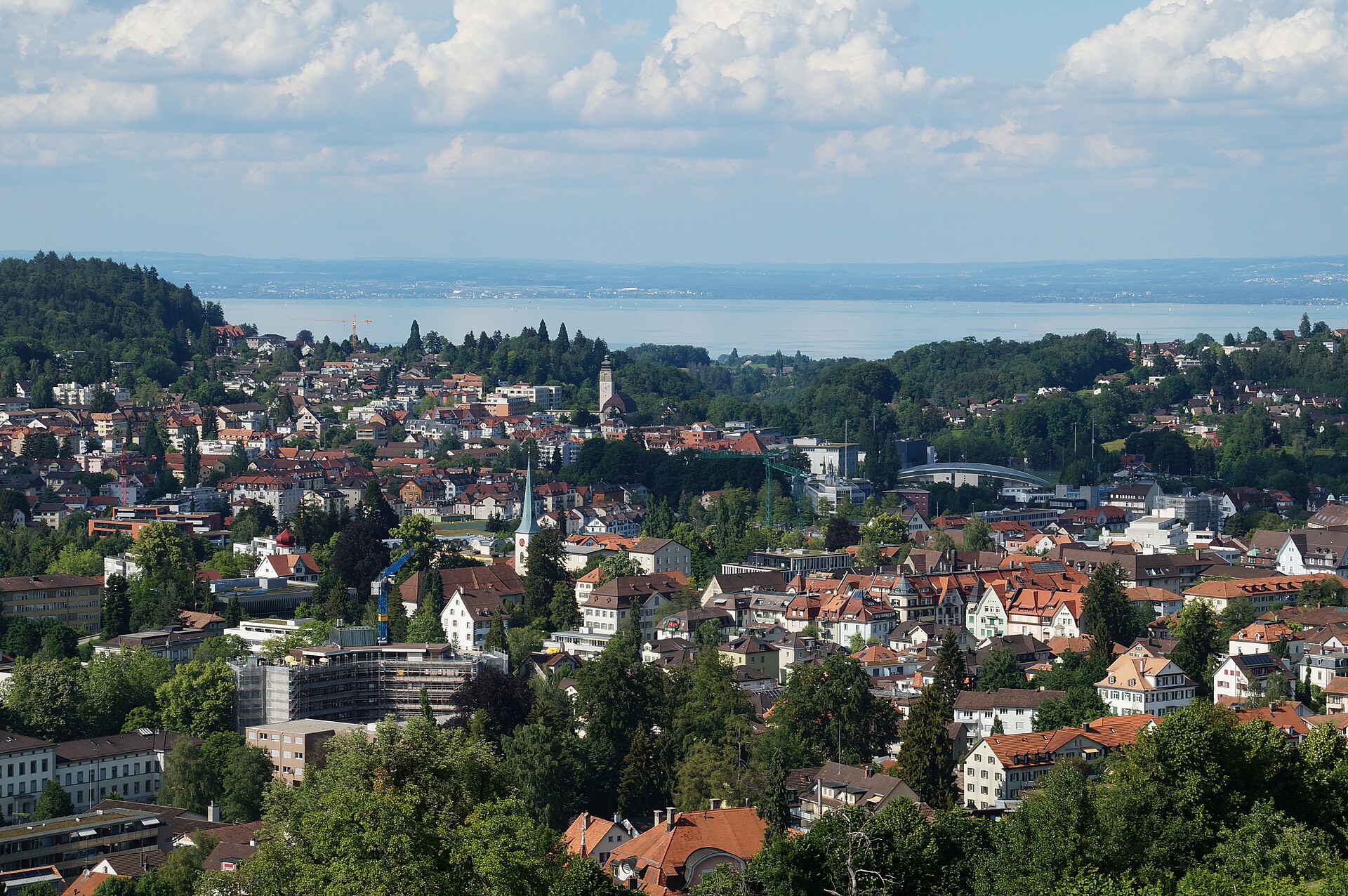
St. Gallen began, according to tradition, with an Irish monk, a wilderness and a bear. It became famous through two things that seem unrelated: manuscripts and embroidery. Look closer and they share the same civic instinct—patience, pattern and an obsession with detail.
Why choose it: Choose St. Gallen when you want a quieter Swiss city with one world-class heritage site and a story that connects medieval scholarship to global fashion. It is compact, uncrowded and easy to combine with Appenzell.
The story most visitors miss: The Abbey of St Gall grew from the community associated with the missionary Gallus. Its library preserves manuscripts that made the monastery one of medieval Europe's great centres of learning. Centuries later, St. Gallen embroidery travelled through international fashion houses, bringing industrial wealth to the city while keeping pattern-making at the heart of its identity.
A day that works: Go first to the Abbey District and enter the library before groups build. Felt slippers protect the elaborate floor, but the room's real treasure is intellectual: manuscripts, plans and centuries of accumulated memory. Give the cathedral time as well; the baroque ensemble is designed as a whole. Climb or take the Muehlegg railway toward Drei Weieren, the hillside ponds above town. They began as water reservoirs for textile production and later became swimming places. From here, St. Gallen sits below with Lake Constance beyond on a clear evening—the industrial and recreational city in one view.
9. Montreux: the for music and scenery
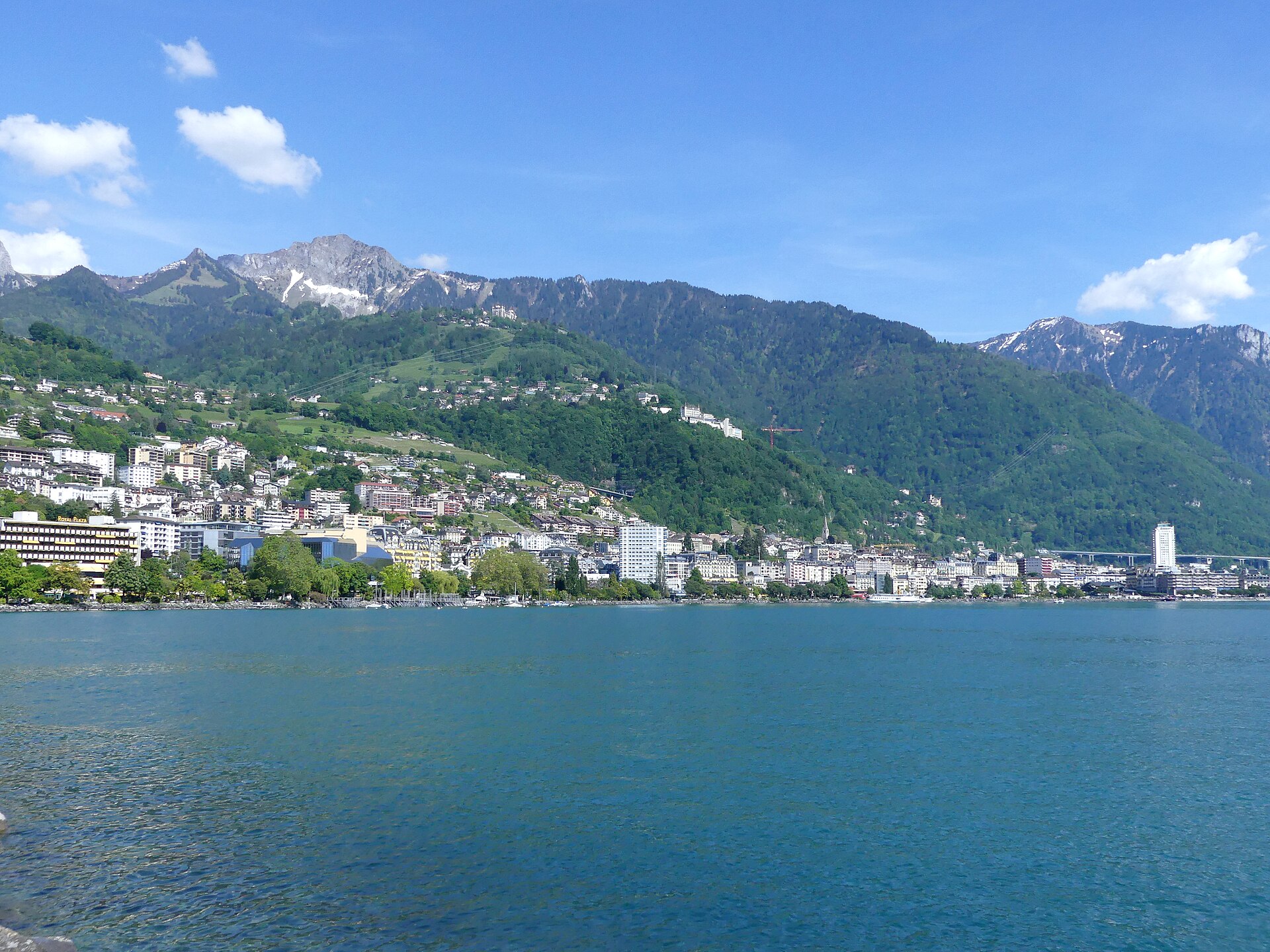
Montreux has always sold atmosphere: Belle Epoque hotels, exotic flowers and mountains reflected in Lake Geneva. Yet its most enduring modern identity came from sound. The jazz festival filled its halls, Deep Purple saw smoke on the water nearby, and Queen made music in a casino studio. The landscape became a stage, then the stage became part of the landscape.
Why choose it: Choose Montreux for a resort town rather than a conventional city: lake walks, music history and one of Switzerland's greatest castles, with vineyards and mountain railways close at hand.
The story most visitors miss: The arrival of railways transformed scattered lakeside settlements into an international resort. Grand hotels hosted aristocrats, writers and invalids seeking the mild climate. The Montreux Jazz Festival, founded in 1967, gave that hospitality culture a new audience and a less formal soundtrack.
A day that works: Walk the lakefront before the promenade becomes busy. The planting is deliberately exotic for this latitude, protected by the lake and slopes. Pass the Freddie Mercury statue, then continue by bus, boat or foot toward Chillon Castle. Its island-like position controlled the route between the lake and Alpine passes long before it became Switzerland's most photographed fortress. Ride the cogwheel railway toward Rochers-de-Naye only in clear weather and with enough time for the return. Otherwise, take the slower pleasure: walk west along the water as evening softens the opposite Alps. Montreux's main sight is the relationship between lake, slope and light.
10. Thun: the small city

Most travellers see Thun through a train window on the way to Interlaken. That is their mistake. Here the Aare leaves the lake beneath a white castle, surfers ride a river wave beside covered bridges and shopfronts sit on two levels along a street found nowhere else in Switzerland.
Why choose it: Choose Thun for a smaller, more relaxed alternative to Lucerne and Interlaken. It has a real working centre, fast access to the lake and enough heritage for a full day without feeling managed for tourism.
The story most visitors miss: The Zaehringen dynasty built the castle's great hall in the late 12th century, asserting control over the route through the Bernese Oberland. The town developed below between river channels and the lake. Later, military institutions and tourism shaped Thun together, producing a place that is gateway, garrison and lakeside resort at once.
A day that works: Climb to Thun Castle early and look back from the hill: the old town is squeezed between river and slope, while the lake opens toward the Alps. Descend to Obere Hauptgasse, where raised pavements run above the roadway. The unusual split level turns an ordinary shopping street into a piece of urban theatre. Take a short lake cruise or follow the shore, then return along the Aare as castle lights appear above the roofs. Thun's pleasure is proportion: castle, river, lake and shops all remain close enough that the day never becomes logistics.
How to combine the cities without spending the trip on trains
Three days: the essential triangle
Use Zurich, Lucerne and Bern. The rail legs are short, the cities are radically different and you can fly or arrive by international train through Zurich. Sleep in two bases rather than changing hotels every night.
Five days: art, old towns and the lake
Start in Basel, continue to Bern, then follow Lake Geneva through Lausanne to Montreux. This route moves from museums to medieval streets to vineyards and resort architecture without doubling back.
Seven days: three language regions
Combine Zurich, Lucerne, Lugano, Lausanne and Geneva. The Gotthard route between central Switzerland and Ticino is part of the experience. Five cities is the upper limit; remove one if you want day trips or slow evenings.
The honest rules for planning a Swiss city trip
- Do not rent a car for the cities. Trains arrive centrally, while parking is expensive and historic streets are built for feet and trams.
- Check museum closing days. Monday is a common closure, but not universal.
- Treat river swimming as a local sport, not a casual attraction. The Aare and Rhine are powerful moving water.
- Keep one clear-weather decision open. Mountain railways are poor value inside cloud; museums and old towns are excellent fallbacks.
- Stay after 17:00. Lucerne, Montreux and Bern become more themselves when day-trip groups leave.
Which Swiss city should you choose?
If this is your first visit and you want the Switzerland in your imagination, choose Lucerne. If you value intact streets and quiet character, choose Bern. For art, choose Basel; for a complete urban weekend, Zurich; for global history, Geneva; for hills and youthful energy, Lausanne; for Italian-speaking contrast, Lugano; for books and craftsmanship, St. Gallen; for music and lake scenery, Montreux; and for a smaller place with no need to perform, Thun.
The best itinerary is not the one with the most pins. It is the one in which each stop changes the story.
Frequently asked questions about Swiss cities
What are the best cities to visit in Switzerland?
For a first trip, choose Lucerne for lake-and-mountain scenery, Bern for a preserved old town and Zurich for the widest mix of culture and daily life. Add Basel for art, Geneva for international history, Lausanne or Montreux for Lake Geneva, Lugano for Italian-speaking Switzerland, St. Gallen for heritage and Thun for a smaller city.
Which Swiss city is best for a first visit?
Lucerne is the easiest first choice because the old town, lake and mountain excursions meet in one compact place. Zurich is better for nightlife and museums; Bern is better for a slower historic atmosphere.
How many Swiss cities can you visit in one week?
Three cities plus one mountain or lake region is comfortable. Zurich, Lucerne and Bern form an efficient first route. Geneva, Lausanne and Montreux form a second cluster; Basel fits naturally between the two.
Can you visit Swiss cities without a car?
Yes. Every city in this guide is easier by train, and the centres are walkable or well served by trams, buses and boats. A car adds parking costs and is rarely useful inside the historic core.
Which is better: Zurich or Geneva?
Choose Zurich for a broader urban experience, stronger nightlife and easy links to central and eastern Switzerland. Choose Geneva for international institutions, French-speaking culture and access to Lake Geneva and nearby France.
What is the prettiest city in Switzerland?
Lucerne delivers the classic postcard, Bern has the most coherent historic centre, and Lugano has the strongest lake light. The answer depends on whether you value mountains, architecture or atmosphere.
Sources and further reading
- Switzerland Tourism
- Swiss Federal Railways timetable
- UNESCO World Heritage in Switzerland
- Zurich Tourism
- Lucerne Tourism
- Bern Welcome
- Geneva Tourism
- Basel Tourism
- Lausanne Tourisme
- Lugano Region
- St. Gallen-Bodensee Tourism
- Montreux Riviera
- Thun-Thunersee Tourism
Facts checked 30 October 2026. Opening times, transport and access rules change; verify them with the linked official source before travelling.