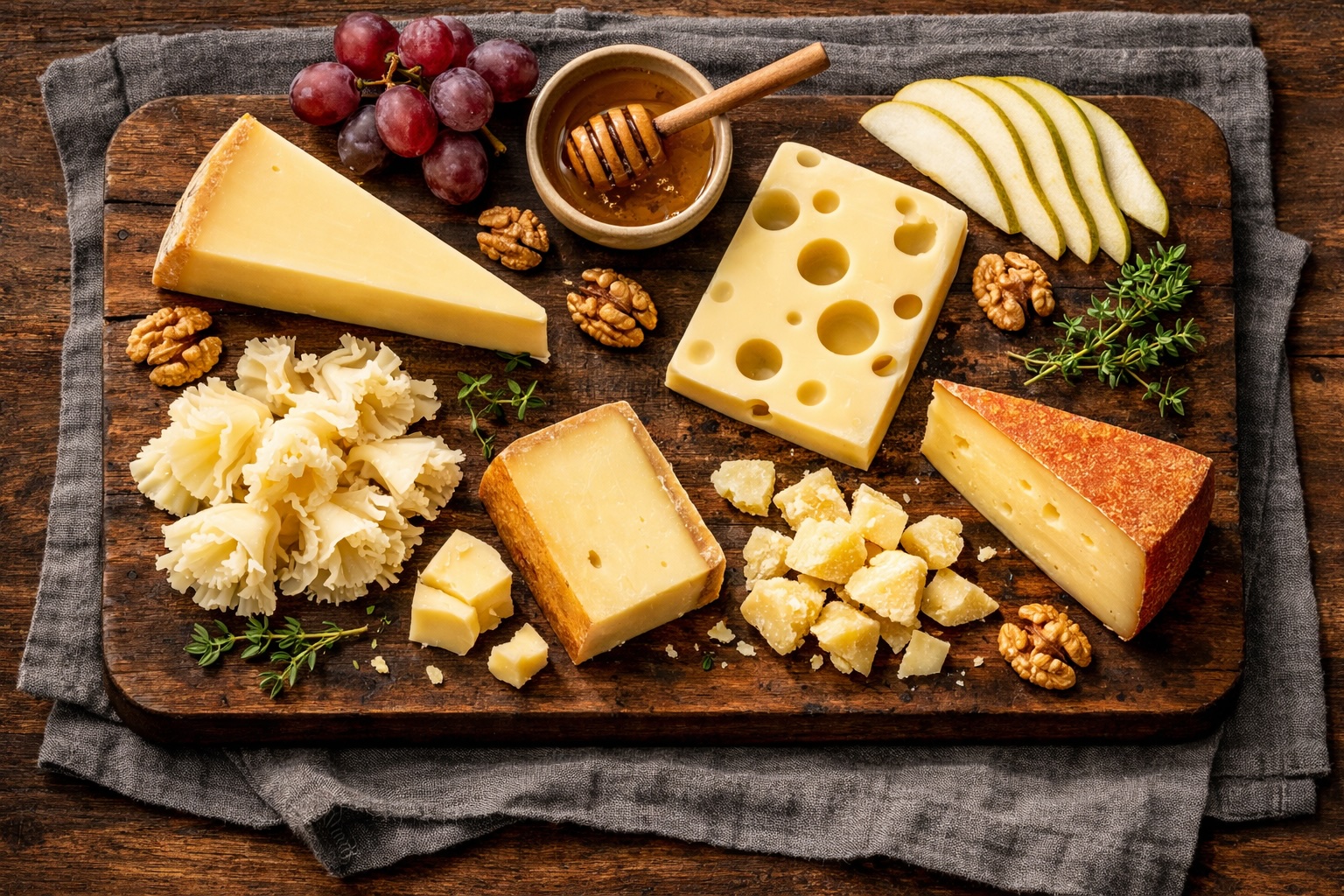
Switzerland produces over 700 types of Swiss cheese — and most people have tasted exactly one of them. That’s a genuine shame, because what’s hiding beyond that familiar holey wheel is one of the most diverse, regionally distinct cheese cultures on earth.
Many of these cheese traditions are tied to specific regions you can visit — see the 25 best places to visit in Switzerland.
For more on Switzerland’s fascinating culinary and cultural identity, explore the full guide to Switzerland’s cultural treasures.
Walk into a good fromagerie in Bern or Lausanne and you’ll find wheels aging on wooden shelves, rinds rubbed with herbal brine, and wedges that smell like summer pasture and patience. This guide skips the filler. Whether you’re building a board, shopping at a mountain market, or just trying to decode a Swiss restaurant menu, here’s what you need to know.
Why Switzerland Has So Many Varieties
The short answer: geography and stubbornness — in the best possible way.
Switzerland’s terrain runs from lowland dairy farms to high Alpine pastures to forested hillsides, and each region built its own cheese tradition around local milk, local bacteria, and local taste. Nobody was in a rush to standardize things, which is exactly why the country ended up with such extraordinary diversity. A farmer in Appenzell wasn’t making the same cheese as one in the Gruyère district, and that gap in approach is what makes both cheeses worth knowing.
Switzerland’s culinary heritage doesn’t stop at cheese — discover the full Swiss chocolate experience.
Many of the greats carry an AOP label — Appellation d’Origine Protégée, or Protected Designation of Origin. That label legally ties a cheese to a specific geographic region, meaning production, milk sourcing, and aging must all happen within that zone. It’s not branding. It’s a legal guarantee of origin.
Switzerland currently has 12 AOP-protected cheeses, each with its own rulebook, regional character, and centuries of method behind it.
The Classics — And What Most People Get Wrong
Emmentaler AOP — Not Just the Holes
Emmentaler became the global shorthand for “Swiss cheese,” and that fame has cost it its reputation. The rubbery, tasteless supermarket version has almost nothing in common with a genuine Emmentaler AOP wheel.
Real Emmentaler is a semi-hard cheese whose famous holes — formed by CO₂ released by Propionibacterium freudenreichii bacteria during fermentation — sit inside a paste that is subtly sweet, nutty, and clean-finishing. Aged reserve versions, matured 12 months or more, develop a depth that pairs brilliantly with dry white wine or a crisp lager. Authentic wheels weigh up to 120 kg and must carry the AOP seal. Check before you buy.
Gruyère AOP — The One That Does Everything
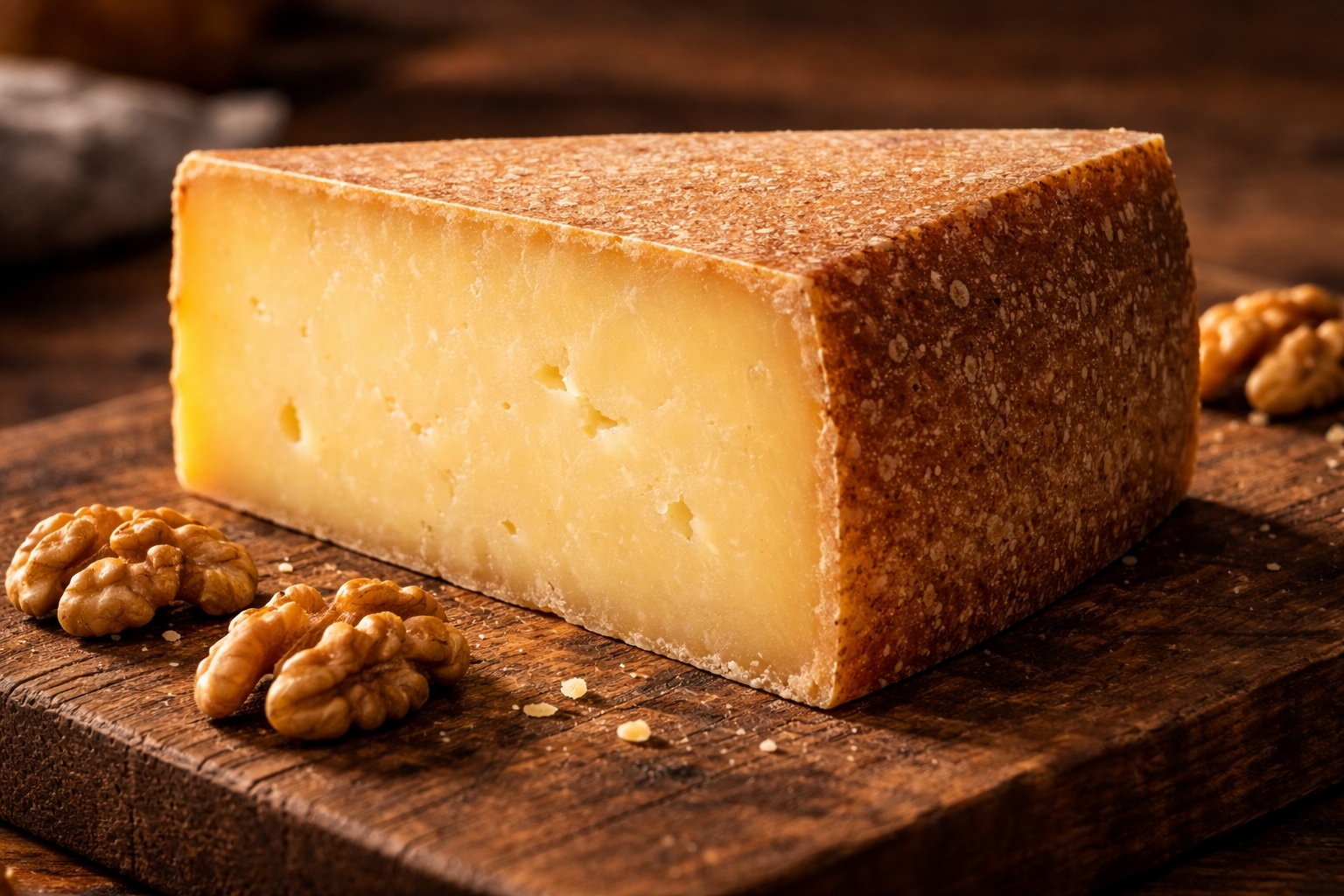
Gruyère is arguably the most functional hard cheese in the world. It melts without going greasy, ages into something genuinely spectacular, and holds its own on any board. The flavor moves from buttery and mild in young wheels to deeply nutty, crystalline, and almost caramel-like at 18 months.
It’s also, contrary to what most people assume, completely hole-free. Dense, pale yellow paste with a firm brownish rind — no gaps, no bubbles. Gruyère has been the backbone of Swiss fondue for centuries, and once you taste an aged version on its own with a glass of Fendant, you’ll stop needing the fondue pot as an excuse.
Semi-Hard Cheeses Worth Your Full Attention
Raclette du Valais AOP — Built for Sharing
Raclette the dish gets all the glory, but Raclette du Valais AOP — the protected, raw-milk version from the Valais canton — is a genuinely different thing from the generic wheels sold in supermarkets. It’s semi-hard, smooth, and carries a mellow earthiness that transforms completely when heated: funky, savory, and deeply satisfying scraped over potatoes and pickled vegetables.
The first time I tried it melted directly off a half-wheel at a mountain chalet, held next to an open fire — not an electric machine, an actual fire — I couldn’t understand why I’d been eating the other version for years. The flavor difference at that temperature is stark and immediate. Seek out the AOP designation. It’s worth the extra effort.
Vacherin Fribourgeois AOP — The Fondue Secret
Ask a casual fondue fan what’s in Swiss fondue and they’ll say Gruyère and Emmental. Ask a serious one, and they’ll say Gruyère and Vacherin Fribourgeois — the traditional moitié-moitié (half-and-half) blend from the Fribourg region.
Vacherin Fribourgeois is richer and softer than Gruyère, with a more pronounced earthy, barn-like edge that adds genuine complexity to the pot. On its own, it’s supple and funky — the kind of cheese that divides a room the first time and converts skeptics on the second taste.
Appenzeller — The Spicy One With a Secret
Appenzeller has been made in the Appenzell region for over 700 years, and the exact herbal brine used to wash its rind during aging remains a trade secret. That brine is what makes it distinctive: a firm, slightly tangy interior with a pungent, spiced rind that gives the whole cheese its character.
It comes in three strengths — silver label (mild), gold label (natural/mature), and black label (extra-mature). The black label is not subtle. It’s sharp, aromatic, and assertive enough to anchor a cheese board on its own. Appenzeller also works surprisingly well in fondue — its herbal brine gives the pot an intensity that Gruyère alone can’t replicate.
The Hard Hitters: Aged Swiss Cheeses
Sbrinz AOP — Switzerland’s Oldest Cheese
Sbrinz is one of the oldest cheeses in Europe, with evidence of production tracing back to pre-Roman Celtic tribes. It’s an extra-hard, cave-aged cheese with a deeply umami, grana-like intensity that makes it an obvious Parmesan substitute — though aficionados would bristle at the comparison.
Unlike Parmesan, Sbrinz is traditionally broken into irregular chunks rather than cut. The cheese is too hard and brittle to slice cleanly, and breaking it releases the full aromatic blast. Grate it over pasta, pair it in broken pieces with an aged red wine, or add it to a board for sharp contrast. If you see the genuine AOP wheel, buy some.
L’Etivaz AOP — Alpine Artisan
L’Etivaz is made exclusively on high-altitude Alpine pastures in the canton of Vaud, between May and October, over open wood fires. That’s not a romanticized detail — the wood fire directly affects the flavor. The result is a hard cheese with a smoky, floral complexity that no lowland dairy can replicate.
Production quantities are intentionally small, and L’Etivaz is not always easy to find outside Switzerland. When you do find it, it tastes like the mountains it came from.
The Showstoppers
Tête de Moine AOP — The One You Scrape
Tête de Moine (“monk’s head”) is the cheese that stops conversations at dinner parties. A small cylindrical wheel served using a girolle — a wooden board with a rotating blade — it’s shaved into thin, ruffled rosettes rather than sliced.
The scraping isn’t theatrical for its own sake. It aerates the cheese and changes its texture completely, releasing a floral, slightly bitter, intensely aromatic experience that slicing would suppress. A few rosettes on dark bread with a drizzle of honey is one of the better bites you’ll have this year.
Chällerhocker — The Cult Favorite
Chällerhocker doesn’t carry an AOP designation, but among cheese professionals it’s earned a reputation as one of Switzerland’s most exciting modern wheels. Made in the canton of St. Gallen, it’s a washed-rind semi-hard cheese with an aggressive, barnyard aroma and a rich, butterscotch-sweet interior that completely defies what the nose suggests.
The name means “sitting in the cellar,” a reference to its cave-aging process. That contrast — funky exterior, caramel paste — is what makes it memorable. This is the cheese you bring to a dinner party when you want to change someone’s reference points.
Building the Ideal Swiss Cheese Board
You don’t need every cheese here. A great board runs on contrast — texture, intensity, age. Aim for 3–5 cheeses served at room temperature (cold cheese suppresses both aroma and flavor):
| Cheese | Type | Flavor Profile | Best Paired With |
|---|---|---|---|
| Gruyère AOP (aged) | Hard | Nutty, caramel, crystalline | Dry white wine, walnuts |
| Emmentaler AOP | Semi-hard | Mild, sweet, clean | Apple slices, lager |
| Raclette du Valais AOP | Semi-hard | Earthy, funky, savory | Pickled veg, charcuterie |
| Tête de Moine AOP | Semi-hard | Floral, bitter, intense | Honey, pear, dark bread |
| Sbrinz AOP | Extra-hard | Umami, sharp, crystalline | Aged red wine, dried fruit |
| Appenzeller (black) | Hard | Spicy, pungent, herbal | Mustard, dark rye bread |
| Chällerhocker | Washed rind | Barnyard nose, butterscotch paste | Cider, stone fruit jam |
Building the Ideal Swiss Cheese Board
You don’t need every cheese here. A great board runs on contrast — texture, intensity, age. Aim for 3–5 cheeses served at room temperature (cold cheese suppresses both aroma and flavor):
The Tasting Flight
Select a cheese to explore pairings