Switzerland is famous for peace, precision, and mountains. But beneath those idyllic Alpine meadows lies something nobody expects — even more hidden than the fake chalets concealing artillery: the world’s most extensive network of nuclear bunkers. Not in some secret military zone, but under your neighbor’s house. Under your ski chalet. Under the local grocery store.
Swiss institutional secrecy also enabled Crypto AG — a Swiss encryption company secretly owned by the CIA for 50 years.
This isn’t paranoia. It’s law.
For more than 60 years, Switzerland has required every resident to have access to a protected shelter. The Swiss nuclear bunker law remains unique in the world—a Cold War mandate that survived the end of the Cold War. Today, 370,000 bunkers house approximately 9 million people in a country of just 8.6 million. Switzerland has literally prepared to shelter its entire population (plus tourists) underground.
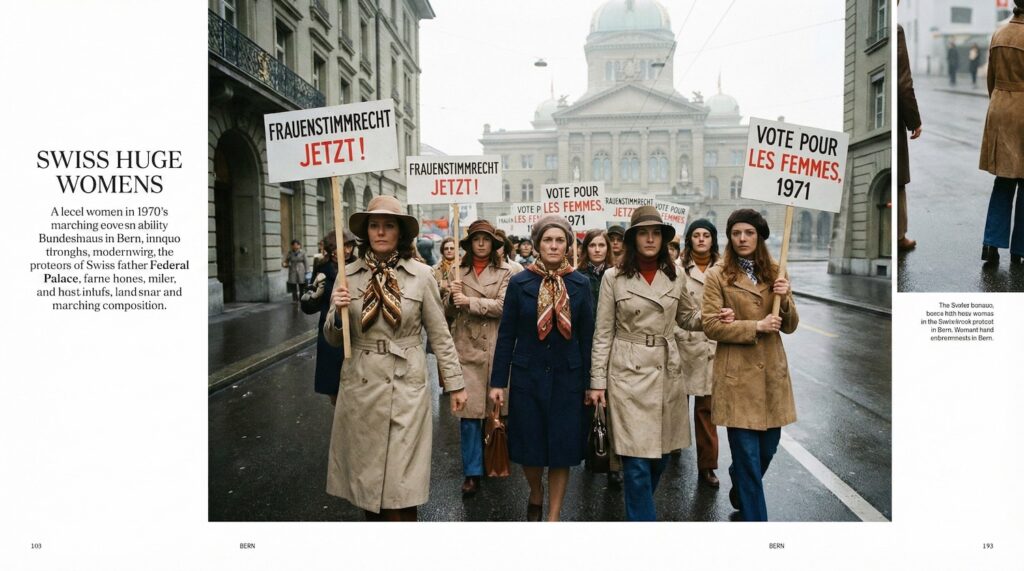
This military mindset echoes the story of Swiss women’s suffrage in 1971 — another law where Switzerland was surprisingly late.
So here’s the question: Is this genius-level preparation, or frozen anxiety from another era?
The Swiss Nuclear Bunker Law (Articles 45-46 of the Federal Law on Civil Protection, enacted 1963): Every Swiss resident must have access to a protected shelter within walking distance of their home. For new buildings, owners must either build and equip a private bunker or pay a contribution fee (CHF 800-1,400) toward public shelters. Today, Switzerland maintains approximately 370,000 private and public shelters with a combined capacity of 9 million protected spaces—equivalent to 107-114% of the population. The law was modified in 2012, requiring bunkers only in buildings with more than 38 apartments, but the basic principle remains: every Swiss person is guaranteed a shelter.
The Cold War Paranoia: Origins of the Law
To understand why Switzerland built bunkers, you need to understand what terrified Switzerland in the 1960s.
Switzerland isn’t in NATO. During the Cold War, this meant something paradoxical: the country was officially neutral, yet surrounded by nuclear-armed superpowers. While the US and Soviet Union pointed missiles at each other across a divided Europe, Switzerland sat in the middle—safe from invasion, but exposed to atomic radiation.
That same armed neutrality shapes Switzerland’s extraordinary gun laws — a country with 2.3 million firearms and almost no gun violence.
The rise of nuclear weapons changed everything. In 1945, the atomic bomb was theoretical. By 1960, it was real, deployed, and multiplying. Switzerland’s government faced a cold logic: geography could no longer protect them. Mountains meant nothing to radiation.
Consequently, in 1963, Switzerland passed the Federal Law on Civil Protection. Articles 45 and 46 were revolutionary in their reach: every single person in Switzerland must have a protected place that could be reached from their home within a certain distance. The law wasn’t optional. It wasn’t a suggestion.
The same doctrine that produced bridges rigged to blow shaped this too. The Swiss philosophy became crystalline: “Neutrality does not guarantee safety.” The government decided to invest in Armed Neutrality—the idea that you stay peaceful, but you prepare for the worst. While other countries built missiles, Switzerland built concrete walls.
Inside a Swiss Bunker: What is Required?
Walk into a Swiss home built between 1963 and the early 2000s, and descend into the basement. Behind a heavy blast door—usually yellow steel, sometimes painted cheerfully—lies the bunker.
It’s a concrete box. The walls are reinforced concrete, roughly 30 centimeters thick. The ceiling is the same. The door itself weighs hundreds of kilos and seals air-tight when shut. There are no windows. There is one entrance: the blast door.
The mandatory equipment is minimal by modern standards:
- Ventilation system with nuclear, biological, and chemical (NBC) filters
- Dry chemical toilets (no running water in emergencies)
- Wooden bunks (stored when not in use)
- Water reserves
- Emergency power system (often manual hand-crank generators in older models)
The shelter is designed to reduce radiation intensity by a factor of 500—meaning that if deadly radiation sat outside at a certain level, inside the bunker it would be reduced by 500-fold. In theory, if you sheltered here for two weeks during a nuclear fallout, you’d survive.
In practice? Here’s the twist.
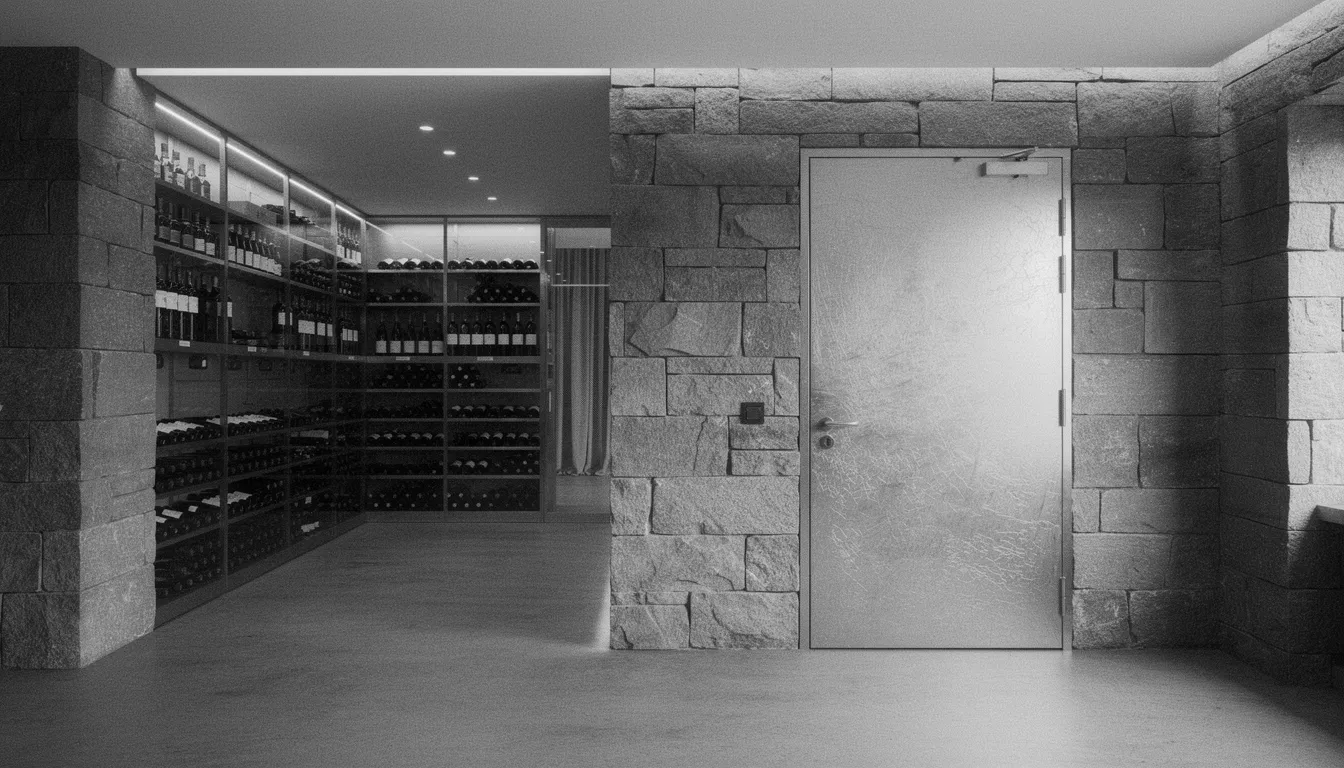
Today, most Swiss bunkers are wine cellars. Seriously. The thick concrete walls maintain a perfectly stable temperature year-round—ideal for storing expensive wine at a consistent 12-15°C. The dry environment protects against moisture. Many Swiss homeowners invested in upgrading their bunkers into luxury wine storage, with wooden racks, proper lighting, and climate control.
One Reddit user summarized the absurdity perfectly: “Well, we’ve got a bunker filled with wine, so if nuclear war starts, at least we’ll die happy.”
Others use them as ski storage, home entertainment centers (the acoustics are exceptional), storage for home equipment, or laundry rooms. In Geneva, some bunkers house asylum seekers and refugees.
The Swiss authorities tolerate this repurposing—with one requirement: owners must be able to make their shelters operational and equipped with beds and supplies within five days of an emergency order. Many Swiss people joke about this, unsure whether their wine collection would have to be temporarily moved in a crisis.
The Sonnenberg Tunnel: The Largest Bunker in the World (And Why It Failed)
The most ambitious bunker in Swiss history is the Sonnenberg Tunnel, a 1,550-meter-long motorway tunnel outside Lucerne. When it opened in 1976, it was the world’s largest civilian nuclear fallout shelter—designed to protect 20,000 people.
The genius of the design was pragmatic: Switzerland was building a new highway tunnel anyway (the A2 motorway). Why not make it pull double duty? The tunnel could carry cars in peacetime. In wartime, you seal the blast doors, and it becomes a fortress.
The infrastructure was staggering. Behind the two motorway tunnels (one for each direction of traffic), engineers carved out a seven-story underground cavern.
This central core contained:
- A command post for civil defense authorities
- An emergency hospital with operating theaters
- A radio studio and telephone center
- Prison cells (for maintaining order, grimly)
- Ventilation systems with diesel generators (enough fuel for two weeks of electricity)
- Supply storage for 20,000 people
The blast doors were masterpieces of engineering: 1.5 meters thick, weighing 350 tonnes each. They could withstand the pressure wave from a 1-megaton nuclear explosion 1 kilometer away.
But then came the test.
In 1987, the Swiss military ran a large-scale exercise called “Opération Fourmi” to see if they could actually convert the motorway tunnel into a functioning shelter in an emergency. The goal: deploy 10,000 bunks in one week.
It was a disaster. The trolleys designed to transport supplies got stuck in the narrow corridors. Worse, one of the four blast doors would not close properly. The bottleneck was immediate and catastrophic—they couldn’t even get people and supplies into the bunker fast enough.
So in 2002, the Swiss government made a decision: downgrade it. The Sonnenberg Tunnel capacity was reduced from 20,000 to 2,000 people (with a 24-hour setup time instead of a week-long evacuation). The motorway shelter concept was effectively abandoned. You can’t run 55,000 vehicles a day through a highway and simultaneously maintain it as a nuclear fallout shelter.
Today, the Sonnenberg Tunnel is a historical curiosity. Tours are available—approximately 50,000 people visit annually to walk through the concrete corridors and see the massive blast doors. The guide, Zora Schelbert, a former teacher, has been leading tours since 2006 and will mark her 1,000th visit this year. Visitors marvel at the Cold War architecture while traffic roars above on the A2 motorway.
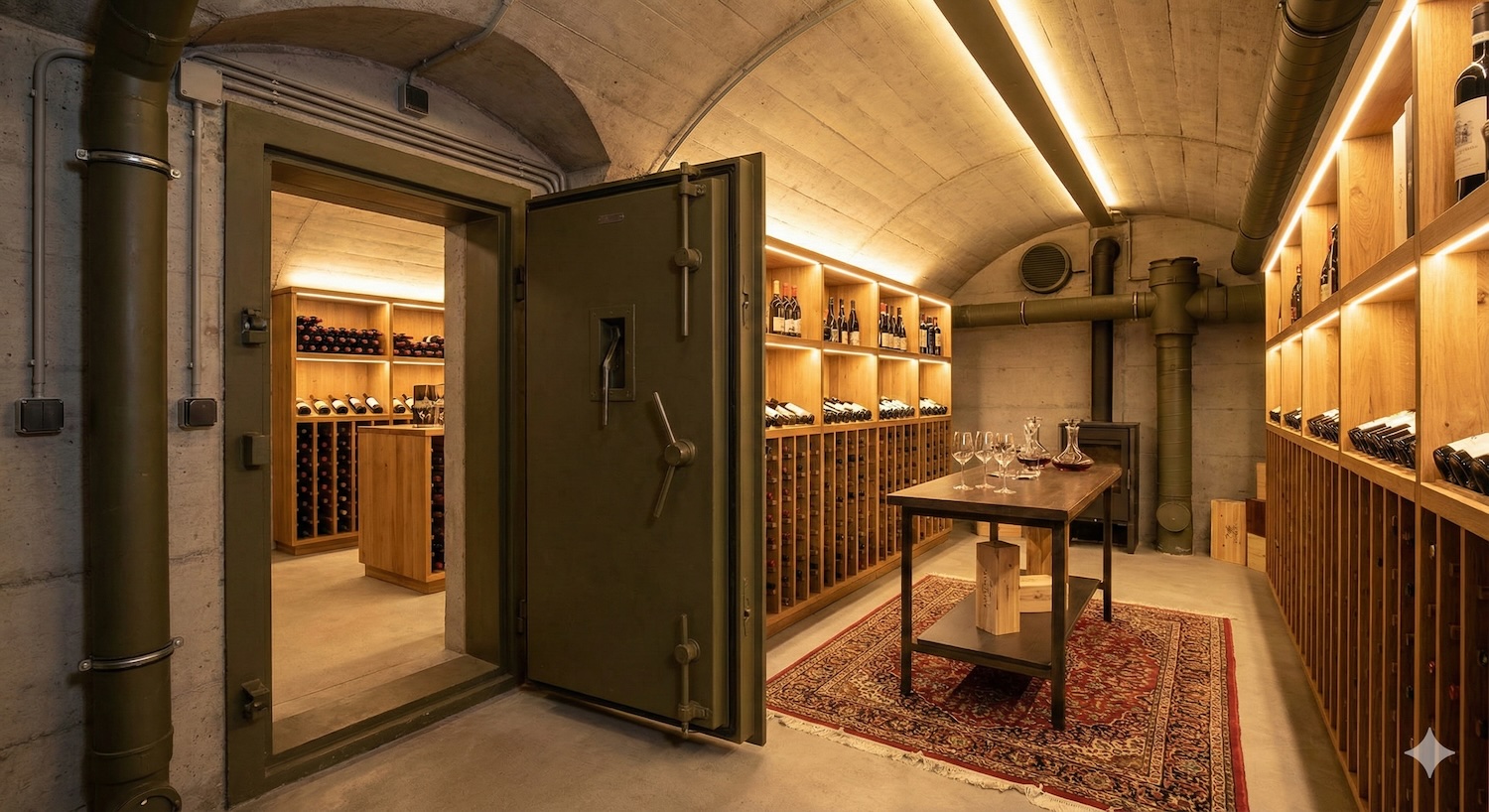
Swiss Cold War bunker converted to wine cellar: military past meets peacetime luxury storage
Is the Law Still Active Today?
Yes. But it’s evolved.
In 2012, the Swiss Federal Council modified the law. New buildings no longer must have a private bunker—but only if they have more than 38 apartments. For smaller residential buildings, homeowners have an alternative: pay a contribution fee into a public shelter fund.
This fee varies by canton, but the current proposal (2026) ranges from CHF 800 to CHF 1,400 per residence—a one-time payment instead of annual fees. For apartment dwellers without a private bunker, this is far cheaper than the cost of building one.
The result? Switzerland maintains approximately 370,000 shelters: roughly 360,000 private shelters and about 9,000 to 10,000 public shelters. Together, they provide space for approximately 9 million people.
This translates to a coverage rate of 107-114% of the population—meaning Switzerland has more shelter spaces than residents. The only caveat: coverage isn’t perfectly distributed. Geneva has only 75% coverage (the worst in the country), while some rural cantons are near or above 100%.
The Switzerland vs. The World: A Unique Outlier
Global Civil Defense Comparison: Switzerland’s Unique Bunker System
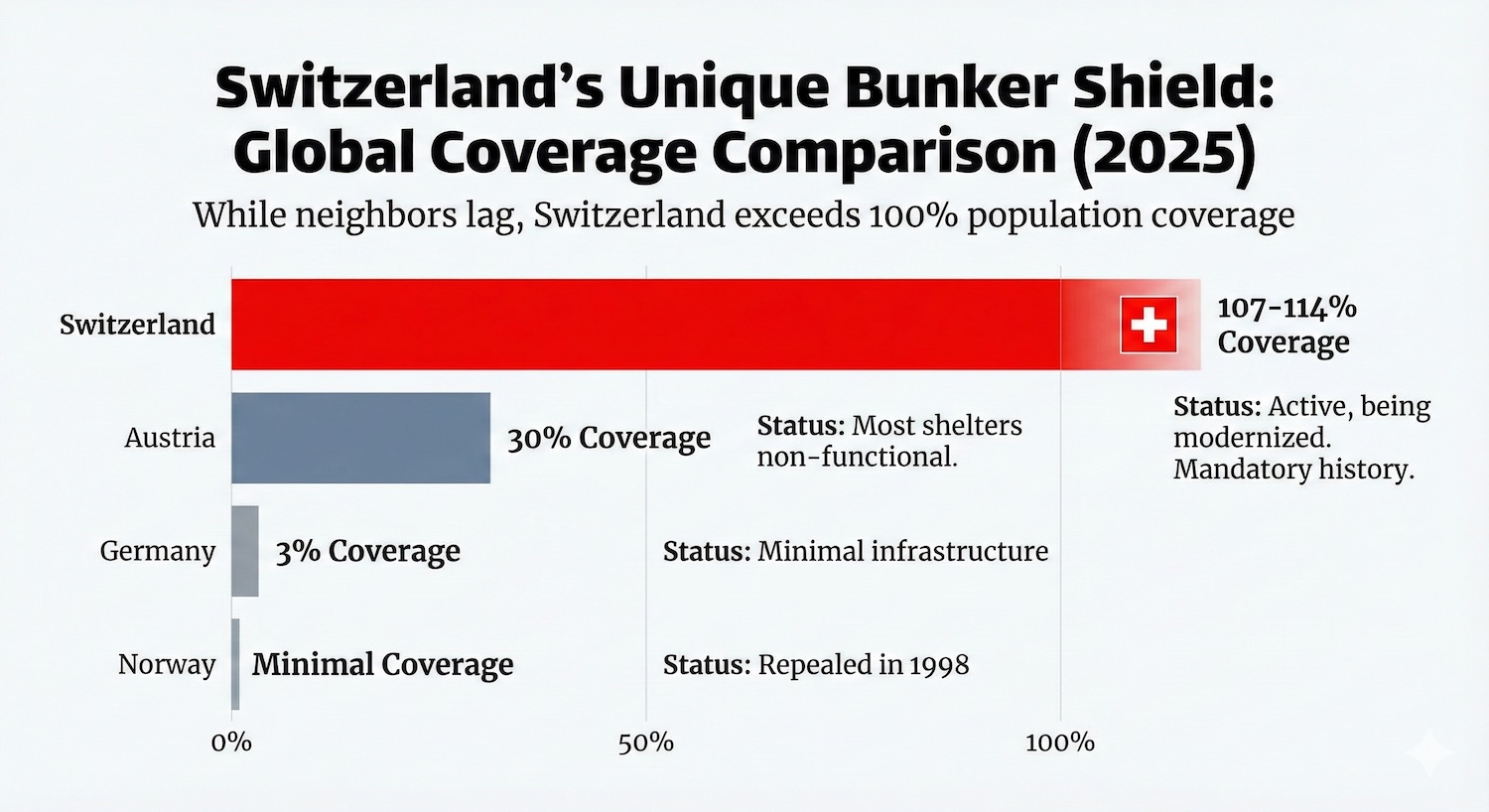
Switzerland stands almost entirely alone in its commitment to universal shelter access. No other Western democracy has mandated bunkers for its entire population.
Germany has approximately 3% bunker coverage. Most are old military installations from WWII.
Austria has 30% coverage, but most shelters are outdated and lack functional ventilation systems.
Norway actually repealed its bunker requirement in 1998, deciding it was a “relic of other times.”
Switzerland? Still building. Maintaining. Improving.
The contrast reveals something deeper: Switzerland’s culture of preparedness. The same mindset that keeps the Swiss military strong, the banks secure, and the trains running on time also maintains bunkers. It’s the manifestation of an old Latin phrase Helvetians take seriously: “Si vis pacem, para bellum” (If you wish for peace, prepare for war).
The Ukraine War Changed Everything (2022+)
For decades, the Swiss bunker system seemed like a relic—a Cold War artifact that no one would ever need. Wine collectors converted them into cellars. Teenagers discovered them as private meeting spaces. The apocalypse felt improbable.
Then Russia invaded Ukraine in February 2022.
Suddenly, bunkers felt very real.
Within weeks, the Unterirdisch-überleben association (literally “Survival Underground”)—which operates the Sonnenberg tours—received more inquiries about bunker locations and capacity than it had in 15 years. People stopped joking about wine storage and started asking: Where is my nearest shelter, and how do I access it?
The Federal Council took notice. On March 2, 2022, just one week after the invasion, the Confederation issued a directive to all cantons: “Review your shelter allocation plans and adapt as necessary.”
The Swiss government also announced plans to invest CHF 15 million annually in shelter maintenance (up from CHF 9 million), beginning in 2027. The 2026 civil protection ordinance update includes modernization plans for 200 larger bunkers at a cost of approximately $276 million.
The threat landscape expanded too. Modern bunkers are now designed to protect against not just nuclear fallout, but also chemical attacks, biological weapons, conventional bombing, and natural disasters like earthquakes.
The Phasing Out of Small Bunkers (2026+)
Here’s something surprising: Switzerland is retiring bunkers.
Specifically, approximately 100,000 small private bunkers—those designed for 7 or fewer people—are being phased out over the coming years. The reason is practical: their ventilation systems have reached the end of their 40-year lifespan. Replacing them is expensive and may not be cost-effective.
Instead, Switzerland is shifting resources toward maintaining and modernizing fewer, larger public shelters. The federal government believes it’s more economical to have 2,000-person shelters that are properly maintained than to manage 370,000 individual bunkers, many of which are wine cellars or storage rooms.
This doesn’t mean the end of universal shelter access. It means evolution. Public shelters will absorb capacity as private bunkers age out. The goal remains unchanged: “A shelter for every inhabitant.”
Common Misconceptions About Swiss Bunkers
Myth #1: “Every Swiss house has a bunker, and it’s well-stocked.”
Partially true, partially false. Houses built before 2012 are likely to have bunkers, but many built after that period don’t. And “well-stocked” is generous—most are wine cellars or storage rooms. In an actual emergency, the authorities would expect residents to bring in bunk beds and supplies within five days.
Myth #2: “Switzerland is obsessed with bunkers because it’s paranoid.”
Reframe: Switzerland is obsessed with bunkers because it’s realistic. A small, surrounded neutral country can’t rely on powerful allies. Self-reliance means preparedness. Banks, weapons, bunkers—they’re all expressions of the same philosophy: if you’re peaceful, you must be prepared to stay peaceful.
Myth #3: “Modern Swiss people ignore the bunker law.”
False. The 2022 Ukraine invasion proved otherwise. Public interest spiked immediately. Cantons reviewed their plans. The government increased funding. Preparedness remains culturally embedded.
Frequently Asked Questions About the Swiss Nuclear Bunker Law
It depends on when your building was constructed. If built before 2012, yes—the owner was required to build and equip one. If built after 2012, only if the building has more than 38 apartments. Otherwise, you pay a contribution fee (CHF 800-1,400) toward public shelters.
Yes, though modified. Articles 45 and 46 of the Federal Law on Civil Protection (1963) remain in effect. Every resident must have access to a protected shelter. The method has shifted from universal private bunkers to a mix of private (for large buildings) and public shelters.
A well-maintained Swiss bunker can reduce radiation intensity by a factor of 500, which means 500 times safer than outside exposure. Properly ventilated, they’re designed to sustain life for weeks. However, they won’t protect you from a direct hit or provide indefinite shelter without resupply.
Because it intends to stay not at war. The bunker system is an insurance policy—a message to potential adversaries that Switzerland can protect its population, making invasion or attack undesirable. It’s part of the “Armed Neutrality” doctrine.
Yes—and most Swiss people do. The thick concrete walls and stable temperature make them ideal for wine storage. You just need to be able to convert it back to a shelter (with beds and supplies) within five days if ordered.
Approximately 9 million people in 370,000 shelters. The country’s population is 8.6 million, so there’s roughly 107-114% coverage—enough for every resident plus some margin for tourists or population growth.
Technically yes, but downgraded. Its capacity was reduced from 20,000 to 2,000 people after 1987 exercises revealed operational problems. Today it functions as a historical museum and popular tour attraction. The A2 motorway traffic above (55,000 vehicles daily) makes it unsuitable as a functional emergency shelter.
The basics: reinforced concrete walls and ceiling, a blast door, ventilation with NBC filters, dry toilets, water storage, and space for bunks. Many also have emergency power generators. In peacetime, most contain wine racks, storage shelves, or home entertainment equipment.
The Federal Law on Civil Protection (Articles 45-46) was enacted in 1963, during the height of Cold War nuclear anxiety. Switzerland has been building and maintaining bunkers for over 60 years.
Yes—the only documented use was in December 2007, when police locked dozens of anti-bunker-closure protestors in the Sonnenberg Tunnel’s prison cells during civil unrest. Otherwise, they remain in standby mode, regularly inspected and maintained.