Can you cross a national border without actually leaving the country? In Switzerland, the answer is yes. You don’t need a passport, and there are no guards. But if you drive ten minutes west from Bern, the world tilts on its axis.
As you cross the river Saane (or Sarine, depending on who you ask), the heavy, wood-beamed farmhouses of the Emmental give way to elegant stone facades with shuttered windows. The beer on the cafe tables turns into glasses of crisp white Chasselas. And the polite, guttural “Grüezi” you offer strangers is met with a confused, melodic “Bonjour.”
Welcome to the Röstigraben (literally the “Hash Brown Ditch”).
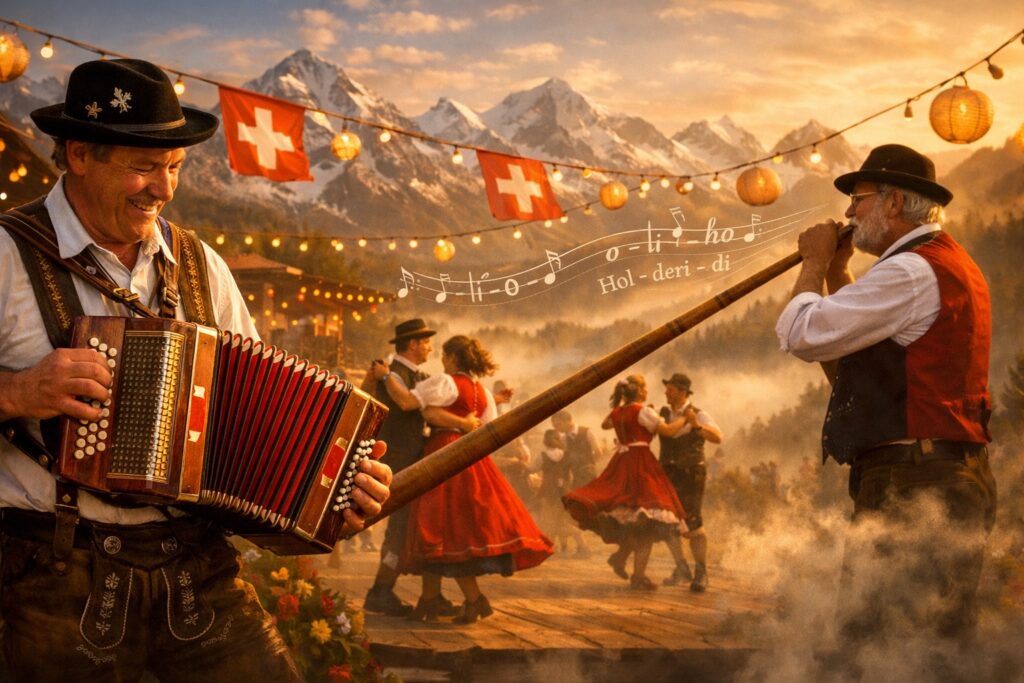
It is the invisible, psychological, and culinary wall that separates the German-speaking East from the French-speaking West. It is the reason one half of the country wakes up at 6:00 AM to ensure the trains run on time, while the other half stays up late to debate why life should be enjoyed more. It is a divide so sharp that marketing companies run entirely different ad campaigns for Geneva than they do for Zurich, knowing that a joke that lands in one will die in the other.
But is this “Potato Ditch” a line of hate, or just a friendly fence between neighbors? Is it a fracture that threatens the nation, or the very glue that holds it together? Let’s explore the hidden reality of Switzerland’s split personality.
What is the “Potato Ditch”? The Anatomy of a Divide
The term Röstigraben is a humorous compound of two words: Rösti (the buttery, fried potato dish beloved by the German Swiss) and Graben (ditch or trench).
While it sounds like a joke invented by a food critic, the concept is serious sociology. It describes the deep cultural chasm between the roughly 65% of the population who speak Swiss-German (Deutschschweiz) and the 25% who speak French (Romandie).
To the outsider, Switzerland looks monolithic: mountains, money, and watches. But to the insider, it is a binary system.
- Deutschschweiz (German Switzerland): Culturally closer to Germany but fiercely distinct from it. Stereotyped as serious, punctual, rule-obsessed, and pragmatic.
- Romandie (French Switzerland): Culturally aligned with France but more organized. Stereotyped as relaxed, open-minded, wine-loving, and occasionally rebellious.
The “Graben” Paradox: The irony of the Röstigraben is that Rösti (the potato dish) is now eaten everywhere. You can get excellent Rösti in Geneva. But the idea of the potato eaters vs. the wine drinkers remains a potent symbol of identity.
The WWI Roots: When the Ditch Was Real
To understand why this divide exists, we have to look past the menu and look at the trenches. The term might be modern, but the emotional rift was cemented during the First World War.
Between 1914 and 1918, Switzerland remained neutral, but its people did not. The country was emotionally torn apart.
- The German Divide: The German-speaking Swiss sympathized heavily with the German Empire. To them, Germany was a cultural cousin, a titan of science and industry.
- The French Divide: The French-speaking Swiss were horrified by the German invasion of Belgium and sided passionately with France and the Allies.
For four years, the Swiss press was at war with itself. German-Swiss newspapers cheered for the Kaiser, while French-Swiss newspapers cheered for the Republic. The “Graben” wasn’t just about potatoes then; it was about which side of Europe you wanted to see win.
General Ulrich Wille, the head of the Swiss Army during WWI, was visibly pro-German, which alienated the French speakers to a dangerous degree. It took decades for this distrust to heal, and in many ways, the modern political Röstigraben is the ghost of that polarization.
The Map That Splits in Two: A Political Marriage of Convenience
You might think these historical grievances are ancient history. But the Röstigraben appears on the map today with terrifying precision.
After national referendums—Switzerland holds them four times a year—Swiss TV displays the results colored by canton. Time and again, a clean line cuts the country in half, almost exactly along the linguistic border.
1. The “Bloody Sunday” of 1992
The most famous example occurred on December 6, 1992. The vote was on joining the European Economic Area (EEA), a stepping stone to the EU.
- Romandie Voted YES: They wanted openness, international connection, and to be part of the European family.
- Deutschschweiz Voted NO: They feared a loss of sovereignty, a loss of identity, and “foreign judges.”
The proposal failed by a razor-thin margin (50.3% No). The French speakers were furious, feeling dragged into isolation by their German-speaking cousins. Thousands of protesters took to the streets in Geneva chanting “Europe! Europe!” while the German Swiss celebrated their “independence.”
2. The Social Welfare Split
The divide isn’t just about foreign policy; it’s about how to live.
- Maternity Leave: For years, the German side blocked paid maternity leave, viewing it as a private family matter. The French side pushed for it as a state necessity. It finally passed in 2004, largely because the French side (and women across the board) dragged the conservative German cantons into the 21st century.
- Vacation Time: When voting on initiatives to increase mandatory vacation time to 6 weeks, Romandie almost always says “Oui” (Life is for living!). Deutschschweiz usually says “Nein” (Who will pay for this? We must work!).
It is a marriage of opposites: The Romands act like the rebellious teenagers wanting to change the world, and the Deutschschweizers act like the strict parents holding the checkbook.
A Tale of Two Dinner Plates: The Culinary Iron Curtain
If politics is too heavy, let’s talk about lunch. Food is the most visible daily indicator of which side of the ditch you are standing on.
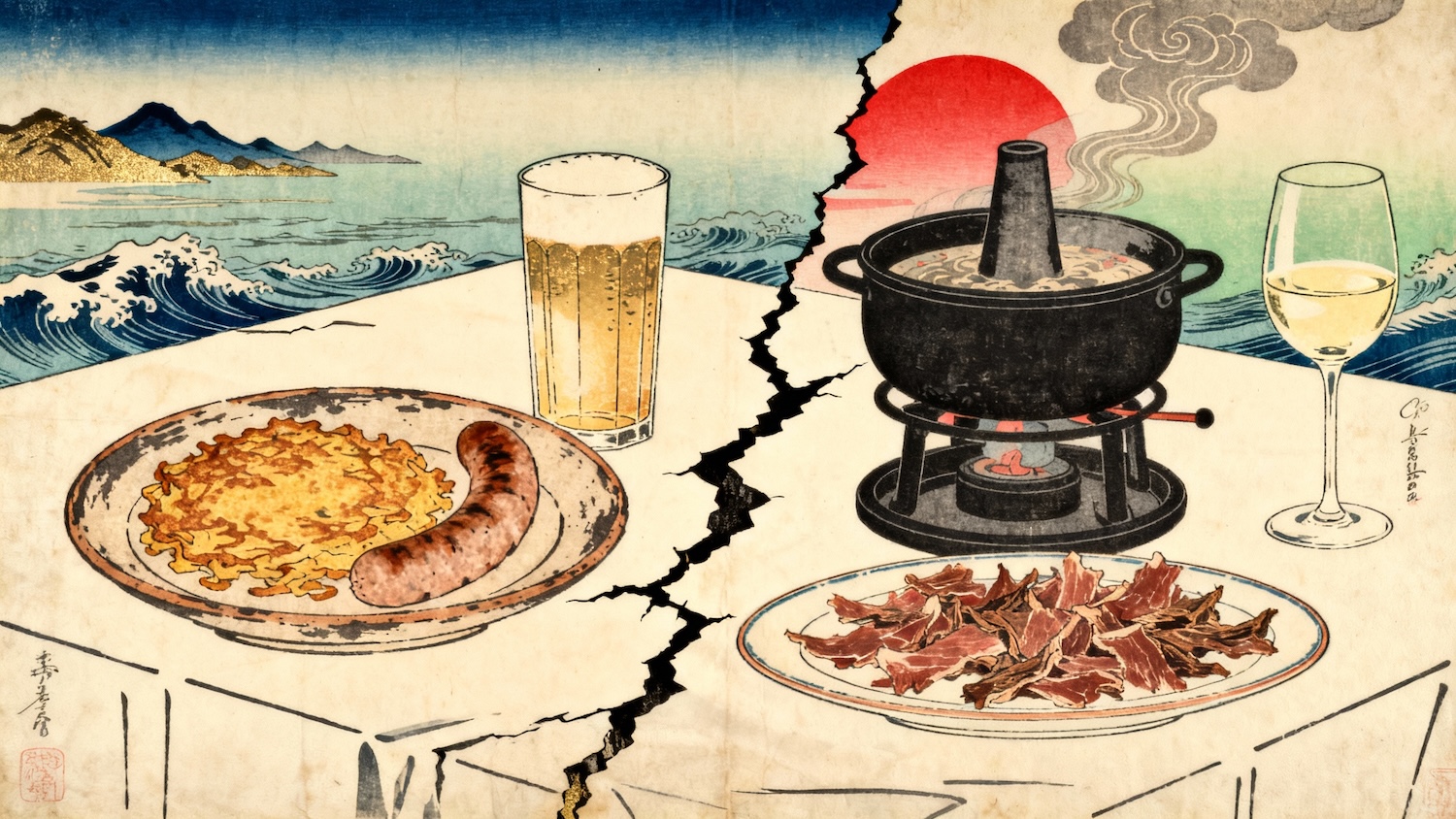
On the East Bank (German): Life revolves around substance. The cuisine is agrarian and fuel-heavy.
- The Meal: Pork sausages, Rösti, rich gravies, and heavy breads.
- The Drink: Beer (Lager or “Spezli”).
- The Vibe: The Stammtisch (regulars’ table). You sit, you eat, you discuss local politics, you leave. Efficiency is key. Lunch starts at 12:00 sharp. If you arrive at 12:15, you are late.
On the West Bank (French): Life revolves around pleasure. The cuisine is lighter, saucier, and slower.
- The Meal: Lake fish, cheese fondues (yes, shared, but eaten with wine), dried meats, and fruit tarts.
- The Drink: White wine (Chasselas or Fendant).
- The Vibe: The Apéro. This is not just a drink; it is a sacred ritual. A glass of wine at 5:00 PM can easily turn into dinner at 9:00 PM. The meal is the destination, not just the fuel.
The “Butter vs. Oil” War: Even the cooking fat changes. German Switzerland cooks with butter (the dairy influence). As you move deep into the French side and south toward the Valais, olive oil starts to appear more frequently. You can practically map the country by checking the frying pans.
Why Are We Still Together?
If the differences are so vast, why hasn’t the country split apart?
Historically, it almost did. As we explored in our deep dive into the Sonderbund War (1847), religious and cultural frictions have led to bloodshed in the past. Even during the era of Swiss Mercenaries, the French and German cantons often fought for opposing kings, deepening the rift long before the term “Röstigraben” existed.
But today, the Röstigraben represents a paradox: Unity through diversity.
The Swiss know that they are stronger together. The German side provides the economic engine and stability; the French side provides the cultural flair, diplomacy, and international connections (hosting the UN, Red Cross, and Olympics). They love to complain about each other, but like an old married couple, they cannot imagine life apart.
The “School Wars”: Which Neighbor Matters More?
Perhaps the most contentious modern battleground of the Röstigraben is not the ballot box, but the classroom.
For decades, the “social contract” of Switzerland was that you learned the other national language first.
- German kids learned French at age 8.
- French kids learned German at age 8.
But recently, the Röstigraben has widened. Many German-speaking cantons (like Zurich) have pushed to teach English before French. Their argument? “English is the global language of business. French is just ‘nice to have’.”
The French speakers view this as a betrayal. To them, learning the neighbor’s language is the “cement” of the nation. If a Swiss from Geneva and a Swiss from Zurich have to speak English to understand each other, are they even countrymen anymore? Or just two tourists meeting in a hotel lobby?
Where to Visit the “Border”: Standing in Two Worlds
If you want to experience the Röstigraben physically, you don’t need a Geiger counter. You just need to visit the transition zones. These cities are linguistic laboratories where the mixture creates something unique.
1. Fribourg / Freiburg: The Split City
Fribourg is the ultimate Röstigraben city. It is built on a literal gorge.
- The Experience: The river Sarine cuts through the center. On the east bank, the locals speak German, the street signs say Schulhaus, and the culture is distinctly Bernese. Cross the Zaehringen Bridge—a walk of 200 meters—and you are in French Switzerland. The signs say École, the vibe is looser, and the university students speak a “Fribourgeois” mix that borrows words from both.
- The Beer Test: Order a beer in the lower town (Basse-Ville). You might hear the waitress say, “Wollen Sie une pression?”—a perfect, chaotic blend of German grammar and French vocabulary.
2. Biel / Bienne: The Bilingual Utopia
While Fribourg is split, Biel is blended. It is the only officially bilingual city where everything—from bus announcements to tax forms—is in both languages simultaneously.
- The Experience: You will hear shopkeepers switch from German to French mid-sentence depending on the customer. It is a linguistic gymnastics routine that is fascinating to watch.
Conclusion: Viva la Difference
So, is the Röstigraben a problem?
The Swiss media loves to wring its hands and say yes. They worry that the country is drifting apart. But if you look closer, you realize that the Röstigraben is not a bug; it is a feature.
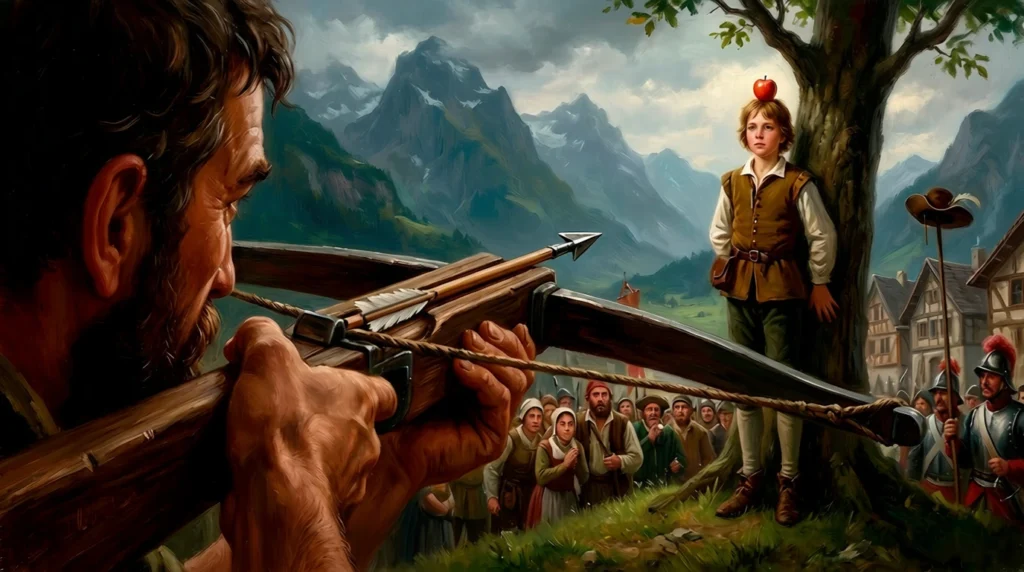
Switzerland is not a nation based on a common ethnicity, a common religion, or a common language. It is a Willensnation—a nation by will. Much like the legendary oath of William Tell, the country exists only because these very different people decide every day to stay together.
The Röstigraben provides the necessary friction. Without the French, the German Swiss might turn the whole country into a boring, hyper-efficient insurance company. Without the Germans, the French Swiss might spend all the national budget on wine festivals.
So the next time you visit, don’t just stay in one region. Cross the ditch. Eat the crispy Rösti and dip your bread in the Fondue. Complain about the train being one minute late in Zurich, and then laugh about it over a three-hour lunch in Lausanne.
That contradiction is the only way to taste the true flavor of Switzerland.