Close your eyes. An alphorn’s deep, mournful call rolls through misty Alpine valleys. Leather boots stomp precise Ländler rhythms on wooden floors. A raw yodel pierces crisp mountain air, bouncing off granite peaks. Swiss traditional music and folklore don’t merely entertain—they capture a nation’s soul, forged through centuries of isolation, rebellion, and communal joy.
This isn’t preserved-in-amber museum culture. These traditions pulse vibrantly at packed festivals. They bridge Switzerland’s 26 cantons, each adding distinct flavors: Appenzell’s delicate string polyphony, Graubünden’s brassy Ländler quintets, Ticino’s Italianate marches. Urban youth remix them with electronica. UNESCO campaigns recognize yodeling. In 2026, Basel’s Federal Yodelling Festival expects 150,000 visitors.
This comprehensive guide immerses you completely. Discover instruments born from pastoral necessity. Master yodeling’s vocal physics. Learn dances demanding perfect synchronicity. Unravel myths shaping national identity. Plan festival pilgrimages. By journey’s end, you’ll hear Switzerland’s heartbeat everywhere—from cowbells clanking pastures to flag throws soaring festival skies.
Iconic Instruments: Tools That Carved Soundscapes
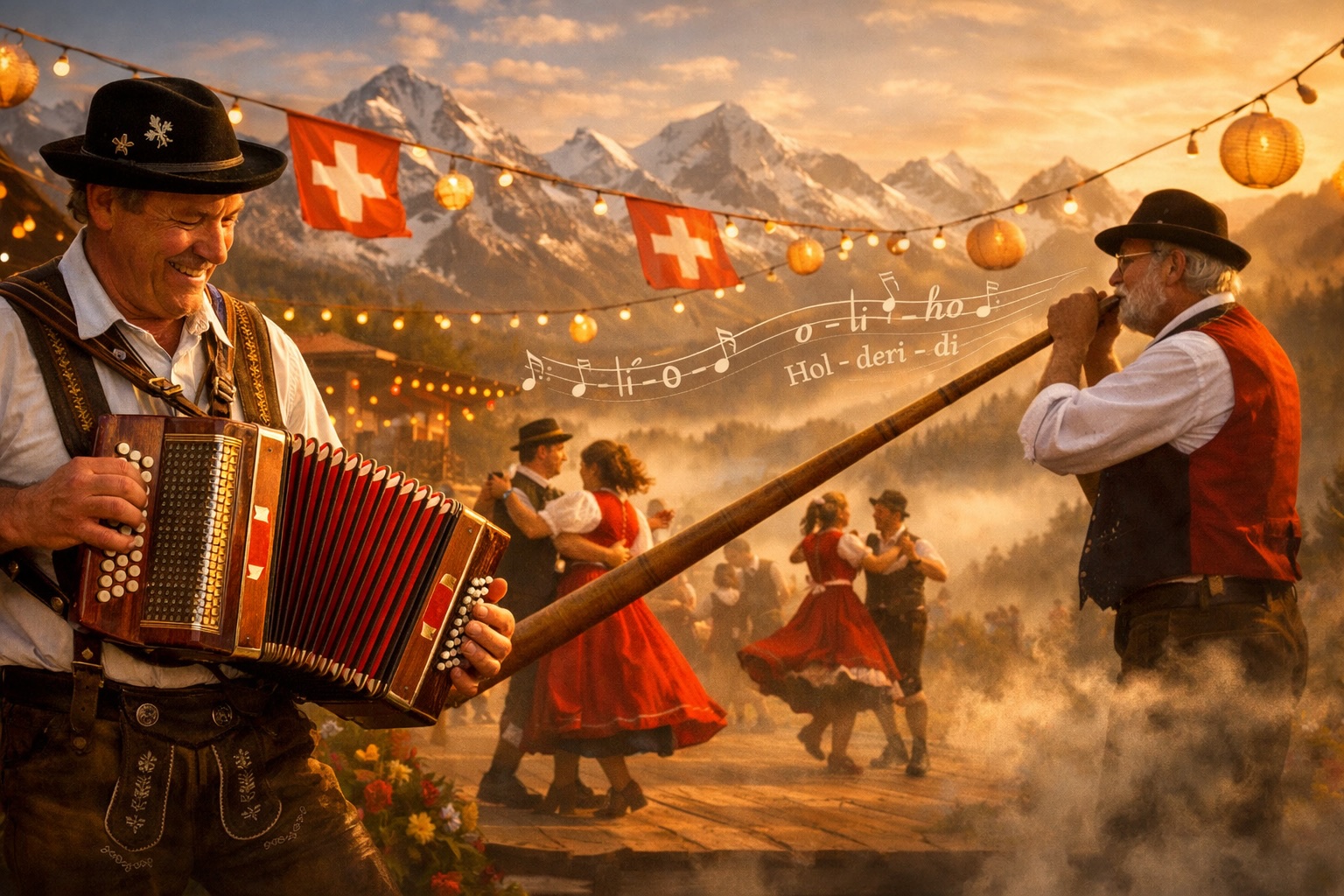
Alphorn commands awe first. Carved from single spruce trunks (3.5–4.2 meters long), its conical bell flares upward gracefully. Shepherds invented it around 1500 for long-distance cow calls across fog-shrouded valleys—no finger holes, valves, or reeds. Players master embouchure alone, producing a natural harmonic series (roughly nine notes). Buzz lips precisely at 111 Hz fundamental; overtones climb to ethereal falsetto. Miss? Discord. Hit it? Echoes carry 10+ kilometers. Modern makers steam wood spherically, dry years, polish with linseed oil. Brienz schools train 500 pupils annually; competitions judge purity, range, improvisation. Beyond symbols, alphorns underpin funerals, weddings—soundtracking life’s extremes.
Schwyzerörgeli revolutionized everything post-1886. J. Friedrich Haefeli patented this button accordion in Schwyz canton. Diatonic layout (G-C-F major scales) perfectly suits Ländler 3/4 time. 42 treble buttons, 12 bass/chord pallets—bellows pump staccato bursts driving dance fury. Central Switzerland’s trios rule: two fiddles weave melody, drone bass anchors, örgeli pulses rhythm like heartbeat. No piano accordion competes; its steirische (Styrian) cousin lacks folk purity. Duets dazzle at Schwyz Stubete evenings—fast scales blur fingers.
Appenzell preserves Hackbrett (hammered dulcimer) supremacy. 72–108 strings stretch across trapezoidal soundbox, tuned fourths/fifths. Birch mallets (one plain, one leather-tipped) strike sparkling arpeggios. Persian origins (9th century) met Alps via 18th-century wanderers. String quartets exclude percussion—no drums dilute elegance. Two violins lead counterpoint, cello grounds; dulcimer sprinkles fairy dust.
Graubünden Ländlerkapellen deploy clarinet aggression. Quintets balance two melody clarinets (Bb/A), twin orgeli harmony, thumping double bass. Romansh lyrics lament emigration, lost pastures. Ticino Bandellas march brassily—cornetti, helicons, tamburi—echoing Italian feste.
These aren’t artifacts. Interlaken’s Unspunnen pits 100 alphornists. Örgeli battles shake Schwyz barns. Strings serenade Appenzell pilgrims. Instruments demand mastery, reward community. Voices amplify next.
Yodeling: Vocal Alchemy of the Alps
Yodeling transcends trick. Train diaphragm for instantaneous register shift: thick chest voice (120–200 Hz) catapults to piercing head voice (600–1200 Hz). Shepherds signaled herds 5+ km through fog; families called across ravines. Physics explains “yodel break”—vocal folds slacken rapidly, creating formant peaks resonating cavernously off mountainsides.
Naturjodel epitomizes Appenzell purity. Wordless whoops cascade (fa-sol-la patterns), weaving string harmonies. No vibrato pollutes raw timbre—emotion flows unfiltered: pastoral longing, alpine joy. Performers sustain 20-second phrases on single breath.
Central cantons champion Juz (or Naturjuz). Duets trade motifs—”Hoi zä!” men bellow, women trill replies. Call-response mimics conversation, building ecstatic crescendos. Jodellied layers lyrics atop: lovesick ballads (“Mööt isch meh”), rebel anthems, homesick emigré laments. 500+ clubs nationwide compete graded tiers.
Women shattered patriarchy post-1960s. Schweizer Frauenjodler choirs (1972-founded) reclaim space; Gjon’s Tears (ESC 2021) globalized flips. UNESCO intangible heritage bids accelerate.
Federal Yodelling Festival culminates triennially. Basel 2026 forecasts 15,000 singers, 150,000 attendees across 4 days. Mornings: Naturjodel purity. Afternoons: Juz duets. Evenings: mass choirs (2000 voices). Alphorns drone foundations; flags whirl finales. Categories span beginner Stubai to elite Steirisch. Workshops teach falsetto control.
Live impact? Naturjodel erupts goosebumps. Juz forges instant bonds. Joy surges; sorrow aches deeply. Feet demand response—dances await.
Dances: Rhythms Etched in Muscle Memory
Ländler reigns supreme. 3/4 meter spins couples intimately—backs brush, arms interlock crossed, sudden rotations accelerate to blur. Örgeli trios propel: lead fiddle carves melody, second harmonizes thirds, drone bass stamps oom-pah. Central Switzerland perfects it; Schwyz barns host nightly circles. Dirndls flare crimson, lederhosen braces gleam under lanterns.
Appenzell refines grace. String quartets dictate gliding steps—partners mirror precisely, eyes locked, hands feather-light. No hops; pure flow evokes waltzes’ aristocratic ancestor (Mozart favored Ländler).
Schuhplattler detonates energy. Men percuss thighs-boots-belts in 2/4 fury (slap patterns: thigh-thigh-knee-cross). Bavarian 16th-century import gained Swiss machismo. Women circle demurely, skirts billowing; men rotate leaders. Zäuerli shouts (“Hoi-soi!”) punctuate exertion sweat.
Bödeli/Bedälä hammers communal. Couples face off, heels pound syncopated thunder—wood floors shake. Strangers pair randomly; bonds spark mid-stomp. Ticino Grotte sways languidly, accordion-guitar duets evoking Mediterranean siestas.
Flag throwing elevates spectacle. Men launch 3x5m banners 20m+ skyward, catch mid-whirl to yodel crashes. Unspunnen demands perfection—lightest touch wins.
Fasnacht unleashes pre-Lent anarchy. Basel 2026’s 72 cliques drum Schnitzelbänke (satirical verses mocking pols). 3am starts, 72-hour marathons. Liestal burns 30m broom-pyres. Appenzell Silvesterchläuse (New Year’s) parade 200 bell-ringers, scaring winter demons.
Dances transcend steps. They forge identity—stranger to sibling in three minutes. Myths whispered fuel melodies.
Legends: Myths Forging National Steel
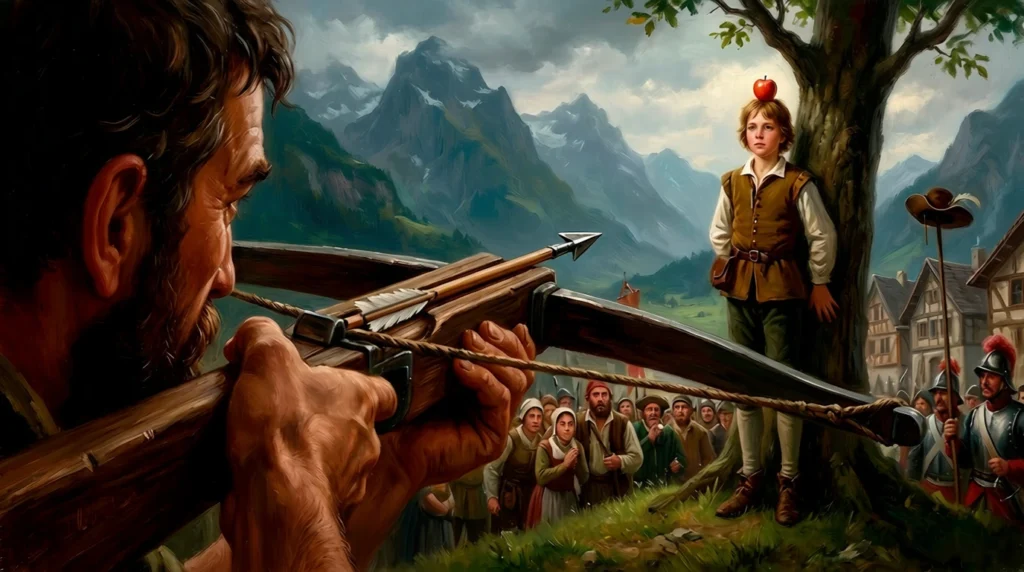
William Tell pierces deepest. Uri marksman defies Habsburg bailiff Gessler (1307?). Son’s head bears apple; crossbow flies true—center split, no harm. Tell slays tyrant, ignites revolt. Friedrich Schiller dramatized 1804; Rossini operatized 1829. Historicity? First texts 1470s Rütli-adjacent. Habsburg records omit. Yet Tell embodies marksmanship, fatherhood, defiance—Swiss DNA. Annual Altdorf plays draw thousands; Tell statues dot cantons.
Rütli Oath births confederation. August 1, 1291: Uri-Schwyz-Unterwalden free men swear meadow-side against Habsburg bailiffs. Meadow tours (Lake Lucerne) evoke shivers—granite cliffs loom. National holiday fireworks light it yearly. Chronicle evidence surfaces 1470s; modern historians call “foundation legend.” Irrelevant—identity endures.
Perchten parade wild. Krampus-kin masked figures (goat horns, bells) whip winter away. Central Valais Tschäggättä sport moss-shrouds, nut masks. Pilatus Dragon legends explain storms; White Witch Tödi spins blizzards. Rigi dwarves forge treasure underground.
Fasnacht revives spirits. Basel witches burn; Appenzell scarecrows blaze. Folklore tames chaos—nature’s rage, oppressors’ fall.
Jodellieds immortalize Tellshots. Yodels echo Rütli breezes. Myths breathe through melody. Festivals manifest them.
Festivals: Living Heritage in Motion
Unspunnen thunders Interlaken every 12 years (next 2027). 100 alphornists compete pitch purity. 7.5kg Krone stones sail 100m+. Schwingen wrestlers grapple dirt rings. 2000 costumed choirs vie Ländler. UNESCO-recognized since 2011.
Federal Yodelling Festival peaks triennially. Basel 2026: 100 choirs, 15,000 voices, 150,000 fans. Naturjodel dawn contests; Juz duo battles; mass finales shake arenas. Flag precision, alphorn obligatos dazzle.
Fasnacht detonates Februarys. Basel’s 72 cliques (3000 musicians) drum 72 hours from 4am Monday. Schnitzelbänke lampoons leaders. Liestal’s 1000°C broom-pyres roar. Lucerne giants parade.
Appenzell Pilgrimages pipe strings post-Sunday mass. Schwyz Stubete evenings teach Juz over Genever. Zermatt Matterhorn Festival fuses folk-electronica. Chur Ladin Carnival horns Romansh pride.
Summer Openairs nod roots: St. Gallen (50,000 attendees), Frauenfeld. Insider: Don Tracht (regional costume)—instant belonging. Workshops abound.
Revival: Folk Meets Digital Age
Neue Volksmusik electrifies. Stimmer Sisters layer orgeli atop synths. Gjon’s Tears yodeled Eurovision. TikTok flips viralize technique. Apps coach falsetto physics.
Music academies boom: 500 alphorn pupils, 2000 orgeli students yearly. Festivals youth quotas ensure succession.
Personal spark: Appenzell naturjodel lesson. Voice cracked thrice. Elder breathed demonstration—echo soared perfectly. Timeless connection clicked.
Urbanization erodes farms. Revivals counter: 500 folk clubs thrive. Future? Global—yodel remixes chart Spotify.
Quick checklist: Swiss essentials
- Instruments: Alphorn (pastoral), orgeli (dance), Hackbrett (sparkle).
- Yodels: Naturjodel (pure), Juz (duet), Jodellied (lyrics).
- Dances: Ländler (spin), Schuhplattler (slap), Bödeli (stomp).
- Myths: Tell (defiance), Rütli (oath).
- Fests: Unspunnen (strength), Basel Yodel 2026 (voice).
| Region | Signature Sound | Must-Experience Event |
|---|---|---|
| Central | Örgeli Ländler trios | Schwyz Stubete nights |
| Appenzell | String naturjodel | Post-mass pilgrim music |
| Graubünden | Clarinet quintets | Chur Ladin carnival |
| Interlaken | Alphorn wrestling | Unspunnen Festival |
Comprehensive FAQs
What’s the difference between Naturjodel, Juz, and Jodellied?
Naturjodel delivers wordless vocal whoops (Appenzell specialty, pure emotion). Juz features call-response duets (Central Switzerland, conversational bounce). Jodellied overlays romantic/heroic lyrics on yodel technique—choral competition staple.
How do you make an alphorn, and can anyone learn?
Artisans select straight spruce (18+ years growth), split lengthwise, hollow spherically via steam, reassemble with dowels, flare bell, season 2–5 years. Learning demands 1–2 years for basics (embouchure control yields 5–9 notes); conservatories offer graded courses. Children start age 8.
Is William Tell a true historical figure?
No contemporary records exist. First literary mention appears 1470s White Book of Sarnen (post-founding legend). Historians view him as composite folk hero symbolizing 14th-century resistance. Cultural impact outweighs historicity—Schiller’s play (1804) cemented immortality.
When and where is the next Federal Yodelling Festival?
Basel hosts July 2026 (every 3 years). Expect 100+ choirs, 15,000 participants, 150,000 visitors across 4 days. Categories: Naturjodel, Juz duets, Jodellied choirs, flag throwing. Free workshops teach beginners.
What makes Ländler different from waltz?
Ländler uses vigorous 3/4 spins with back-touching intimacy (pre-waltz rural form). Waltz formalizes arm extension, smoother glides. Örgeli drives Ländler staccato; strings soften Appenzell variants. Both trace Styrian/Austrian roots (late 1700s).
Which Swiss dance involves thigh-slapping?
Schuhplattler: men percuss thighs/boots/belts in 2/4 patterns during courtship display. Women circle gracefully. Bavarian import (1600s); Swiss variants add Zäuerli shouts. Performed at weddings, festivals.
What’s Fasnacht, and where’s best to experience?
Pre-Lenten carnival (Feb-Mar). Basel’s world-famous: 72 cliques (3000 musicians) drum 72 hours from 4am Monday; satirical Schnitzelbänke lanterns mock leaders. Liestal burns 30m broom-pyres. Appenzell parades Silvesterchläuse (New Year’s demons).
Can I learn Swiss folk music as a tourist?
Absolutely. Schwyz Stubete evenings teach orgeli/Juz. Appenzell naturjodel workshops. Brienz alphorn courses (week-long). Unspunnen offers intro sessions. No prior skill needed—locals embrace learners.
How does Swiss folk music vary by language region?
German Switzerland: orgeli Ländler, Juz yodels. French: Reformation erased much; revivals sparse. Italian Ticino: Bandella brass marches. Romansh Graubünden: clarinet quintets, melancholic Ladin laments.
What’s the Unspunnen Festival, and why important?
Interlaken spectacle (every 12 years, 2027 next). Alphorn precision contests, 7.5kg stone throws (100m+), Schwingen wrestling, mass choirs. UNESCO intangible heritage (2011). Celebrates strength, skill, community since 1805.
References
- MySwitzerland: Folk Music Guide. https://www.myswitzerland.com/en-us/planning/about-switzerland/custom-and-tradition/folk-music-in-switzerland/
- National Geographic: Yodeling Evolution. https://www.nationalgeographic.com/travel/article/swiss-yodeling-changing-how-experience
- Wikipedia: Swiss Folklore. https://en.wikipedia.org/wiki/Swiss_folklore
- Lebendige Traditionen: Central Folk Music. https://www.lebendige-traditionen.ch/tradition/en/home/traditions/folk-music-and-jutz-in-central-switzerland.html
- Unspunnen Festival Overview. https://www.lebendige-traditionen.ch/tradition/en/home/traditions/unspunnen-festival.html