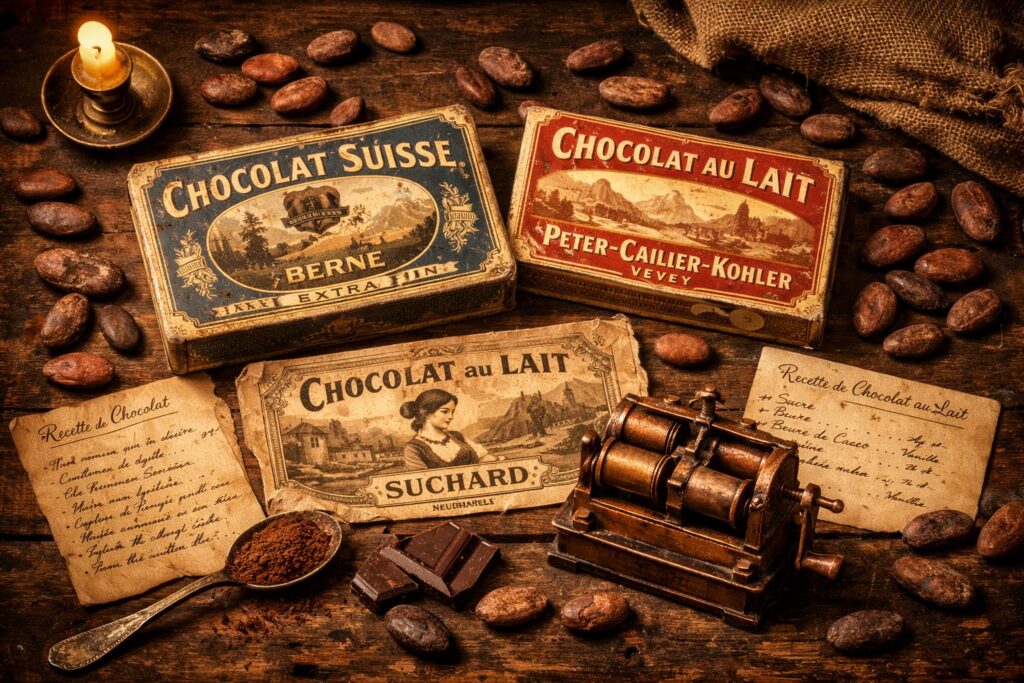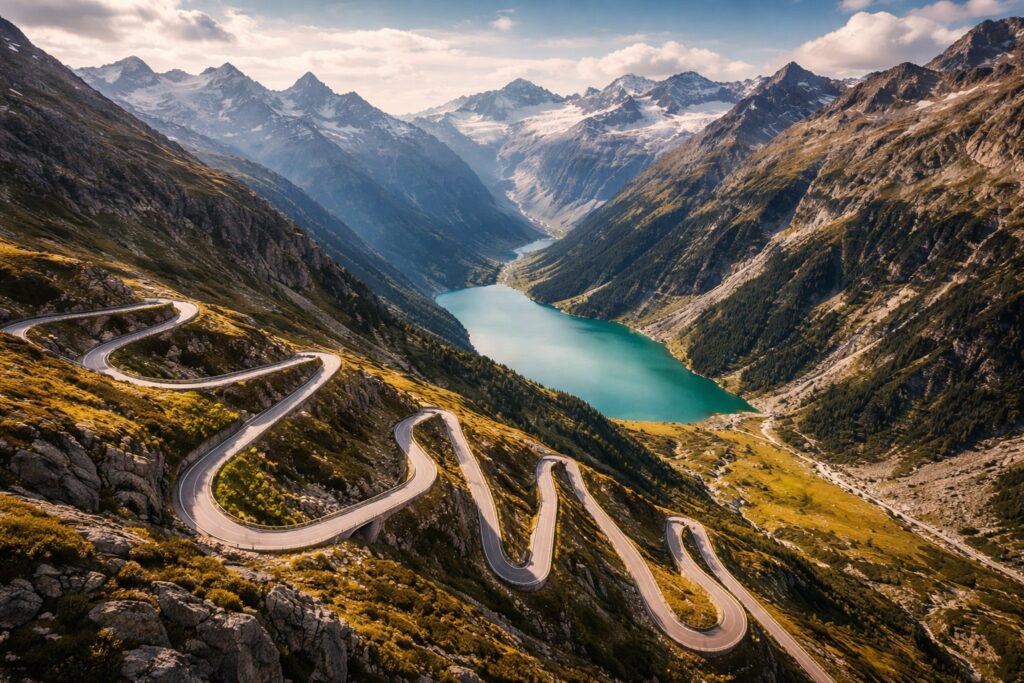
Most lists of the best places to visit in Switzerland read like brochures. Every lake is “stunning”, every village is “charming”, and you finish none the wiser about where to actually go. This guide is different. It’s built around a simple idea: a place becomes unforgettable when you know its story.
So for each of the 25 places below, you’ll find what makes it worth the trip, the heritage story most guides miss and an honest tip on how to see it well. Some of those stories are funny, like the hotelier who invented winter tourism with a bet. Others are moving, like the stone lion in Lucerne. Together, they explain why this small country packs so much into so little space.
Use the finder and the map to choose, the month planner to time your trip and the itinerary builder to string it all together. And if you only remember one thing, make it this: in Switzerland, the journey between places is often as good as the places themselves.
By Asel Mamytova, cultural historian and founder of Swiss Heritage. Facts last checked on 16 October 2026.
25 places, 25 hidden gems, 76 nearby wondersAll reachable without a carEvery claim checked against official sourcesSee the sources
Sources: UNESCO World Heritage Centre, Swiss Alpine Club, Swiss Travel System.
How we chose these 25 places
Switzerland has hundreds of beautiful spots. To make our list of the best places to visit in Switzerland, beauty alone wasn't enough. Every place had to pass four tests:
- A story worth knowing. Each one has a piece of history, culture or engineering that changes how you see it.
- Reachable without a car. You can get to all 25 by train, bus, boat or cable car.
- The whole country, not just the Alps. The list covers all four language regions and seven travel regions.
- Worth the effort in more than perfect weather. That's why Jungfraujoch, Europe's highest railway station, appears as an option rather than an entry of its own. It's the region's most expensive ticket, and on a cloudy day you'll see nothing but fog.
For each place, you'll also find a hidden gem that few visitors know, a box with practical planning details and a few bonus wonders nearby. Then we checked every date, figure and travel time against official sources, listed at the end of the guide.
Find the best places to visit in Switzerland for you
Not every traveller wants the same Switzerland. Some come for glaciers and cable cars, others for medieval lanes, wine terraces or museums on a rainy afternoon. Filter the 25 places below by what you love, or by region, and tap a card to jump straight to it.
Find your Swiss destination
Filter by what you love or by region, then tap a place to jump to it.
- 1Lauterbrunnen
- 2Grindelwald
- 3Wengen
- 4Mürren & Schilthorn
- 5Interlaken
- 6Zermatt & the Matterhorn
- 7Saas-Fee
- 8Aletsch Glacier
- 9Lucerne
- 10Bern
- 11Zurich
- 12Basel
- 13Geneva
- 14Rhine Falls & Stein am Rhein
- 15St. Gallen
- 16Appenzell & the Alpstein
- 17Chur
- 18St. Moritz & the Engadin
- 19Swiss National Park
- 20Lugano
- 21Locarno & Verzasca
- 22Bellinzona
- 23Lavaux
- 24Montreux & Chillon
- 25Gruyères
All 25 places on one map
Switzerland is small enough to cross by train in a few hours, so geography matters more than you'd think. Places that look far apart on a list are often neighbours. The map shows how the 25 places cluster into seven travel regions, which is how this guide is organised.
The 25 places on one map
Tap a number to see what makes the place special. Switch to hidden gems to see the little-known spot near each one.
Outline: Natural Earth via datasets/geo-countries. Positions are approximate; markers in the crowded Jungfrau region are slightly spread for legibility. The Vitra Campus gem lies just across the German border.
The Bernese Oberland and the Jungfrau region
If you have time for only one mountain region, many travellers choose this one, and for good reason. Within an hour of Interlaken, you'll find sheer valley walls, car-free villages, the famous trio of the Eiger, Mönch and Jungfrau, and a railway that climbs inside a mountain. Part of the region belongs to the Swiss Alps Jungfrau-Aletsch World Heritage Site.
The trick here is to sleep up high. Day-trippers crowd the trains between ten and four. Stay in a village, and you'll have sunrise and sunset almost to yourself.
1. Lauterbrunnen: the valley of falling water
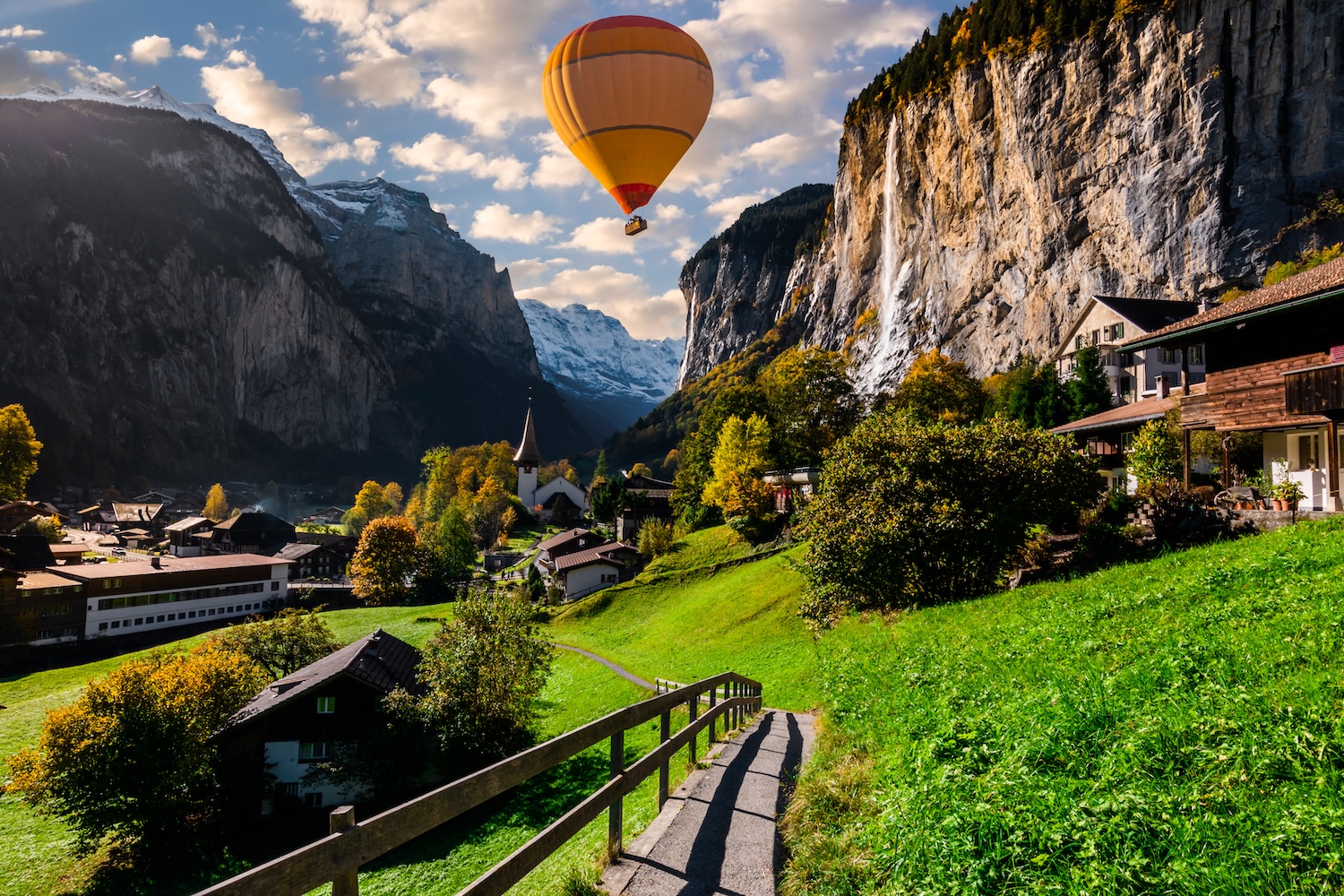
Lauterbrunnen is the picture people mean when they say "Switzerland". It's a deep, U-shaped valley carved by ice, with rock walls so steep that streams simply leap off them. The local tourism office counts 72 waterfalls.
The most famous, the Staubbach Falls, drops almost 300 metres beside the village church. In 1779, it moved Goethe to write his poem Song of the Spirits over the Waters. A few kilometres up the valley, the Trümmelbach Falls are even stranger: ten glacier-fed waterfalls that roar inside the mountain, reached by a lift in the rock.
The story most guides miss: in 1911, a young J.R.R. Tolkien hiked through this valley. Many readers believe it inspired Rivendell, the hidden elven valley in The Lord of the Rings.
Local tip: skip the selfie crowd at the church and walk the flat valley path to Stechelberg. Trümmelbach opens from spring to autumn only.
Hidden gem: at the far end of the valley, a two-hour walk above Stechelberg, the Berghotel Obersteinberg still runs without mains electricity. Evenings are lit by candles, and the terrace faces glaciers that most visitors never see.
Plan your visit
Getting thereAbout 2.5 hours from Zurich by train, changing at Interlaken Ost.
Give itOne to two days, together with Wengen and Mürren.
Best timeMay to October. The waterfalls are at their fullest in June.
Bonus: wonders nearby
- Isenfluh: a quiet hamlet on a sunny terrace, linked to Sulwald by a small cable car.
- Schynige Platte: a cogwheel railway from 1893 to an alpine garden with hundreds of mountain plants.
- Hinteres Lauterbrunnental: the protected head of the valley, with glaciers and almost no crowds.
2. Grindelwald: life under the Eiger
Grindelwald is a real village, with farms and cows, beneath one of the most notorious walls in mountaineering. The Eiger's North Face, nearly 1,800 metres of rock and ice, killed so many early climbers that German speakers nicknamed it the Mordwand, the "murder wall". An Austrian-German team of four finally climbed it in July 1938.
Today, the Eiger Express gondola, opened in 2020, takes you from Grindelwald to the Eigergletscher station in about 15 minutes, where the Jungfrau Railway continues to Jungfraujoch.
The story most guides miss: the hotel terrace at Kleine Scheidegg has long been a grandstand. In the 1930s, guests watched climbing dramas unfold on the face through telescopes.
Local tip: take the gondola to First for the Cliff Walk, then hike to the Bachalpsee, where the peaks reflect in the water on still mornings.
Hidden gem: from Grindelwald, a PostBus crosses the Grosse Scheidegg, a pass road closed to private cars, down to Rosenlaui and Meiringen. Just above Meiringen, the Reichenbach Falls are where Arthur Conan Doyle sent Sherlock Holmes over the edge in 1893. A funicular has run up to the viewpoint since 1899, from May to early October. A white star marks the ledge where Holmes and Moriarty fought.
Plan your visit
Getting thereAbout 2.5 hours from Zurich by train, changing at Interlaken Ost.
Give itOne to two days.
Best timeJune to September for hiking, December to March for skiing and sledging.
Bonus: wonders nearby
- Glacier Gorge: a walkway through a gorge carved by the Lower Grindelwald Glacier.
- Männlichen: the start of the classic trail to Kleine Scheidegg.
- Jungfraujoch: Europe’s highest railway station, at 3,454 metres. Go only on a clear day.
3. Wengen: the car-free balcony
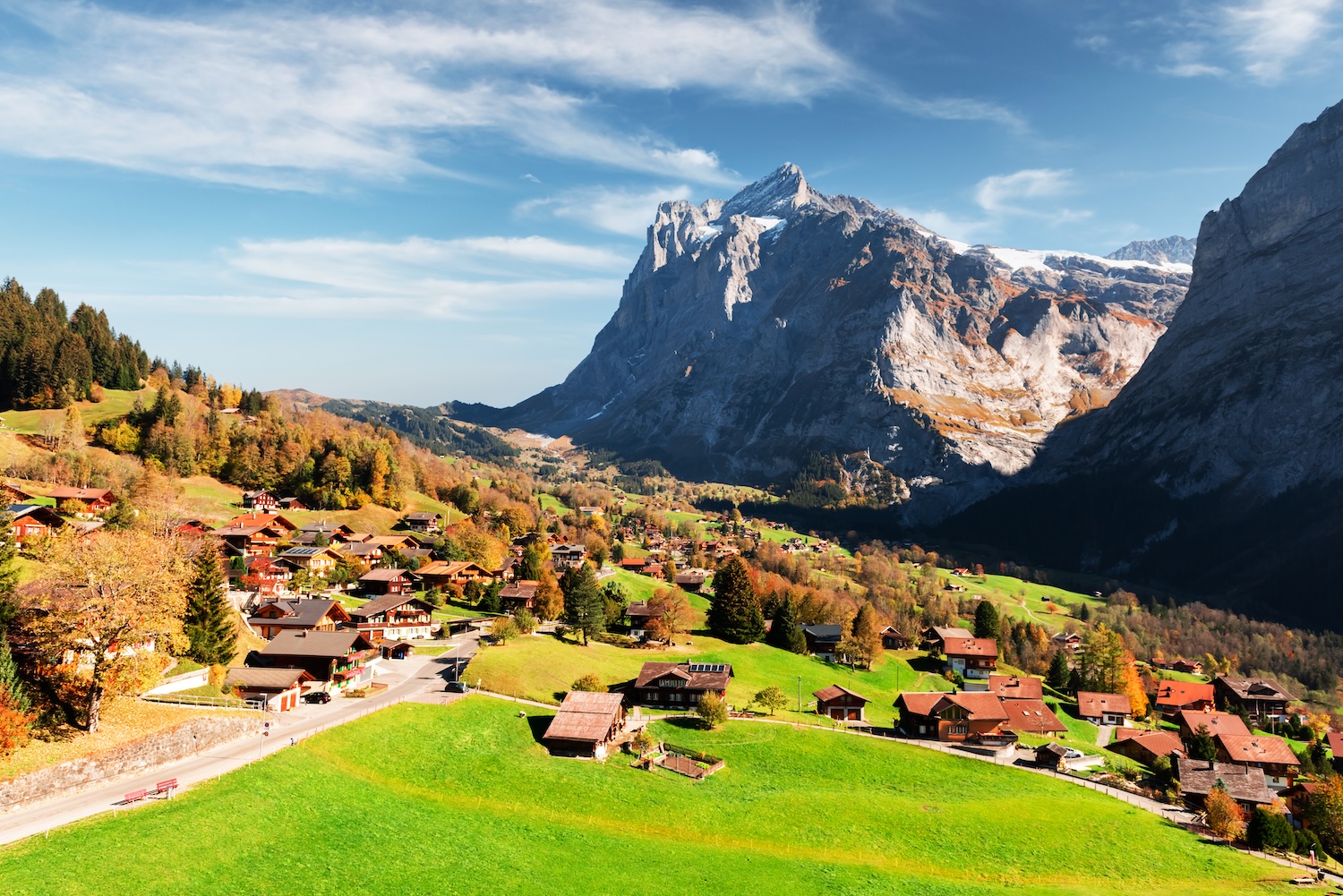
Wengen sits on a sunny shelf high above Lauterbrunnen, reached only by a cogwheel railway that has run since 1893. There are no private cars, so the loudest sound is often a cowbell.
Every January, Wengen hosts the Lauberhorn races. Its downhill is the longest on the World Cup circuit, at around 4.4 kilometres, and the racers reach speeds above 150 km/h. The race has run since 1930.
The story most guides miss: the course passes the "Hundschopf", a jump between rocks so narrow that it's become a rite of passage for racers and a magnet for spectators.
Local tip: in summer, walk the gentle trail from Männlichen to Kleine Scheidegg. It's one of the easiest high-mountain walks in Switzerland, with the Eiger in front of you the whole way.
Hidden gem: most passengers sit through Wengernalp, a stop between Wengen and Kleine Scheidegg. Get off. In 1816, Lord Byron stood here and watched avalanches pour off the Jungfrau, and the scene found its way into his drama Manfred. The view of the Jungfrau's ice walls has barely changed.
Plan your visit
Getting thereAbout 2 hours 45 minutes from Zurich, via Interlaken Ost and Lauterbrunnen.
Give itOne to two days.
Best timeJune to September, or mid-January for the Lauberhorn races.
Bonus: wonders nearby
- Royal Walk at Männlichen: a short summit trail to a crown-shaped viewing platform.
- Kleine Scheidegg: the pass below the Eiger North Face, where the Jungfrau Railway begins.
- Staubbach Falls: Lauterbrunnen’s 297-metre waterfall, a short train ride down the hill.
4. Mürren and the Schilthorn
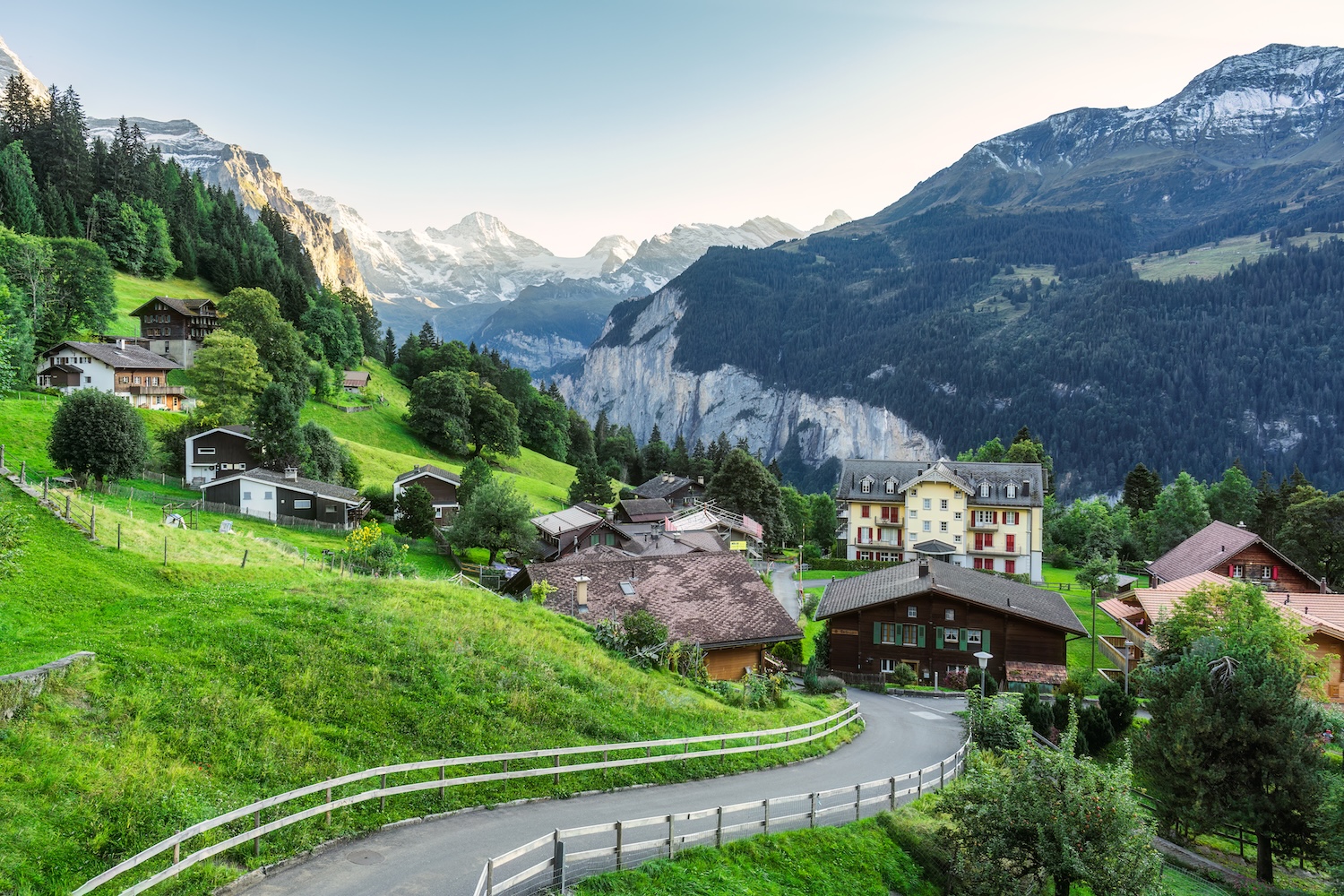
Mürren clings to a cliff edge on the other side of the valley. Like Wengen, it's car-free, and it may have the best balcony view in the Alps.
It's also where modern ski racing was born. In 1922, the British skier Sir Arnold Lunn organised the first modern slalom race here, and in 1928, Mürren hosted the first Inferno, a wild amateur race from the Schilthorn summit down to the valley. It still runs every winter.
The story most guides miss: the revolving summit restaurant on the Schilthorn, Piz Gloria, played the villain's lair in the 1969 James Bond film On Her Majesty's Secret Service. The producers helped finish the building in exchange for filming there.
Local tip: on the way down, get off at Birg and walk the Thrill Walk, a steel path bolted to the cliff, with glass floor sections.
Hidden gem: walk down to Gimmelwald, a farming hamlet on a ledge below Mürren, where some farms sell cheese and syrup from honesty boxes. Nearby, a trail from Spielbodenalp leads behind the Sprutz waterfall, so you pass through a curtain of spray.
Plan your visit
Getting thereAbout 3 hours from Zurich, via Lauterbrunnen and the cable car to Grütschalp.
Give itA full day, or a night to see the sunset.
Best timeJuly to September for hiking. Save the Schilthorn for a clear day.
Bonus: wonders nearby
- Allmendhubel: a funicular from Mürren to a flower trail and the start of the Northface Trail.
- Birg Thrill Walk: a steel path on the cliff below the Schilthorn summit.
- Grütschalp railway: an almost flat cliff-top line to Mürren, facing the Eiger, Mönch and Jungfrau.
5. Interlaken: more than a transfer hub
Most visitors treat Interlaken as a railway junction between Lake Thun and Lake Brienz. Stay a little longer.
The great meadow in the middle of town, the Höhematte, is open grass for a reason. In 1864, a group of hoteliers and locals bought it to stop anyone from building on it, so that guests would always see the Jungfrau from their windows. Interlaken traded building land for a view, and it's still paying off.
The story most guides miss: in 1805, a festival near Interlaken revived Alpine games such as wrestling and stone-throwing. Its 83.5 kg Unspunnen stone later became a political trophy. Jura separatists stole it in 1984, it came back in 2001, and it vanished again in 2005. Today's champions throw a replica.
Local tip: ride the funicular to Harder Kulm, the classic viewpoint above town.
Hidden gem: take the boat across Lake Brienz to the Giessbach landing. From there, a funicular opened in 1879, one of the oldest in Europe, climbs to the Grandhotel Giessbach, a belle époque hotel facing a waterfall that tumbles down 14 cascades. A footpath even runs behind one of them.
Plan your visit
Getting thereAbout 2 hours from Zurich via Bern, or about 2 hours 45 minutes on the scenic Luzern–Interlaken Express.
Give itOne day, or several nights as a base.
Best timeMay to October, when the lake boats run their full timetable.
Bonus: wonders nearby
- Ballenberg: Switzerland’s open-air museum, with more than 100 historic buildings from across the country.
- St. Beatus Caves: limestone caves above Lake Thun, tied to a legend about a dragon.
- Oberhofen Castle: a castle on Lake Thun with a tower standing in the water.
The Valais: Switzerland's highest ground
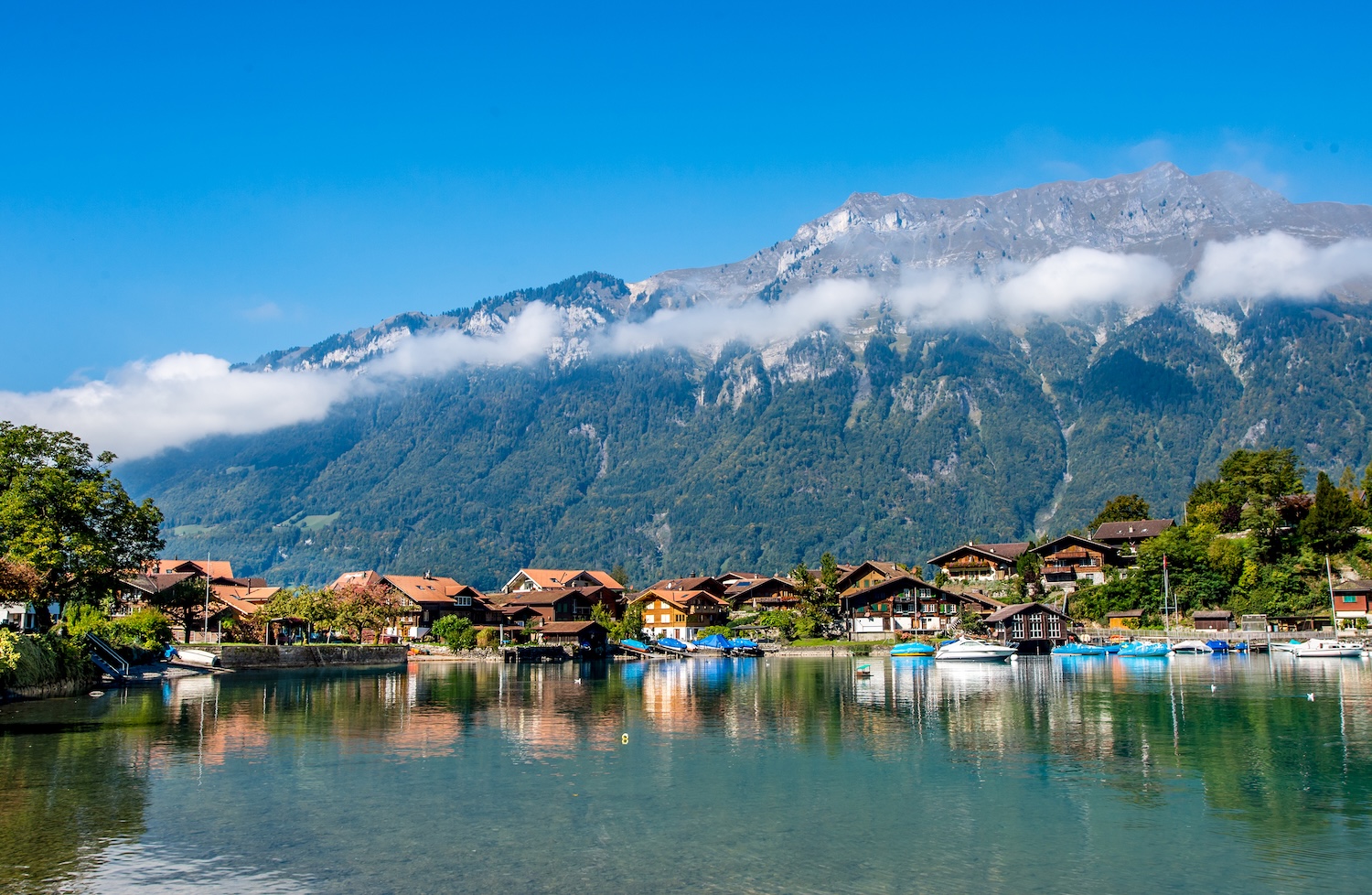
The Valais in the south-west is where Switzerland gets serious about altitude. Most of the country's 4,000-metre peaks rise here, along with its largest glacier. The canton is bilingual, French in the west and German in the east, sunny and dry, and famous for wine and apricots as well as ice. For a taste of its food, see our guide to traditional Swiss food.
6. Zermatt and the Matterhorn
No mountain on earth is photographed quite like the Matterhorn, whose summit is made of African rock. Zermatt, the village at its foot, banned combustion-engine cars long ago. You arrive by train and get around on foot or in small electric taxis.
The mountain's fame began with tragedy. On 14 July 1865, a party led by the Englishman Edward Whymper made the first ascent. On the way down, a rope broke and four men fell to their deaths. The disaster made headlines across Europe and, in a dark twist, made Zermatt famous.
The story most guides miss: the broken rope is still on display in the Matterhorn Museum, along with the story of the controversy that followed.
Local tip: take the first train up the Gornergrat railway, which opened in 1898, and walk down to the Riffelsee lake. On calm mornings, the Matterhorn is mirrored in the water.
Hidden gem: behind the main street, Zermatt's Hinterdorf keeps the village's oldest buildings: dark larch barns and granaries raised on stone slabs that kept mice out of the grain. Then walk up to Zmutt, a hamlet of barns and a chapel, 75 minutes above the village.
Plan your visit
Getting thereAbout 3 hours 15 minutes from Zurich, changing at Visp.
Give itTwo days, so you get at least one clear morning.
Best timeJuly to September for hiking, December to April for skiing.
Bonus: wonders nearby
- Gorner Gorge: wooden walkways through a glacier-carved gorge near the village.
- Five Lakes Walk: a trail from Blauherd down to Sunnegga past five lakes, three of which mirror the Matterhorn.
- Matterhorn Glacier Paradise: Europe’s highest cable car station, at 3,883 metres.
7. Saas-Fee: the glacier village
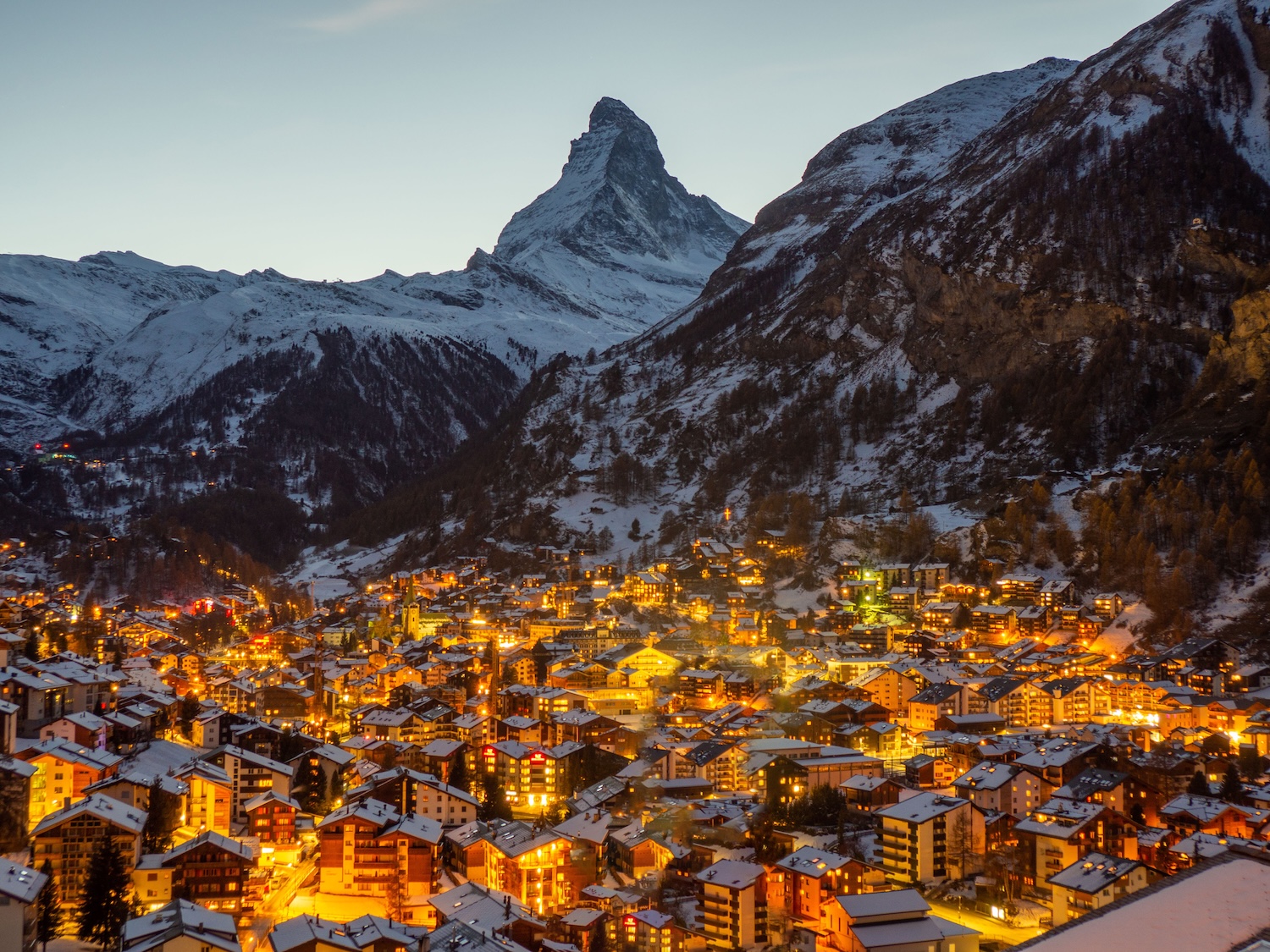
Saas-Fee, in the next valley east of Zermatt, is quieter, more compact and also car-free. It sits in a bowl surrounded by glaciers and some of the highest peaks in the Alps, which is why locals call it the "Pearl of the Alps".
From the village, the Alpin Express cable car rises to Felskinn. There, an underground funicular, the Metro Alpin, takes over and climbs to the Allalin, where the revolving restaurant at about 3,500 metres claims to be the highest in the world.
The story most guides miss: the German writer Carl Zuckmayer, who fled the Nazis, spent the last two decades of his life in Saas-Fee and became an honorary citizen in 1961. He's buried in the village cemetery.
Local tip: the summer glacier skiing on the Allalin is a rare treat. Even if you don't ski, the ice grotto and the views make the trip worthwhile.
Hidden gem: skip the bus for the last stretch and walk the Kapellenweg, an old pilgrims' path from Saas-Grund up to Saas-Fee. It passes 15 small chapels built between 1708 and 1711, each with figures showing one of the mysteries of the Rosary.
Plan your visit
Getting thereAbout 3 hours from Zurich: train to Visp, then the PostBus up the valley.
Give itOne to two days.
Best timeJuly to September, or December to April for snow.
Bonus: wonders nearby
- Mattmark: a reservoir at the head of the valley, behind a huge earth dam.
- Saaser Museum: village life in the Saas valley, including Carl Zuckmayer’s original study.
- Hohsaas: a lift from Saas-Grund to a viewpoint ringed by four-thousand-metre peaks.
8. The Aletsch Glacier
The Great Aletsch Glacier is the largest in the Alps, about 20 kilometres of ice flowing from the Jungfrau region towards the Rhône valley. It's the heart of the Jungfrau-Aletsch World Heritage Site, listed in 2001.
You can see it from Jungfraujoch, but the best views are from the Valais side. Cable cars lead from the car-free villages of Riederalp, Bettmeralp and Fiescheralp to viewpoints such as the Eggishorn.
The story most guides miss: in 1678, the villagers of Fiesch vowed to pray that the advancing glacier would stop growing. More than three centuries later, they asked the Church to let them pray for the opposite. Our full guide to the Aletsch Glacier tells that story, with the official melt data and the best viewpoints.
Local tip: walk through the Aletsch forest in October, when the larches turn gold beside the ice.
Hidden gem: on the Riederfurka above Riederalp stands Villa Cassel, the summer house of the British banker Sir Ernest Cassel. A young Winston Churchill was among his guests. Today, it's Pro Natura's Aletsch centre, with exhibitions and an alpine garden.
Plan your visit
Getting thereAbout 3 hours from Zurich: train to Mörel or Betten, then the cable car up.
Give itOne to two days.
Best timeJune to October. Come in October for the golden larches.
Bonus: wonders nearby
- Aletsch suspension bridge: a 124-metre bridge high over the Massa gorge between Riederalp and Belalp.
- Eggishorn: the classic viewpoint over the full sweep of the glacier.
- Binn valley: a quiet nature park famous for its rare minerals.
The great Swiss cities
Some lists of the best places to visit in Switzerland skip the cities, which is a mistake. Swiss cities are small by global standards, and that's their charm. You can cross most old towns on foot in half an hour, swim in their rivers and lakes in summer, and be in the mountains by lunchtime. Each one also tells a different chapter of Swiss history.
9. Lucerne: bridges, a lion and a clock with privileges
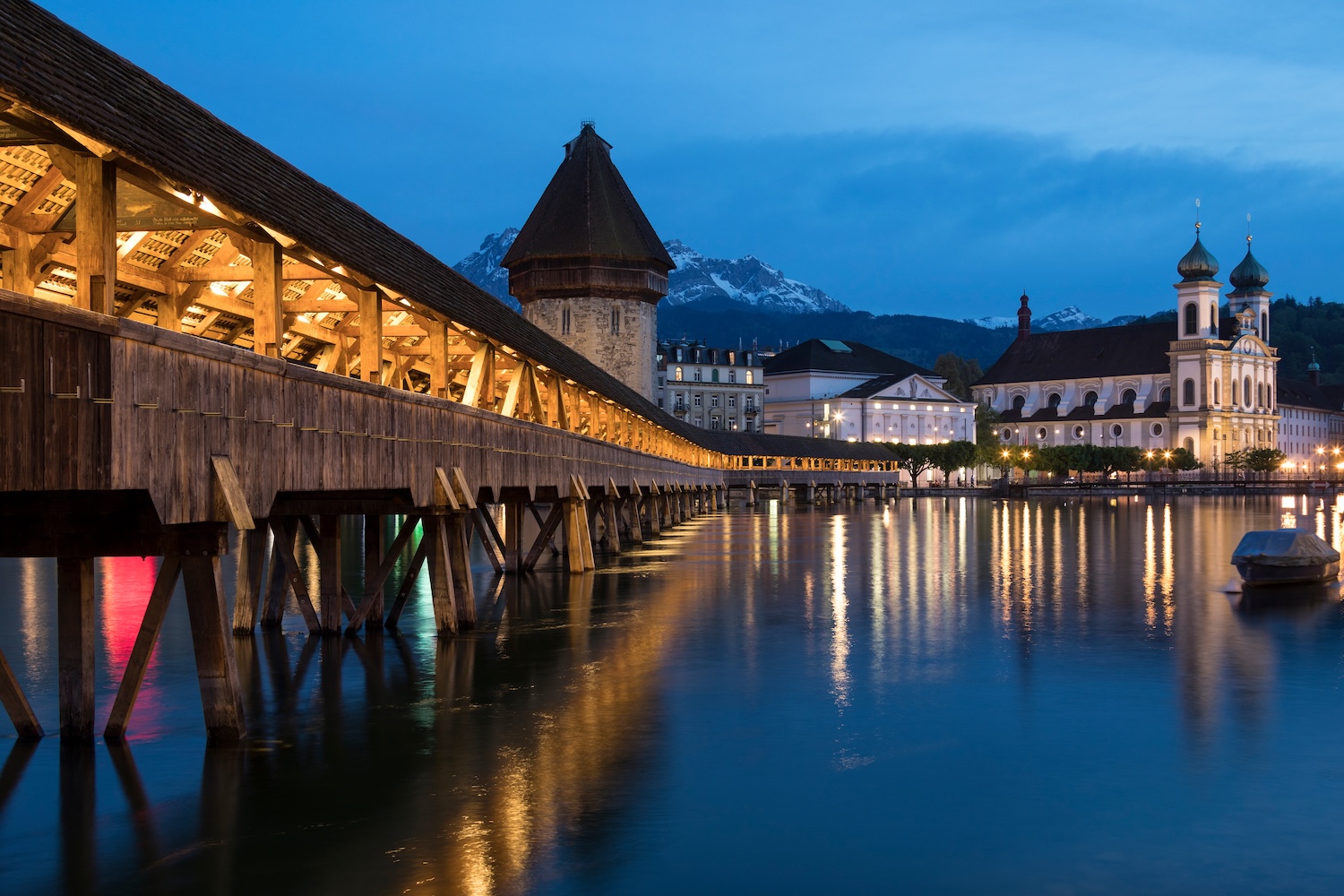
Lucerne sits where the River Reuss leaves Lake Lucerne. Its symbol, the Chapel Bridge, is a 14th-century covered wooden footbridge lined with painted panels. In 1993, a fire destroyed much of it, along with many of the paintings. It was rebuilt within a year.
Then there's the Lion Monument, a dying lion carved into a sandstone cliff. It honours the Swiss Guards killed in Paris in 1792 while defending the French king. Mark Twain called it "the most mournful and moving piece of stone in the world". It's a powerful reminder of the long history of the Swiss mercenaries.
The story most guides miss: in the old city wall, the Zyt tower has the oldest clock in Lucerne. By ancient privilege, it strikes the hour one minute before every other clock in the city.
Local tip: ride at least one leg of your trip on one of the lake's paddle steamers.
Hidden gem: a few steps from the Lion Monument, the Bourbaki Panorama is a circular painting about 112 metres long. It shows the defeated French army of General Bourbaki crossing into Switzerland in February 1871, when some 87,000 exhausted soldiers were disarmed, fed and cared for. Most visitors walk straight past it.
Plan your visit
Getting thereAbout 45 minutes from Zurich by train.
Give itOne to two days, plus a mountain.
Best timeMay to October for the lake steamers, December for the markets.
Bonus: wonders nearby
- Rigi: the “queen of the mountains”, with Europe’s first mountain railway, opened in 1871.
- Pilatus: reached by the world’s steepest cogwheel railway, with gradients of up to 48%.
- Rütli meadow: the meadow where, legend says, the Confederation was sworn. Read Was William Tell real?
10. Bern: arcades, a clock and Einstein's flat
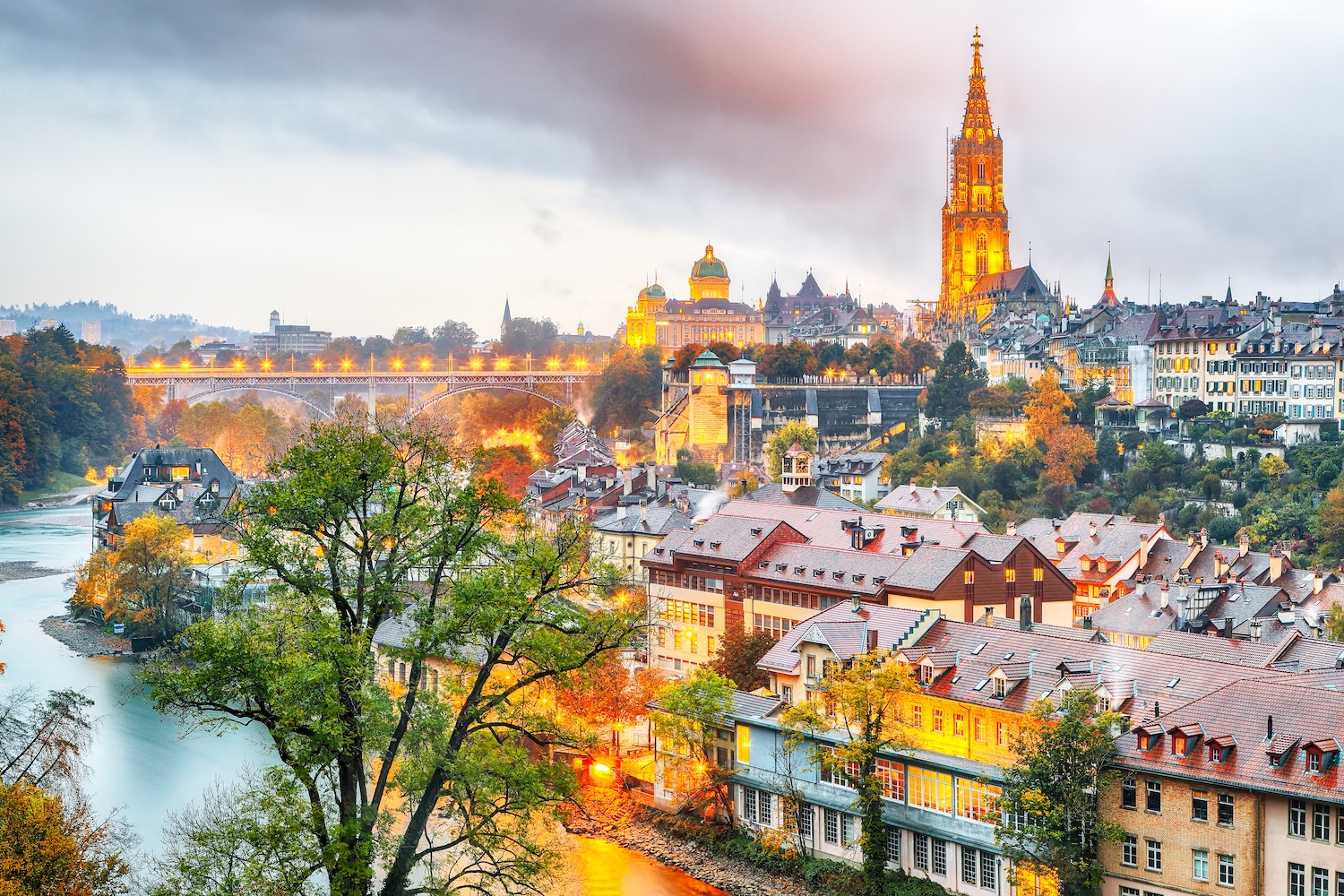
Bern's old town, wrapped in a loop of the green Aare, has been a UNESCO World Heritage Site since 1983. Its sandstone arcades, known as Lauben, run for about six kilometres, so you can shop in the rain without an umbrella.
In the middle stands the Zytglogge, a medieval tower with an astronomical clock from 1530. A few doors away, at Kramgasse 49, Albert Einstein lived while he worked at the patent office and developed his special theory of relativity in 1905.
The story most guides miss: Bern isn't officially the capital of Switzerland. The constitution doesn't name a capital at all, and federal law calls Bern only the "federal city", for reasons we explain in our article on the capital of Switzerland.
Local tip: in summer, do what the locals do and float down the Aare, as described in our guide to river swimming in Switzerland. Only if you're a strong swimmer, though.
Hidden gem: look down as you walk the arcades. Steep wooden doors in the pavement lead to vaulted cellars that now hold bars, shops and tiny theatres. Down by the river, the Marzili funicular has carried passengers since 1885 on a track barely 100 metres long, one of the shortest in Europe.
Plan your visit
Getting thereAbout 1 hour from Zurich by train.
Give itOne day.
Best timeAll year. Come in summer for the Aare, or on the fourth Monday of November for the onion market.
Bonus: wonders nearby
- Gurten: Bern’s own mountain, by funicular, with views to the Alps.
- Emmental: rolling dairy country with huge-roofed farmhouses and a show dairy.
- Thun: a castle town on Lake Thun, about 20 minutes away by train.
11. Zurich: where Dada was born
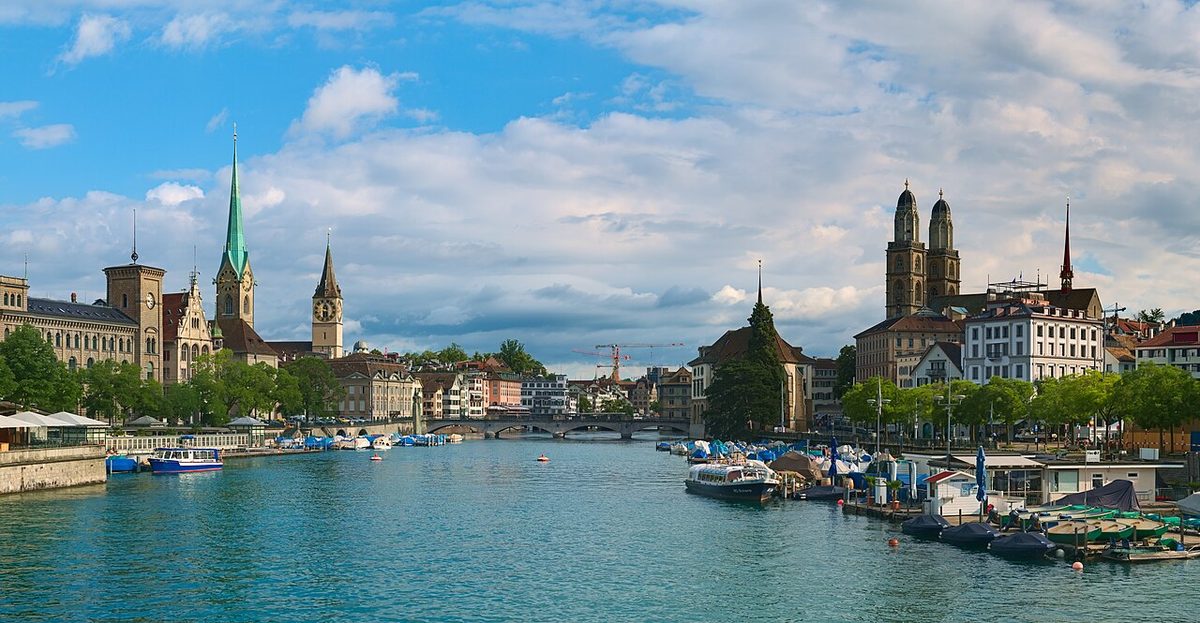
Zurich is Switzerland's largest city and its financial heart, but it's more playful than its banking image suggests. In 1916, a group of artists founded Dada at the Cabaret Voltaire in the old town. Four centuries earlier, the reformer Huldrych Zwingli preached at the Grossmünster and helped launch the Swiss Reformation.
Across the river, the Fraumünster church glows with stained-glass windows by Marc Chagall, installed in 1970. On summer evenings, office workers cool off in lake and river baths in the city centre.
The story most guides miss: Paradeplatz, the square at the heart of Swiss finance, was once a livestock market, known locally as the Säumärt, the "pig market". Our story of Swiss banking secrecy explains what happened in the banks around it.
Local tip: climb to the Lindenhof, on the site of a Roman fort, for the best free view of the old town.
Hidden gem: on the lake shore at Zürichhorn, the Pavillon Le Corbusier is the last building the architect designed, completed in 1967, two years after his death. It's now a museum. In the old town, the Kronenhalle restaurant still hangs originals by Chagall, Miró and Picasso.
Plan your visit
Getting thereZurich is the hub. The airport is about 10 to 15 minutes from the main station.
Give itOne to two days.
Best timeAll year. Summer for the lake baths, April for the Sechseläuten spring festival.
Bonus: wonders nearby
- Uetliberg: the city’s own mountain, about 25 minutes by train, with views over the lake.
- Rapperswil: a castle town with a long wooden footbridge across the lake.
- Einsiedeln Abbey: a vast baroque abbey, about an hour away.
12. Basel: museums and river ferries
Basel sits where Switzerland, France and Germany meet, and it feels international in the best way. It has dozens of museums, from the Kunstmuseum to the Fondation Beyeler and the playful Museum Tinguely.
Basel's Fasnacht, a three-day carnival that begins with the eerie 4 a.m. Morgestraich parade, is on UNESCO's list of intangible cultural heritage. In summer, locals float down the Rhine with fish-shaped waterproof bags.
The story most guides miss: Basel's four small river ferries have no engine. Each one hangs from a cable across the Rhine and uses the current alone to push it from one bank to the other.
Local tip: take the ferry across the Rhine for a coin or two, then walk up to the terrace behind the Minster for the view back over the river.
Hidden gem: a short bus ride across the German border, the Vitra Campus in Weil am Rhein is an open-air collection of modern architecture. You'll find buildings by Frank Gehry, Tadao Ando and Herzog & de Meuron, plus a fire station that was Zaha Hadid's first major completed building. Take your passport or ID card.
Plan your visit
Getting thereAbout 1 hour from Zurich by train.
Give itOne to two days.
Best timeFebruary or March for Fasnacht, summer for swimming in the Rhine, June for Art Basel.
Bonus: wonders nearby
- Augusta Raurica: a Roman town with a theatre that once seated thousands, about 20 minutes away.
- Dreiländereck: the point in the Rhine harbour where Switzerland, France and Germany meet.
- Goetheanum: Rudolf Steiner’s monumental concrete building in Dornach.
13. Geneva: a fountain, the UN and the web
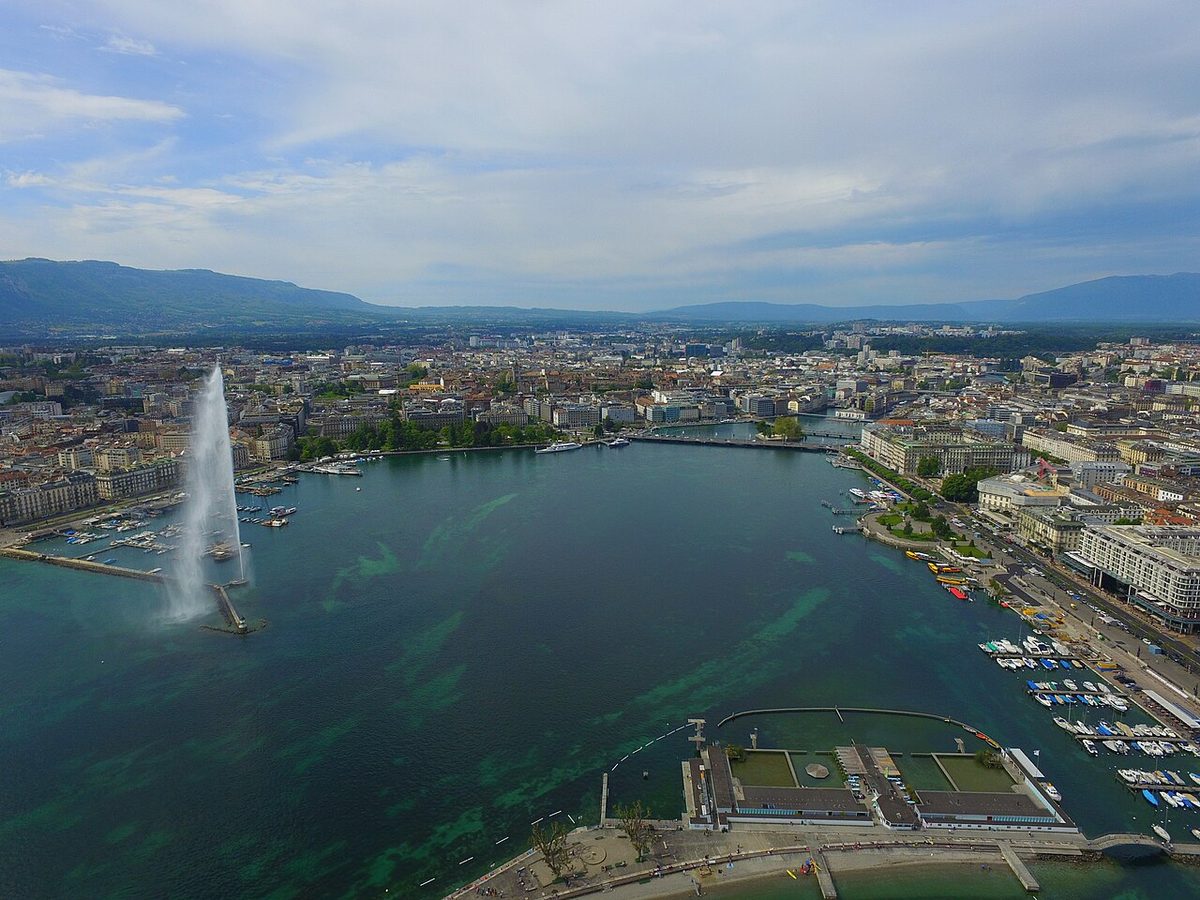
Geneva is the most international city in Switzerland, home to the United Nations' European headquarters and the Red Cross. Its symbol, the Jet d'Eau, shoots water about 140 metres into the air.
It began in the 1880s as a practical fix, releasing excess pressure from the city's hydraulic power network. People liked it so much that the city made it a permanent landmark.
The story most guides miss: the World Wide Web was invented in 1989 at CERN, the particle physics laboratory on the edge of Geneva. Its Science Gateway visitor centre is free.
Local tip: walk the old town up to St. Peter's Cathedral, where John Calvin preached. Then walk down past the Reformation Wall. Our guide to Swiss neutrality explains why so many international organisations chose Geneva.
Hidden gem: cross the Arve to Carouge. In the late 18th century, the King of Sardinia had it laid out as a Catholic rival to Protestant Geneva, and it still feels more like Turin than Calvin's Geneva. Back by the lake, locals swim, sweat in the sauna and eat fondue in winter at the Bains des Pâquis, a public bathing jetty. Just west of Carouge, at La Praille, stand the windowless warehouses of the Geneva Freeport, where art and wine wait under customs.
Plan your visit
Getting thereAbout 2 hours 45 minutes from Zurich by train. The airport is about 7 minutes from the main station.
Give itOne to two days.
Best timeMay to September, or mid-December for the Escalade festival.
Bonus: wonders nearby
- Salève: a cable car into France for the classic view of Geneva and Mont Blanc.
- Château de Coppet: the lakeside home of Madame de Staël and her famous salon.
- Hermance: a medieval village on the lake at the French border.
The northeast: waterfalls, abbeys and open-air democracy
First-time visitors often skip the northeast, yet it belongs on any list of the best places to visit in Switzerland. It combines a thundering waterfall, the most beautiful library in Switzerland and a corner of the Alps where old traditions are still part of everyday life.
14. Rhine Falls and Stein am Rhein
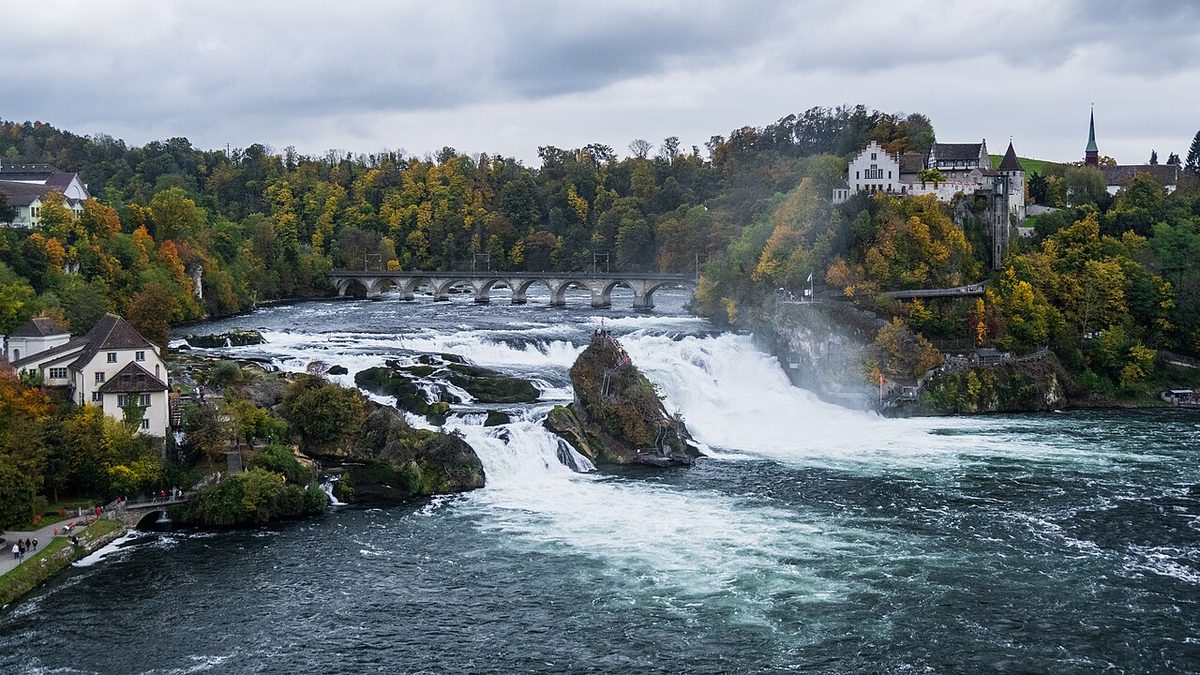
The Rhine Falls near Schaffhausen are about 150 metres wide and 23 metres high. They aren't tall, but they are powerful. In early summer, the average flow can reach around 600 cubic metres per second, which makes them the largest plain waterfall in Europe.
Boats take you right to the rock in the middle of the falls, where you can climb steps to a viewing platform surrounded by spray.
The story most guides miss: half an hour upstream, the small town of Stein am Rhein has some of the finest painted house facades in Europe. Many date from the 16th century and tell stories from history and legend.
Local tip: visit the falls early in the morning, then take the train to Stein am Rhein for lunch on the Rathausplatz.
Hidden gem: in Schaffhausen, the round fortress of the Munot crowns the old town. Every evening at 9 p.m., the Munot watchman, who lives in the tower, rings its little bell, a custom kept for centuries. The streets below have more than 170 decorated oriel windows. The inscription on one of them, in the Neustadt, recalls the Schaffhausen bombing of 1 April 1944.
Plan your visit
Getting thereAbout 45 minutes from Zurich to the falls. Stein am Rhein is about an hour away.
Give itA full day for both.
Best timeJune and July, when the Rhine carries the most water.
Bonus: wonders nearby
- Rheinau: a baroque abbey on an island in the Rhine, just downstream of the falls.
- Hohenklingen Castle: a medieval castle on the hill above Stein am Rhein.
- Reichenau Island: a UNESCO-listed monastery island across the border on Lake Constance.
15. St. Gallen: the pharmacy of the soul
St. Gallen grew around a monastery founded in the 8th century, and its abbey district has been a UNESCO World Heritage Site since 1983. The highlight is the Abbey Library, one of the oldest libraries in the world and one of the most beautiful rooms in Europe.
Above its door, a Greek inscription reads Psyches Iatreion, "pharmacy of the soul". Inside, you walk in felt slippers over the wooden floor, surrounded by baroque shelves and manuscripts more than a thousand years old.
The story most guides miss: St. Gallen grew rich on lace. Around 1910, machine embroidery from this region was Switzerland's biggest export, a story we tell in our guide to why Switzerland is so rich.
Local tip: order a St. Gallen bratwurst from a street stall, and don't ask for mustard. Locals eat it plain.
Hidden gem: take the little Mühlegg funicular up from the old town to the Drei Weieren, three ponds above St. Gallen that now make the city's favourite bathing spot. Back down in town, the "city lounge" by the artist Pipilotti Rist and the architect Carlos Martinez covers a whole block in red, from the ground to the benches.
Plan your visit
Getting thereAbout 1 hour from Zurich by train.
Give itOne day.
Best timeAll year for the library. Summer for the Drei Weieren ponds.
Bonus: wonders nearby
- Säntis: the highest peak of the Alpstein, reached by cable car from Schwägalp.
- Lake Constance: the lakeside town of Rorschach is about 15 minutes away by train.
- Appenzell: about 35 minutes away on the narrow-gauge Appenzell Railways.
16. Appenzell and the Alpstein
Appenzell feels like a Switzerland from a storybook: painted wooden houses, cheese shops and a backdrop of limestone peaks. Yet its traditions are very real.
On the last Sunday of April, the citizens of Appenzell Innerrhoden gather in the town square and vote on laws by raising their hands, at the Landsgemeinde. It's a living example of Swiss direct democracy. The same canton was also the last to let women vote in cantonal matters, and only after a federal court ruling in 1990, as our story of Swiss women's suffrage explains.
The story most guides miss: the famous Aescher cliff inn sits beneath an overhang next to the Wildkirchli caves, where traces of Stone Age hunters have been found.
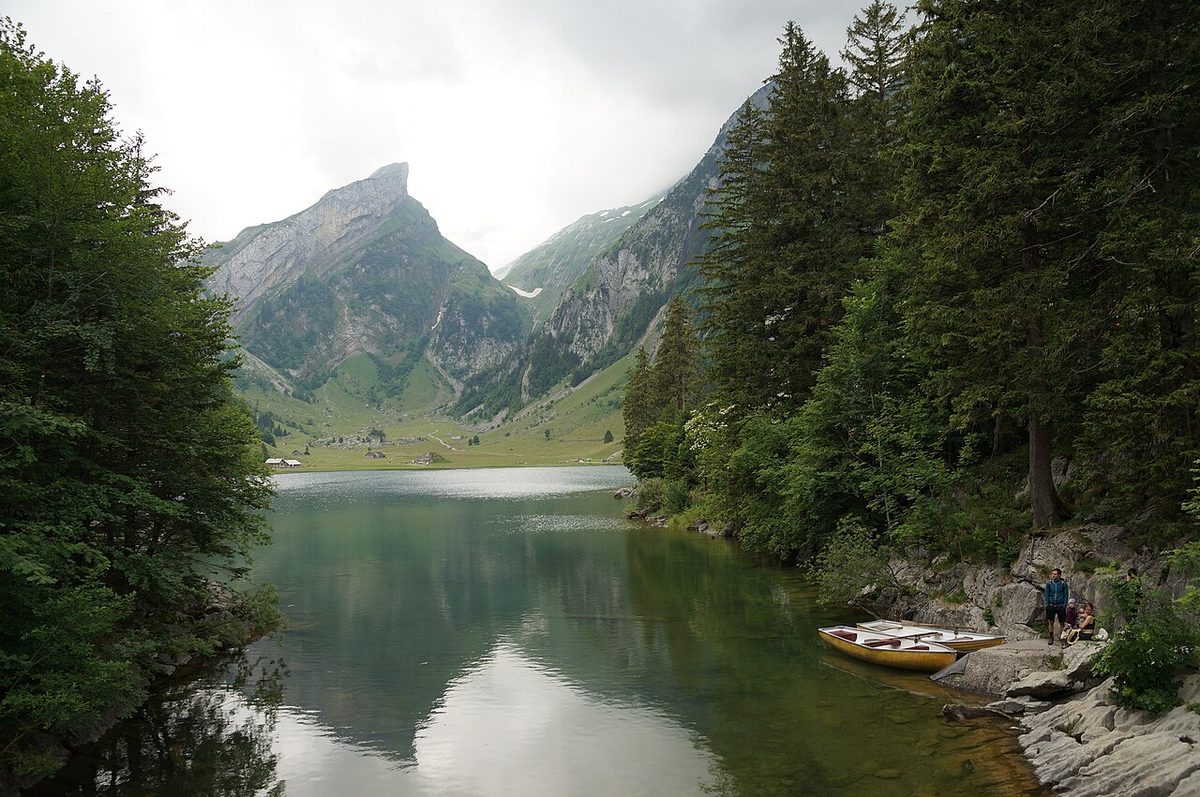
Local tip: take the cable car to Ebenalp, walk down past the Aescher to the Seealpsee lake, and catch the train back from Wasserauen.
Hidden gem: take off your shoes for the Barfussweg, a barefoot trail of about five kilometres from Gontenbad to Jakobsbad. It crosses meadows, mud and cold streams, and just before Jakobsbad you can rinse your feet in a stream.
Plan your visit
Getting thereAbout 1 hour 45 minutes from Zurich, changing at St. Gallen or Gossau.
Give itOne to two days.
Best timeJune to October for hiking. The Landsgemeinde is on the last Sunday of April.
Bonus: wonders nearby
- Hoher Kasten: a cable car to a revolving restaurant and a view over the Rhine valley.
- Säntis: the highest summit in the Alpstein, with views that reach Lake Constance.
- Urnäsch: home of the masked Silvesterchläuse, who go from farm to farm on 31 December and 13 January. More in our guide to Swiss folk traditions.
Graubünden: the mountains of the east
Graubünden is Switzerland's largest canton and its only trilingual one, with German, Romansh and Italian. It's a land of high valleys, sgraffito-decorated houses and the most spectacular railway lines in the country. If trains are your reason for travelling, this is where the best places to visit in Switzerland are linked by viaducts. Our guide to the Swiss languages explains why Romansh survives here.
17. Chur: one of the oldest towns in the Alps
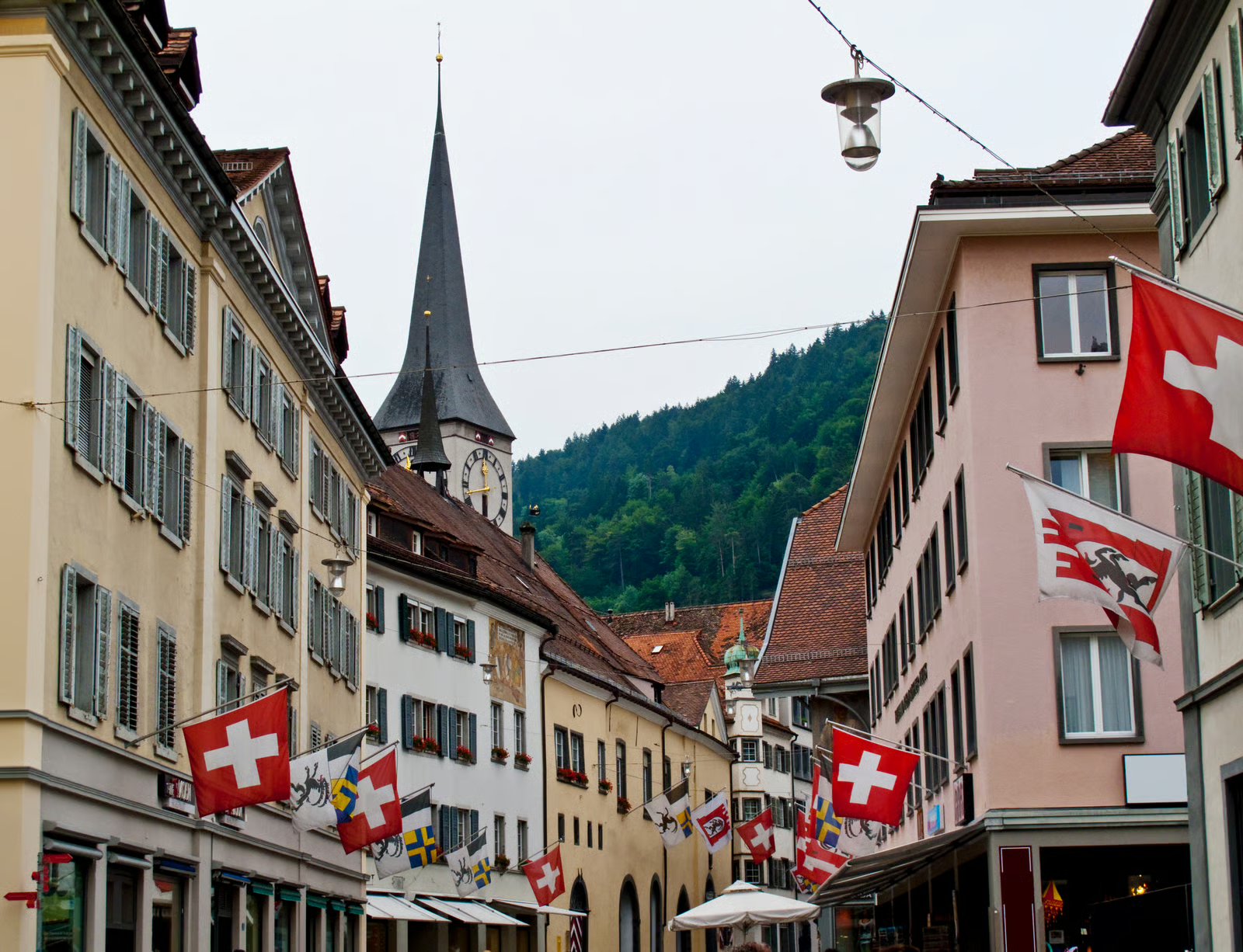
Chur often bills itself as the oldest town in Switzerland, with archaeological traces going back thousands of years. Its compact old town climbs to the cathedral and the bishop's court.
Chur is also the headquarters of the Rhaetian Railway and the starting point of the Bernina Express. The train runs over the Albula and Bernina lines, together a UNESCO World Heritage Site since 2008, crossing viaducts and corkscrewing through spiral tunnels into the Engadin.
The story most guides miss: the artist H.R. Giger, who designed the creature in the film Alien, was born in Chur in 1940. You can have a drink among his eerie designs in the Giger Bar.
Local tip: take the Bernina Express from Chur at least one way, and have your camera ready between Tiefencastel and Filisur for the Landwasser Viaduct.
Hidden gem: the Arosa train leaves from the station square and rolls through Chur's streets like a tram before climbing into the Schanfigg valley. Near Langwies, it crosses a concrete viaduct from 1914 that was, at the time, the largest reinforced-concrete railway bridge in the world.
Plan your visit
Getting thereAbout 1 hour 15 minutes from Zurich by train.
Give itOne day for the town, two with the surroundings.
Best timeMay to October, when the gorges and lakes are at their best.
Bonus: wonders nearby
- Viamala Gorge: a gorge on an ancient trade route, with steps down to the river.
- Caumasee: a turquoise lake in the forest above Flims, warm enough for a summer swim.
- Ruinaulta: the Rhine Gorge, nicknamed the Swiss Grand Canyon, with pale cliffs above the river.
- Zillis: a village church with a painted wooden ceiling of 153 panels from the 12th century.
18. St. Moritz and the Engadin
St. Moritz is glamorous, but the Engadin valley around it is the real treasure: a high plateau of lakes, larch forests and villages with thick-walled houses decorated with sgraffito patterns.
Winter tourism here began with a bet. In 1864, according to the famous story, the hotelier Johannes Badrutt promised a group of English summer guests that they would enjoy winter in St. Moritz, and that he would pay their travel costs if they didn't. They came, stayed until Easter and told their friends. St. Moritz later hosted the Winter Olympics in 1928 and 1948.
The story most guides miss: the village of Guarda, in the Lower Engadin, is the setting of A Bell for Ursli, one of Switzerland's best-loved children's books. Its painted houses look almost exactly like the illustrations.
Local tip: visit in October for golden larches, or in February for horse races on the frozen lake, known as White Turf.
Hidden gem: in Sils Maria, the philosopher Friedrich Nietzsche spent seven summers in a rented room, now the Nietzsche-Haus museum. He said the central idea of Thus Spoke Zarathustra came to him beside a pyramid-shaped rock on the shore of Lake Silvaplana. Behind the village, the car-free Val Fex is reached on foot or by horse-drawn carriage.
Plan your visit
Getting thereAbout 3 hours 20 minutes from Zurich, changing at Chur.
Give itTwo to three days.
Best timeLate June to September, late October for the larches, January and February for the frozen lakes.
Bonus: wonders nearby
- Muottas Muragl: a funicular to the classic view down the chain of Engadin lakes.
- Segantini Museum: Giovanni Segantini’s great Alpine Triptych, under a stone dome.
- Morteratsch Glacier: a trail to the glacier snout, with markers showing how far the ice has retreated.
19. The Swiss National Park
Founded on 1 August 1914, the Swiss National Park in the Lower Engadin is the oldest national park in the Alps. It covers about 170 square kilometres, and its rules are strict: no leaving the trails, no dogs, no picking flowers. Nature has been left almost entirely to itself for more than a century.
The reward is wildlife. With binoculars and patience, you'll see red deer, chamois, ibex and marmots, and maybe a bearded vulture, reintroduced after being wiped out in the Alps.
The story most guides miss: the park was created by scientists who wanted to watch how nature behaves when humans step back. It's still one of the longest-running natural experiments in Europe.
Local tip: start at the visitor centre in Zernez, then take the train to S-chanf for the trail into the Val Trupchun, known for red deer, especially in autumn.
Hidden gem: from Scuol, a narrow road climbs to S-charl, a hamlet that once smelted silver and lead. A small mining museum tells the story. Walk on to God da Tamangur, one of the highest stone pine forests in Europe, where gnarled trees grow at well over 2,000 metres.
Plan your visit
Getting thereAbout 2.5 hours from Zurich to Zernez, changing at Landquart.
Give itOne to two days.
Best timeJune to October, when the trails are open.
Bonus: wonders nearby
- Scuol: a spa town with thermal baths and sgraffito houses.
- Tarasp Castle: a white castle on a hill above the Lower Engadin, now owned by an artist.
- Val Müstair: a Carolingian convent with frescoes from around 800, a UNESCO site.
Ticino: Switzerland with an Italian accent
South of the Alps, Switzerland changes language, climate and mood. In spring, when the north is still grey, it can feel like the best of all the places to visit in Switzerland. Ticino has palm trees, granite villages, pastel churches and long lunches in the shade. Since the Ceneri Base Tunnel opened in 2020, it's also closer than ever: Lugano is now about two hours from Zurich, partly thanks to the Gotthard Base Tunnel.
20. Lugano and its lake
Lugano is the largest town in Ticino, with an elegant lakefront, arcaded streets and the modern LAC arts centre. Funiculars climb Monte Brè and Monte San Salvatore for views across the lake to Italy.
Walk the old fishermen's path from Castagnola to Gandria, a village of stone houses that seems to tumble into the water.
The story most guides miss: the writer Hermann Hesse lived in Montagnola, above Lugano, from 1919 until his death in 1962. He wrote some of his most famous books there, including Siddhartha and The Glass Bead Game. A small museum keeps his memory alive.
Local tip: across the lake, Monte San Giorgio is a UNESCO World Heritage Site for its marine fossils, about 240 million years old.
Hidden gem: across the lake from Gandria, the Swiss Customs Museum sits in an old border post at Cantine di Gandria. It tells the story of smugglers and customs officers on the Italian border. It's best reached by boat and opens from April to mid-October.
Plan your visit
Getting thereAbout 2 hours from Zurich by train, through the Gotthard and Ceneri base tunnels.
Give itOne to two days.
Best timeApril to October.
Bonus: wonders nearby
- Morcote: a lakeside village with arcades and a church staircase, at the tip of a peninsula.
- Monte Generoso: a cogwheel railway to Mario Botta’s “stone flower” summit building.
- Monte San Giorgio: a UNESCO site for its 240-million-year-old marine fossils.
21. Locarno and the Verzasca valley
Locarno, on Lake Maggiore, claims to be one of the sunniest towns in Switzerland. Every August, its Piazza Grande becomes one of the largest open-air cinemas in Europe during the Locarno Film Festival, held since 1946.
Just outside town, the Verzasca valley has river water so clear and green it looks unreal. At Lavertezzo, a double-arched stone bridge, the Ponte dei Salti, spans the river.
The story most guides miss: at the mouth of the valley, the Verzasca Dam was the setting of the bungee jump that opens the 1995 James Bond film GoldenEye. You can still jump it, about 220 metres down.
Local tip: the river is beautiful but dangerous. Swim only in calm pools, and never after heavy rain.
Hidden gem: in the upper Maggia valley, the tiny village of Mogno lost its church to an avalanche in 1986. The architect Mario Botta rebuilt it in stripes of white marble and grey local gneiss, and it opened in 1996. Nearby, most of the Val Bavona has never been connected to the electricity grid, and the Foroglio waterfall plunges more than 80 metres beside a stone hamlet.
Plan your visit
Getting thereAbout 2 hours 15 minutes from Zurich, changing at Bellinzona or Giubiasco.
Give itTwo days.
Best timeApril to October.
Bonus: wonders nearby
- Brissago Islands: a botanical garden on an island in Lake Maggiore.
- Centovalli Railway: a narrow-gauge line over gorges and bridges to Domodossola in Italy.
- Madonna del Sasso: a sanctuary on a rock above Locarno, reached by funicular.
22. Bellinzona: the castles of the Gotthard road
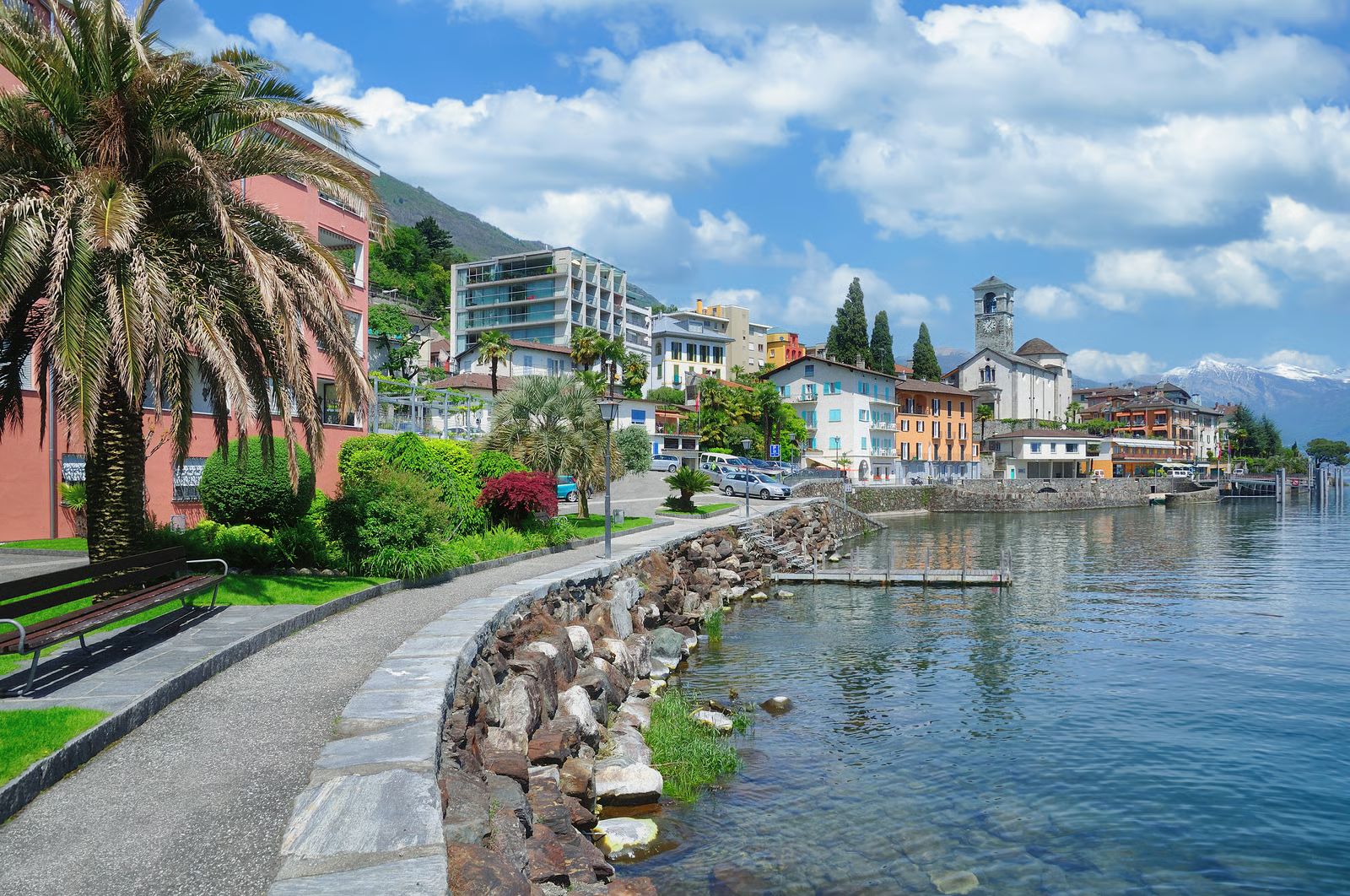
Bellinzona guards the point where several Alpine routes, including the road from the Gotthard Pass, funnel into one valley. To control that bottleneck, the Dukes of Milan expanded and linked three castles here: Castelgrande, Montebello and Sasso Corbaro. Together with their walls, they've been a UNESCO World Heritage Site since 2000.
The story most guides miss: the castles were built to stop armies coming from the north, including the Swiss. In the end, the Swiss took Bellinzona anyway, in 1500.
Local tip: visit on a Saturday morning, when the old town hosts a big market, then take the lift up into the rock to Castelgrande.
Hidden gem: just west of town, the Carasc Tibetan bridge, opened in 2015, hangs high above the Sementina valley on a span of about 270 metres. A cable car from Monte Carasso goes up to Curzútt, a restored medieval hamlet, which makes an easy start to the walk.
Plan your visit
Getting thereAbout 1 hour 40 minutes from Zurich by train.
Give itHalf a day to a day.
Best timeAll year. Come on a Saturday for the market.
Bonus: wonders nearby
- Giornico: Romanesque churches and a stone bridge in the Leventina valley.
- Tremola: the cobbled hairpin road over the Gotthard Pass. Our guide to scenic drives covers it.
- Mesocco: the ruins of a great castle on the road to the San Bernardino Pass.
Lake Geneva and Fribourg
The French-speaking west is gentler than the Alps but just as rich in stories, and it holds some of the best places to visit in Switzerland for wine and castles. Vineyards tumble into the lake, castles rise from the water, and a medieval cheese town hides one of the strangest museums in Europe.
23. Lavaux: vineyards built by monks
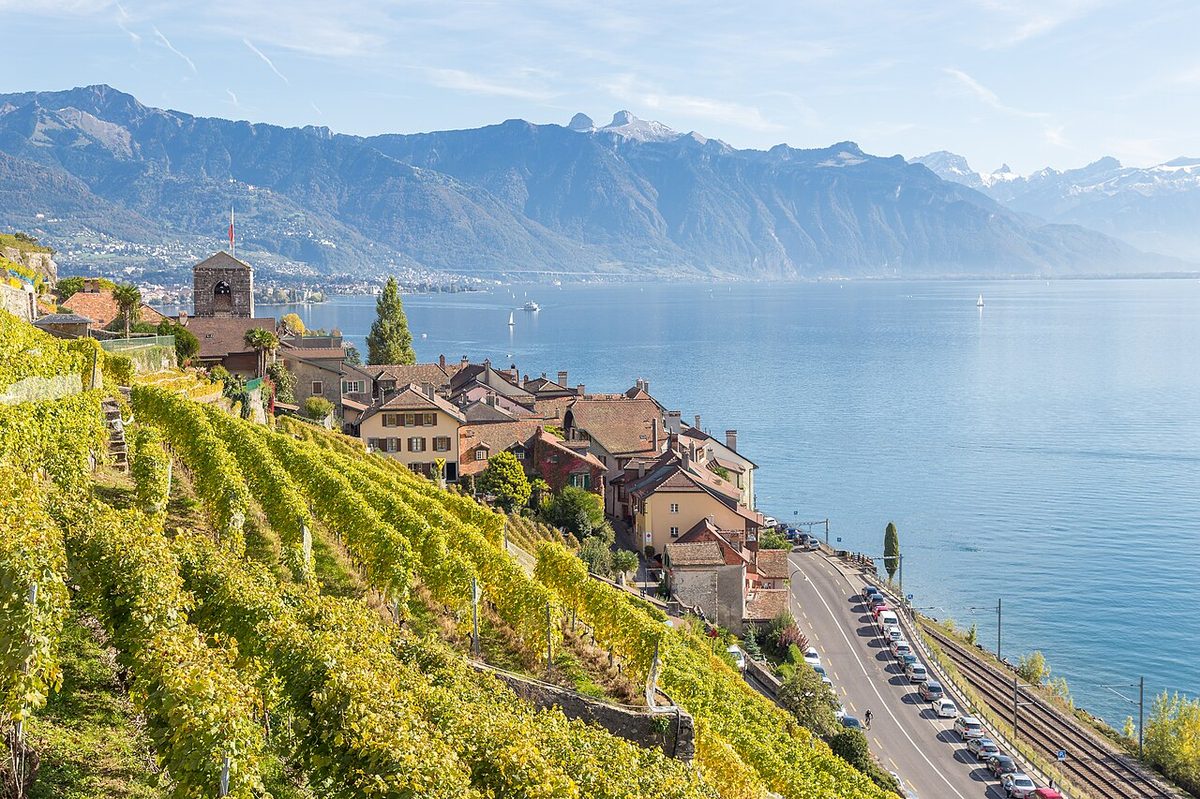
The Lavaux terraces stretch for about 30 kilometres along the shore of Lake Geneva, from the edge of Lausanne towards Chillon. Their stone walls were begun by monks in the Middle Ages and have been tended by winemakers ever since. In 2007, UNESCO listed them as a World Heritage Site.
The local grape is Chasselas, which makes light, mineral white wines. Locals say the vines enjoy three suns: the sky, the reflection from the lake and the warmth stored in the stone walls.
The story most guides miss: in nearby Corseaux, the architect Le Corbusier built a small house for his parents, the Villa Le Lac. It's part of a UNESCO World Heritage Site covering his work.
Local tip: walk from Lutry to Saint-Saphorin through the vineyards, stopping at a caveau, a village wine bar run by local growers.
Hidden gem: ride the Train des Vignes, a small line that climbs from Vevey to Puidoux-Chexbres straight through the vines. Get off at Chexbres for the view across the lake, then walk down to Rivaz, where the Lavaux Vinorama lets you taste wines from many of the region's growers.
Plan your visit
Getting thereAbout 2.5 hours from Zurich to Lutry or Cully, changing at Lausanne.
Give itA full day.
Best timeMay to October. September and October bring the grape harvest.
Bonus: wonders nearby
- Lausanne Cathedral: a night watchman still calls out the hours from its tower, from 10 p.m. to 2 a.m.
- Chaplin’s World: Charlie Chaplin’s home in Corsier-sur-Vevey, now a museum.
- Olympic Museum: the history of the Games, in the city that hosts the International Olympic Committee.
24. Montreux and Chillon Castle
Montreux is a lakeside town of palm trees, belle époque hotels and music. The Montreux Jazz Festival, founded in 1967, takes over the lakefront every July.
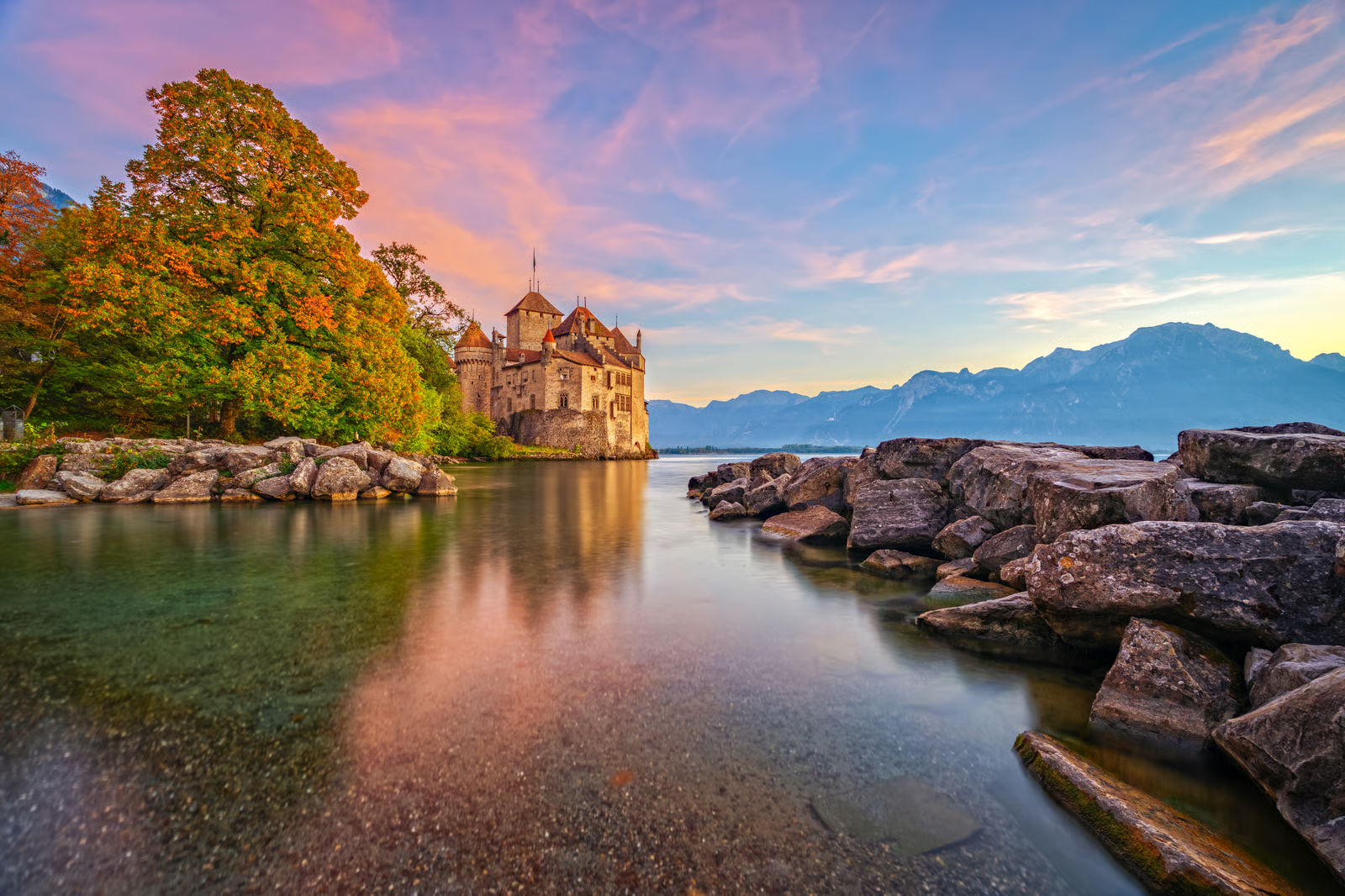
Just down the shore, Chillon Castle sits on a rock in the lake. In 1816, Lord Byron visited and wrote The Prisoner of Chillon. His name is carved into a pillar in the dungeon, although nobody can prove he did it himself.
The story most guides miss: in December 1971, the Montreux Casino burned down during a Frank Zappa concert. Deep Purple watched the smoke spread over the lake and wrote Smoke on the Water. Later, Queen bought a recording studio in the rebuilt casino, and today a statue of Freddie Mercury stands on the lakefront.
Local tip: walk the flower-lined lakeside promenade from Montreux to Chillon. It takes about 45 minutes.
Hidden gem: high above Montreux, the Caux Palace became a meeting place for French and German leaders after the Second World War. From 1946, conferences there helped prepare the way for post-war reconciliation, and Konrad Adenauer was among the guests. In May, the slopes around Caux and Les Pléiades turn white with wild narcissi, which locals call the "May snow".
Plan your visit
Getting thereAbout 2 hours 45 minutes from Zurich by train.
Give itOne day.
Best timeMay to October. July for jazz, December for the Christmas market.
Bonus: wonders nearby
- Rochers-de-Naye: a cogwheel train to a summit with a marmot park and views over the lake.
- Glacier 3000: a peak-to-peak suspension bridge high above Les Diablerets.
- Aigle: a castle among the vines with a wine museum inside.
25. Gruyères: cheese, a castle and an alien bar
Gruyères is a medieval hilltop town with a castle and a single cobbled main street, surrounded by green pastures. Below the town, the Maison du Gruyère dairy shows how the famous cheese is made. You can learn more in our guide to Swiss cheese varieties.
The story most guides miss: inside the old town is the H.R. Giger Museum, full of dark, biomechanical art by the designer of Alien, with a bar that looks like the inside of a skeleton. It's one of the strangest contrasts in Switzerland.
Local tip: this is the place to try a real fondue moitié-moitié. Our story The Fondue Conspiracy explains how a regional dish from this part of the country became the national dish.
Hidden gem: at Moléson-sur-Gruyères, the alp dairy makes cheese the old way, in a copper cauldron over a wood fire inside a 17th-century chalet. In summer, you can watch the cheesemaker at work.
Plan your visit
Getting thereAbout 2.5 hours from Zurich, changing at Bern or Fribourg and Bulle.
Give itHalf a day to a day.
Best timeMay to October. Late September brings the cows down from the alps.
Bonus: wonders nearby
- Maison Cailler: the Cailler chocolate factory in Broc. Our Swiss chocolate guide has more.
- Jogne Gorges: a walk through a gorge between Charmey and Broc.
- Fribourg: a bilingual medieval city on the line between French and German Switzerland, the Röstigraben.
Five more places the crowds miss
Once you've seen the classics, these five places offer heritage without the queues:
- Val Müstair: at the far eastern edge of the country, the Benedictine Convent of St. John has Carolingian frescoes from around 800 AD. It's a UNESCO World Heritage Site.
- La Chaux-de-Fonds and Le Locle: two towns planned around watchmaking, with long rows of houses and big windows for good light. They're a UNESCO site too, and our story on why Swiss watches are so expensive explains their history.
- Murten: a medieval town with walls you can walk on, overlooking a lake where the Swiss defeated Charles the Bold of Burgundy in 1476.
- Soglio: a stone village in the Val Bregaglia, perched on a terrace facing the granite peaks. The painter Giovanni Segantini called it the threshold of paradise.
- Elm and the Tectonic Arena Sardona: in this Glarus village, the sun shines through a hole in the rock, the Martinsloch, onto the church tower on a few days each year. The surrounding mountains are a UNESCO site because they show older rock lying on top of younger rock.
Switzerland's great scenic trains
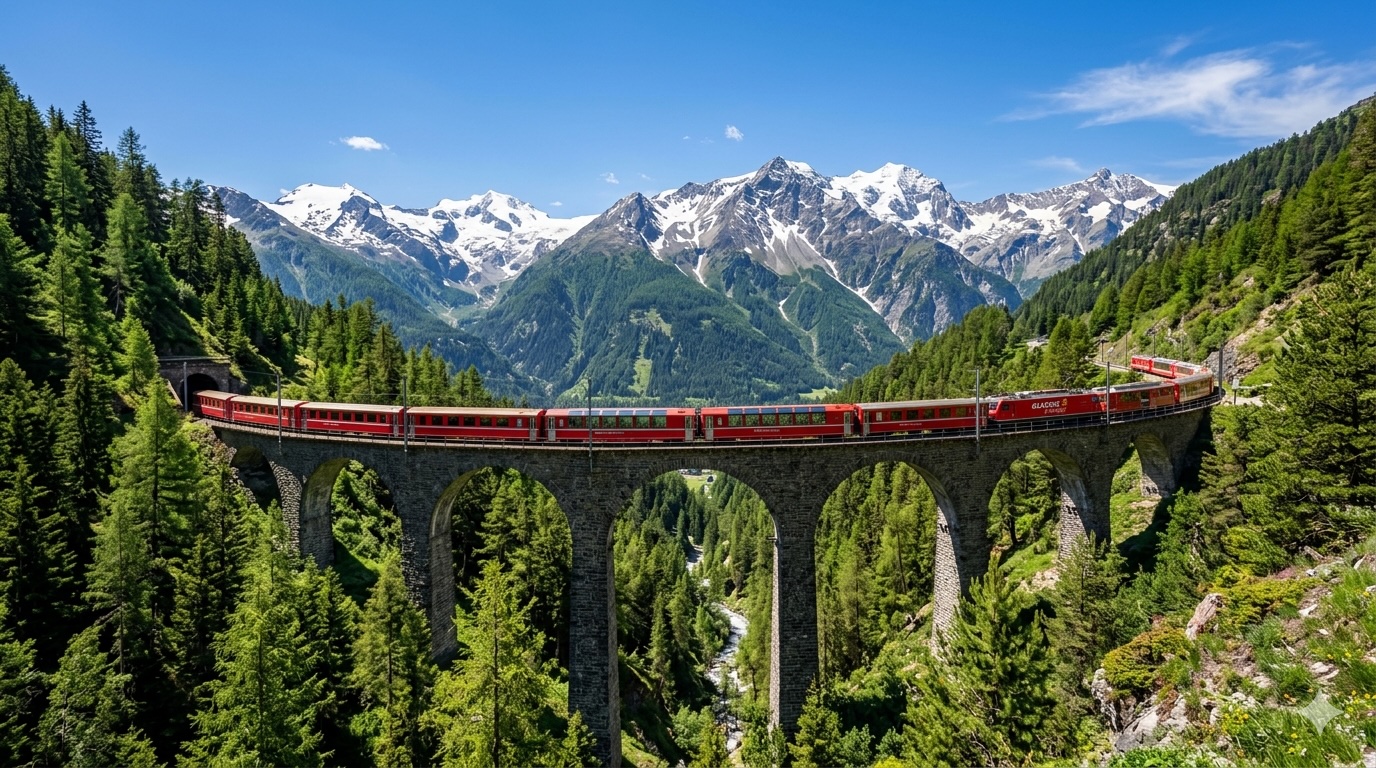
In Switzerland, getting there really is half the fun. The trains below are journeys in their own right, and several link the best places to visit in Switzerland directly. The red train on the viaduct at the top of this page is the kind of view you'll get.
| Train | Route | Time | Why ride it |
|---|---|---|---|
| Glacier Express | Zermatt – St. Moritz | About 8 hours | The “slowest express train in the world” crosses 291 bridges and the Oberalp Pass at 2,033 m. |
| Bernina Express | Chur or St. Moritz – Tirano | About 4 hours from Chur | UNESCO-listed line over the Bernina Pass and round the circular viaduct at Brusio. |
| GoldenPass Express | Montreux – Interlaken | About 3 hours | Since 2022, one train runs the whole way, changing track gauge at Zweisimmen. |
| Gotthard Panorama Express | Lucerne – Lugano | Boat plus about 2.5 hours by train | A lake steamer, then the old mountain line past the church of Wassen. |
| Jungfrau Railway | Kleine Scheidegg – Jungfraujoch | About 35 minutes | Opened in 1912; the line climbs through the Eiger and the Mönch to Europe’s highest station. |
Times are approximate and can change with the timetable. Check SBB or the operator before booking.
When to visit: month by month
There's no bad time to visit Switzerland, but there are wrong times for certain places. Mountain lifts often close for maintenance in spring and late autumn, while summer brings crowds to the classics. Use the planner below to match your travel month to the best places to visit in Switzerland.
Where to go, month by month
Pick a month to see which places shine and what to know before you book.
Shines this month:
Know before you go:
Itineraries: 3 to 14 days
The best way to see Switzerland is to choose a few bases and explore from each, rather than changing hotels every night. Pick your trip length below for a tested route.
Build your route: 3 to 14 days
Pick a trip length. Travel times are approximate and based on direct or one-change train connections.
- The route
- Day by day
- Where to sleep
- Why it works
Getting around and saving money
Switzerland is expensive, but you can travel well without wasting money. A few principles help:
- Use public transport. Trains, buses, boats and many mountain railways run on coordinated timetables, and the SBB app shows them all. Trains really do leave on the minute, and our story of the Swiss railway clock explains how.
- Compare passes before you buy. The Swiss Travel Pass covers most trains, buses and boats, plus entry to more than 500 museums, and gives discounts on many mountain railways. The Half Fare Card halves most fares and suits slower trips.
- Book scenic trains ahead. Seat reservations for the Glacier and Bernina Express sell out in summer.
- Eat like a local. Lunch menus are often much cheaper than dinner, and supermarkets such as Coop and Migros sell excellent picnic food.
- Drink the tap water. It's clean, free and comes from the mountains.
Seven mistakes first-time visitors make
Switzerland is easy to travel in, but even the best places to visit in Switzerland can disappoint if you get the basics wrong. These are the most common mistakes:
- Buying a summit ticket without checking the webcam. Almost every mountain railway publishes live webcams. If the top is in cloud, swap your plans for a lake or a museum and go up another day.
- Assuming the Swiss Travel Pass always pays off. Add up your actual journeys first. For slower trips, a Half Fare Card plus Supersaver tickets bought early in the SBB app can cost far less.
- Changing hotels every night. Two or three bases save hours of packing, and SBB can send your luggage ahead from station to station (allow two days).
- Forgetting that Sunday is quiet. Most shops close on Sundays, except at big stations, airports and some petrol stations. Buy picnic food on Saturday.
- Over-tipping. Service is already included in Swiss prices. Rounding up, or leaving a few francs for good service, is plenty.
- Visiting the mountains in the in-between seasons without checking. In April, May and November, many lifts and mountain hotels close for maintenance.
- Underestimating the mountains. Weather changes fast above 2,000 metres, and the sun is strong. Carry a warm layer, water and sun cream, even when it's hot in the valley.
Quiz: true or false?
How well do you know Switzerland now? Six quick questions will tell.
True or false? Six surprising Swiss travel facts
Score: 0 / 6Zermatt bans combustion-engine cars.
True. You arrive by train and get around on foot or by small electric taxis and buses.
A James Bond film was shot on the Schilthorn.
True. The summit restaurant Piz Gloria starred in On Her Majesty’s Secret Service in 1969.
Lucerne’s Lion Monument honours a Swiss military victory.
False. It mourns Swiss Guards killed in Paris in 1792, defending the French king.
Geneva’s Jet d’Eau began as a safety valve.
True. It released excess pressure from a hydraulic network in the 1880s before becoming a landmark.
Switzerland’s national park is younger than the country’s women’s right to vote.
False. The park opened in 1914. Women won the federal vote only in 1971.
Basel’s river ferries run on electricity.
False. They have no engine at all. The current of the Rhine pushes them across on a cable.
Why Switzerland rewards curious travellers
The best places to visit in Switzerland aren't just beautiful. They're full of stories, and those stories change how you see them. A covered bridge becomes a survivor of fire, a stone lion becomes a memorial to young men who died far from home, and a pretty meadow becomes a 19th-century act of foresight.
That's the real secret of travel here. Slow down, ask why things are the way they are, and Switzerland will keep surprising you long after you've seen the postcard views. If you want the bigger picture, start with our Swiss history timeline and our guide to the cultural treasures of Switzerland.
FAQ: the best places to visit in Switzerland
What are the best places to visit in Switzerland?
For a first trip, combine Lucerne, the Jungfrau region (Lauterbrunnen, Wengen, Grindelwald or Mürren), Zermatt and Bern. Add Lake Geneva for vineyards and castles, Ticino for an Italian atmosphere and the Engadin for high Alpine scenery.
How many days do you need in Switzerland?
Plan at least 5 days for one lake region and one mountain region. With 7 to 10 days, you can add Zermatt, Lake Geneva or a scenic train such as the Glacier Express without rushing.
Is Zermatt or the Jungfrau region better?
Zermatt has the single most famous mountain, the Matterhorn, and a car-free village. The Jungfrau region offers more variety: several villages, waterfalls, cable cars and easier day trips. If you only have time for one, choose the Jungfrau region for variety and Zermatt for the icon.
Can you visit Switzerland without a car?
Yes, and it’s usually easier. Trains, buses, boats and mountain railways run on coordinated timetables, and several mountain resorts, including Zermatt, Wengen, Mürren and Saas-Fee, are car-free.
When is the best time to visit Switzerland?
June to September is best for hiking and high mountain views, and September is often the sweet spot. December to March is for winter sports. April, May and November are quieter, but many mountain lifts close for maintenance.
What are some hidden gems in Switzerland?
Look just beyond the famous names: the candlelit Obersteinberg inn above Lauterbrunnen, Carouge next to Geneva, the Bourbaki Panorama in Lucerne, Nietzsche’s house in Sils Maria, the Val Bavona in Ticino and the barefoot trail in Appenzell. This guide lists one hidden gem for each of its 25 places.
Is the Swiss Travel Pass worth it?
It is worth it if you travel most days and visit several museums, because it covers trains, buses and boats and over 500 museums, with discounts on many mountain railways. If you stay in one or two places, a Half Fare Card or point-to-point tickets are often cheaper.
Sources and further reading
- UNESCO World Heritage Centre: Switzerland
- Switzerland Tourism (MySwitzerland)
- SBB: Buy the Swiss Travel Pass
- SBB: Timetable and tickets
- Swiss National Park
- Abbey Library of St. Gallen
- Jungfrau Railways
- Bourbaki Panorama Luzern
- Pro Natura Zentrum Aletsch: History of Villa Cassel (in German)
- Switzerland Tourism: The Giessbach Falls
- Grimselwelt: Reichenbachfall funicular
- Pavillon Le Corbusier, Zurich
- Vitra Design Museum: Vitra Campus
- Nietzsche-Haus Sils Maria: The first summer, 1881
- Federal Office for Customs and Border Security: Swiss Customs Museum
- Switzerland Tourism: Munot Fortress
- Graubünden Tourism: Viamala Gorge (in German)
- Initiatives of Change: Our story (Caux)
- Ticino Turismo: Tibetan bridge Carasc
- Historical Dictionary of Switzerland (HLS): Carl Zuckmayer
- City of Lausanne: The cathedral watchman
Last updated 16 October 2026. Prices and timetables change; always check before you travel.