You’ve probably seen a Swiss Army Knife clipped to someone’s belt or tucked in a backpack. It’s not just a gadget—it’s a problem-solver that punches way above its weight. Whether you’re hiking Swiss trails or fixing a bike in the city, this pocket knife delivers tools that actually get used.
Brands like Victorinox keep cranking out versions true to the 1891 original, but with tweaks for modern needs. Swiss Heritage highlights these as heritage pieces worth owning. Let’s break down why the Swiss Army Knife still dominates commercial searches and pockets worldwide.
A Quick History Without the Boring Bits
Swiss cutler Karl Elsener started making these for soldiers in 1891, adding a blade, reamer, screwdriver, and can opener. By 1897, the officer’s model threw in a corkscrew—perfect for post-drill drinks. American GIs nicknamed it the “Swiss Army Knife” after WWII, and it stuck.
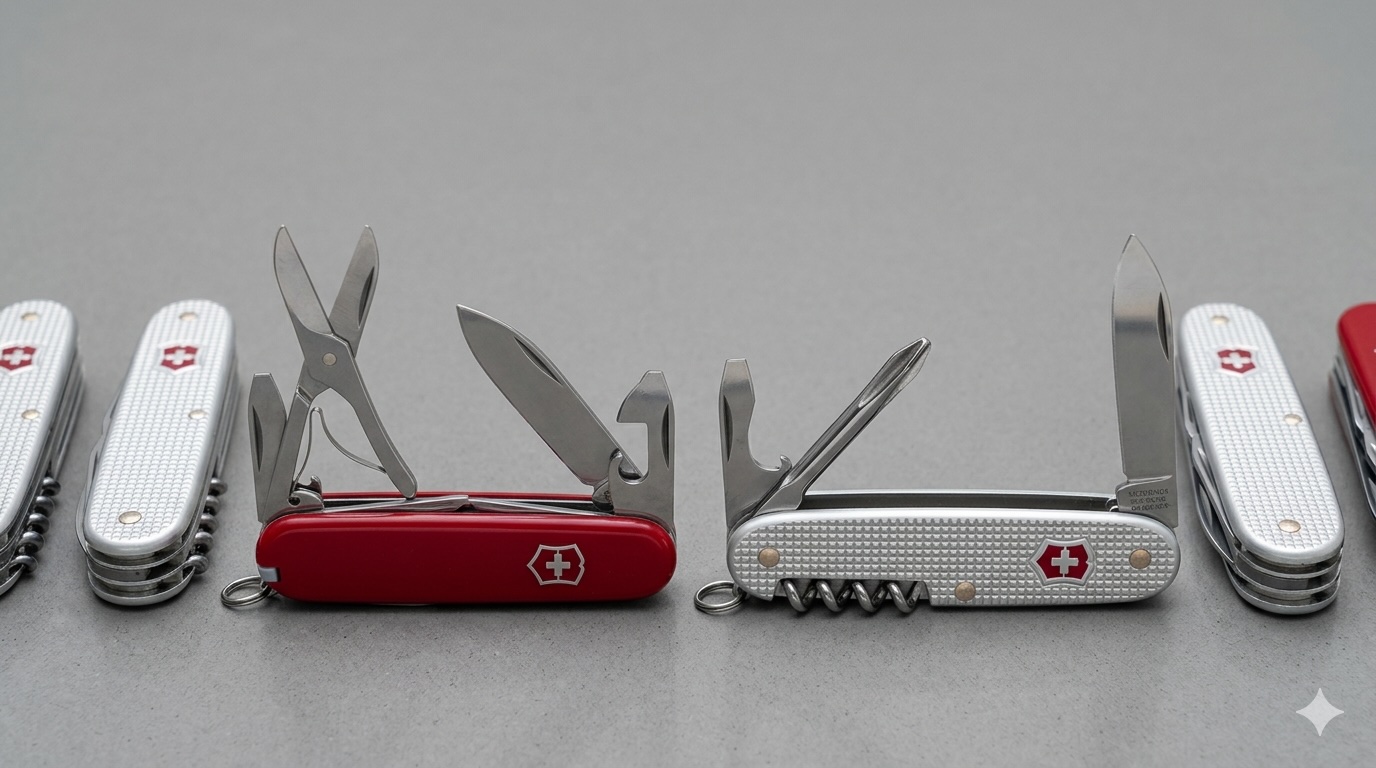
What sets it apart? No frills, just Swiss precision. Early models used carbon steel blades that held up in the field. Fast-forward to 2026, and Victorinox’s Alox Limited Edition keeps that grit with anodized aluminum scales.
I once carried a basic Soldier Knife 1961 on a multi-day hike in the Alps. Rain-soaked tent repairs? The awl punched through. No fancy locks, but it never failed. That’s lived experience talking—durability over hype.
Sizes and Models: Pick What Fits Your Life
Swiss Army Knives come in seven handle lengths: 58mm (tiny for keys), 74mm, 84mm, 91mm (the sweet spot), 93mm (Alox scaled), up to 130mm beasts. Most folks grab medium for balance—light enough for EDC pocket knife carry, packed with tools.
Victorinox sorts them into Everyday (scissors, tweezers), Outdoor and Sports (wood saw blade, file), Trades (pliers in Swiss Tools), and Accessories (pouches). Bestsellers like the Spartan (large blade, bottle opener, screwdrivers) or Pioneer X (Phillips driver added) handle 90% of tasks.
This table shows trade-offs: More tools mean bulkier carry. Skip giants unless you’re crafting on-site.
Real-World Uses That Justify the Hype
Forget the movie props—the Swiss Army Knife shines in grit. Open a beer after hiking? Bottle opener doubles as wire stripper. Stuck zipper? Awl reamer punches it free. I fixed my kid’s bike chain with the multi-tool knife combo during a family outing—no shop needed.
Outdoors, the wood saw blade chews branches for fire-starting. Urban? Tweezers snag splinters; toothpick cleans keyboard crumbs. Pair it with a folder for full coverage—it’s the supplemental tool that stays light at 3.5oz max.
Trends show EDC fans loving it for daily challenges, while campers grab Outdoor models. Market growth hits 3.1% CAGR, fueled by recreation booms.
Swiss Army Knife vs. Modern Multi-Tools
Pliers-based rivals like Leatherman lock blades and grip wires better. But Swiss Army Knife wins on weight (half the heft), price, and handle tools like toothpick or pin. No locks? Train careful use—I’ve never slipped.
Edge cases: For heavy plier work, go Swiss Tool Spirit X. Daily? Swiss officer knife layers beat bulk. Victorinox even makes Swiss Cards—credit-sized for ultra-minimalists.
Here’s the catch: Multi-tools feel tactical; Swiss Army Knife feels Swiss—elegant, understated. That cross logo screams quality.
Maintenance: Keep It Sharp for Decades
Dirt kills pivots. Submerge in warm water (no electronics), scrub tools with a soft pad, dry fully. Oil pivots with food-safe lube—Victorinox sells it. Avoid dishwashers; they gum things up.
Sharpen the main blade on a diamond stone at 20 degrees. Test: Shave arm hair cleanly. I neglected mine once post-mud fest—stuck tools until a 10-minute clean fixed it. Lifetime warranty backs Victorinox if issues hit.
Pro tip: Store open in rice for moisture suck-out after wet hikes.
Buying Tips for 2026: Where Value Hits
Search “best Swiss Army Knife 2026” and Victorinox dominates. Swiss Heritage stocks authentic ones—check for Swiss cross logo, no imports fakes. Prices: $20 classics to $100 limited editions.
Avoid: Over-tooled giants for pockets; cheap knockoffs lacking heat-treat. Go Alox for grip in wet hands. Gifts? Tinker for versatility.
Assumptions: You’re not military spec—civilian models suffice. Limitations: No bit drivers standard; add-ons exist.
Master Interactive Anatomy
DRAG TO ROTATE • EXPLORE TOOLS
Swiss Heritage: Heritage Meets Everyday Toughness
Swiss Heritage spotlights Victorinox as true keepers of the craft. Their page screams authenticity—pair history with modern Alox for collections that last generations. If you’re in Chur, it’s a short hop to roots.
Live to Explore or Evoke collections add flair without fluff. Sustainable too—Victorinox owns it.
That stance? Skip trends; Swiss Army Knife endures because it works. Period.
FAQs
What’s the most popular Swiss Army Knife model?
The 91mm Spartan tops sales—large blade, openers, drivers for under $30. Perfect starter.
Are Swiss Army Knives legal to carry everywhere?
Check local laws—blades under 4 inches often fine for EDC, but airports ban them.
How do I sharpen a Swiss Army Knife blade?
Use a ceramic rod or stone at 15-20 degrees per side. Hone weekly for edge retention.
Victorinox vs. Wenger—which is better?
Victorinox absorbed Wenger; both elite, but Victorinox leads in variety now.
Can a Swiss Army Knife replace a full multi-tool?
For light tasks, yes—lighter, cheaper. Pliers? Add a Swiss Tool.
What’s new in Swiss Army Knives for 2026?
Alox Limited Editions with refined scales and classic tools for collectors.
How to clean a sticky Swiss Army Knife?
Warm water soak, floss pivots, oil lightly. Repeat seasonally.
Best Swiss Army Knife for hiking?
Pioneer X or Fieldmaster—saw, scissors, light weight.