Switzerland is easy to misread. People see the mountains, the watches, the chocolate — and stop there. But scratch beneath the postcard surface and you find a country carrying 13 UNESCO World Heritage Sites, centuries of Romanesque architecture, living folk traditions, and an art scene that produced Giacometti, Klee, and Le Corbusier. The cultural treasures of Switzerland are hiding in plain sight — and most tourists walk straight past them.
This guide doesn’t cover ski resorts or lake views. It covers what the country has actually built, preserved, and handed down across generations.
Why Swiss Culture Runs So Deep
Four languages, one country. That’s Switzerland’s most underrated cultural fact.
German, French, Italian, and Romansh are all official national languages — and each linguistic region has its own distinct architecture, cuisine, artistic tradition, and sense of identity. What feels unmistakably Swiss in Appenzell looks and sounds completely different from what feels Swiss in Lugano or Geneva. That internal diversity is the engine behind the country’s creative output.
Switzerland also sits at the crossroads of European influence. Roman roads, Carolingian monasteries, Gothic cathedrals, and Baroque abbeys all left their mark on a territory smaller than the Netherlands. The result is a country where genuine medieval history is packed into a remarkably compact geographic space — which makes it unusually rewarding for cultural travelers.
UNESCO World Heritage Sites Worth Your Time
The Old Town of Bern — A Medieval City Still in Use
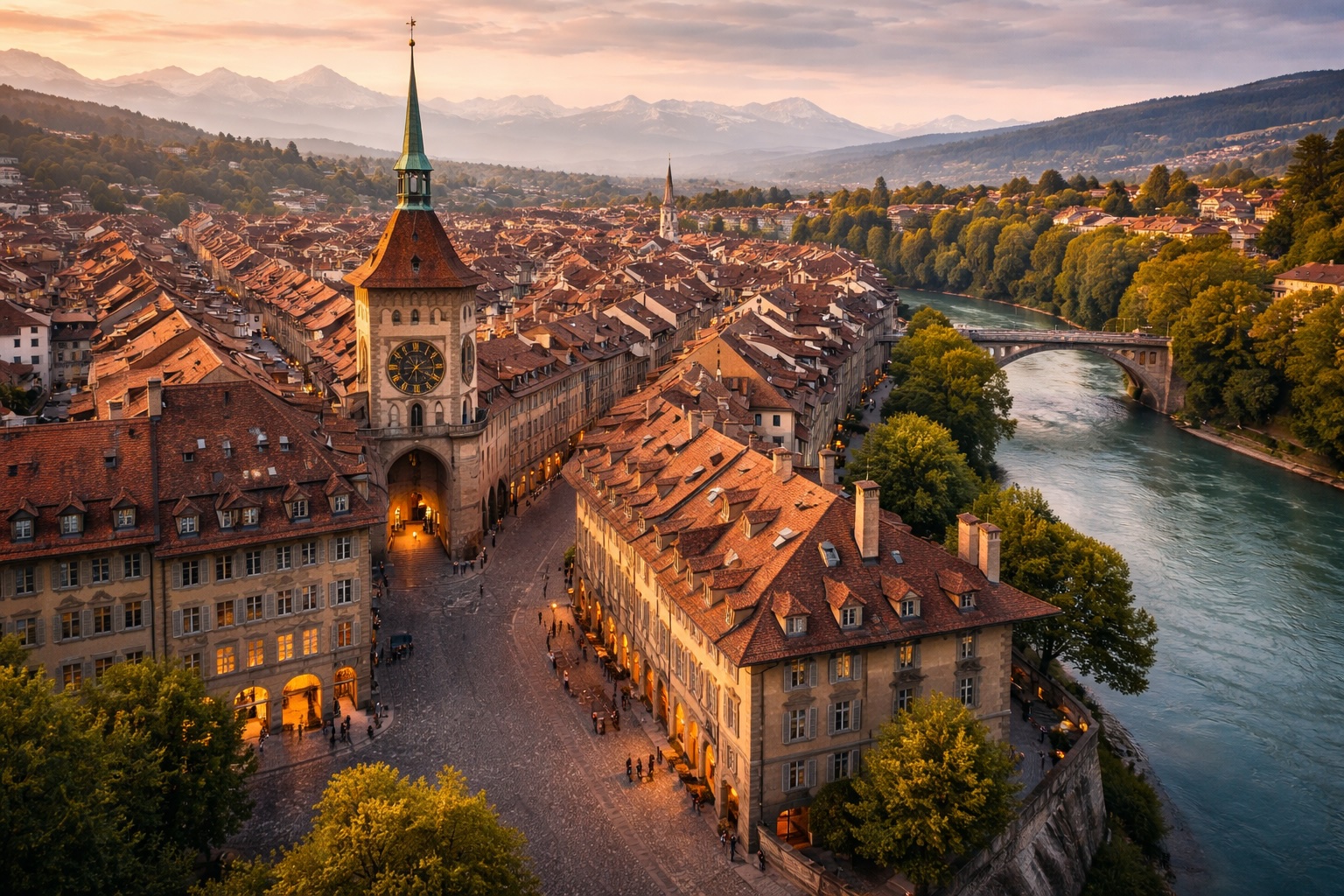
Bern’s Altstadt isn’t a preserved museum district. People live, shop, and work inside a UNESCO World Heritage Site that has remained largely unchanged since the 12th century. The six kilometers of covered arcades (Lauben) that run through the old town make it one of the longest covered shopping promenades in the world — built for rain, still used daily.
The Zytglogge clock tower, dating to the 1200s, still chimes on the hour with its rotating mechanical figures — it has done so since 1530. The Bundeshaus parliament building, framed by 26 fountains representing each canton, sits at the edge of the old town like punctuation at the end of a very long historical sentence. Give Bern at least a full day.
The Abbey of Saint Gall — 1,300 Years of Knowledge
The Abbey of Saint Gall in eastern Switzerland is one of the most important cultural sites in Europe — not because of its size, but because of what’s inside. Its Rococo library holds around 170,000 books and one of the finest collections of medieval manuscripts on the continent, some dating back to the abbey’s founding in the 7th century.
The library’s interior is jaw-dropping: ornate wooden galleries, gilded detail, and the faint smell of old paper on a scale that feels almost impossible. There’s also a collection of Egyptian mummies from the 7th century BC — an unexpected addition that somehow works. The entire abbey district has been a UNESCO World Heritage Site since 1983.
The Three Castles of Bellinzona — Strategic Brilliance in Stone
At the southern gateway to the Alps, the canton of Ticino holds three medieval castles that once controlled the most critical north-south trade route in Europe. Castelgrande, Montebello, and Sasso Corbaro are all within walking distance of each other in the city of Bellinzona, and together they earned UNESCO status in 2000.
Castelgrande, built atop a rocky outcrop in the city center, is the most dramatic — accessible by a hidden lift carved into the rock. Entry to the castle grounds is free, and the views over the Ticino valley are worth the climb alone. For a country better known for Alpine scenery, this corner of the south genuinely surprises.
The Benedictine Convent of Müstair — Carolingian Murals in Graubünden
Tucked into a valley in the canton of Graubünden — not far from Chur — the Convent of Müstair is a working monastery that also happens to contain the most significant series of figurative murals in Switzerland. Painted around 800 AD during the Carolingian period, the frescoes cover the interior walls in extraordinary detail.
This is the kind of place that rewards travelers who deviate from the main circuit. The Benedictine nuns still live and work here, and the convent museum holds over 1,200 years of art and cultural history within a single fortified tower. It’s quiet, historically staggering, and almost never crowded.
Swiss Cultural Icons Beyond the Architecture
Château de Chillon — Byron Was Here
Château de Chillon on the shores of Lake Geneva is Switzerland’s most visited historic monument — and for once, the popularity is deserved. Built primarily in the 12th century, the castle consists of 24 connected buildings on a rocky islet, with the lake literally lapping its walls.
Lord Byron visited in 1816 and wrote The Prisoner of Chillon about a real prisoner held in its dungeon. His name is still carved into one of the pillars. The interior holds centuries of furnished rooms, painted halls, and underground passages — it’s the kind of medieval castle that most countries would kill to have.
Lucerne’s Kapellbrücke — The 14th-Century Covered Bridge
The Kapellbrücke in Lucerne is the oldest covered wooden bridge in Europe, originally built in 1333. Running diagonally across the Reuss River, it’s lined with 17th-century paintings depicting Swiss historical and mythological scenes — most of them painted directly onto the wooden panels of the roof.
A fire damaged part of the bridge in 1993, and it was carefully restored. The adjacent octagonal Water Tower (Wasserturm), which predates the bridge itself, served at various points as a treasury, archive, and prison. Together they form one of the most photographed — and genuinely atmospheric — historic sites in the country.
Einsiedeln Abbey — A Pilgrimage Still Active After 1,200 Years
Einsiedeln Abbey in the canton of Schwyz has been drawing pilgrims for over a thousand years. Founded in 835 AD by the monk Meinrad, it grew into one of the most important Baroque monasteries in Europe. The current structure, rebuilt in the early 18th century, is staggering in its scale and decorative ambition.
The abbey’s chapel is said to have been consecrated by Christ himself in 948 AD — a claim the church made at the time, which was enough to establish Einsiedeln as a major pilgrimage destination that still attracts over a million visitors a year. Whether you’re religious or not, the architecture and atmosphere are genuinely affecting.
Living Swiss Cultural Traditions
Folk Customs That Have Never Stopped
Switzerland’s folk traditions aren’t performances put on for tourists. Yodeling, alphorn playing, and Schwingen (Swiss wrestling) remain active parts of regional identity, particularly in German-speaking cantons. The Silvesterklaus processions in Urnäsch, where participants wear elaborate handcrafted headdresses and ring enormous cowbells through the village on January 13th, have continued uninterrupted for centuries.
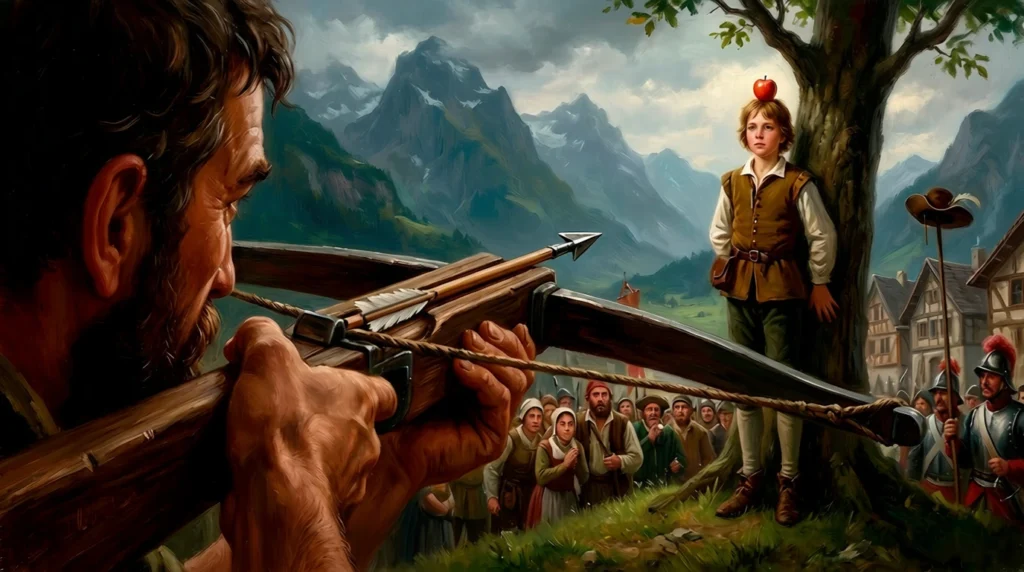
The William Tell legend — whether historically true or not — continues to function as a cultural touchstone for Swiss national identity. The bronze statue of Tell and his son in Altdorf, Uri, marks the supposed site of the famous apple-shot. It’s become a pilgrimage of its own kind.
The Ballenberg Open-Air Museum — An Entire Country Under One Roof
The Ballenberg Open-Air Museum near Brienz in the Bernese Oberland is one of the most unusual cultural institutions in Switzerland. Over 100 historic farmhouses, mills, and rural buildings have been physically relocated from across the country and reassembled on a single hillside site.
Visitors can walk between buildings from different cantons, different centuries, and different linguistic regions — all within a few hours. Craftspeople demonstrate traditional skills on-site: cheese-making, weaving, blacksmithing. It’s the closest thing to holding Switzerland’s entire rural heritage in your hands at once.
Swiss Art and Architecture: The Big Names
Switzerland punches dramatically above its weight in architecture and visual art. The list of world-famous Swiss creatives is surprisingly long:
- Le Corbusier — born in La Chaux-de-Fonds, became one of the founding figures of modern architecture
- Mario Botta — Ticino architect known for geometric precision; designed the San Francisco Museum of Modern Art
- Herzog & de Meuron — Basel-based firm behind the Tate Modern in London and the Beijing National Stadium
- Alberto Giacometti — sculptor whose elongated bronze figures are among the most recognized in 20th-century art
- Paul Klee — painter whose color theory work influenced generations of artists; major collection at the Zentrum Paul Klee in Bern
- Jean Tinguely — kinetic sculptor; his self-destroying machine Homage to New York (1960) remains a defining moment in modern art
The country’s museum density is extraordinary: Switzerland has an unusually high concentration of museums per capita, and around 70% of Swiss residents visit a museum at least once a year.
A Quick-Reference Cultural Map
| Site/Tradition | Location | UNESCO? | Best For |
|---|---|---|---|
| Old Town of Bern | Bern | ✅ 1983 | Medieval architecture, daily life |
| Abbey of Saint Gall | St. Gallen | ✅ 1983 | Medieval manuscripts, Rococo library |
| Three Castles of Bellinzona | Ticino | ✅ 2000 | Medieval military history |
| Benedictine Convent of Müstair | Graubünden | ✅ 1983 | Carolingian frescoes, monastic life |
| Château de Chillon | Lake Geneva | ❌ | Medieval castle, literary history |
| Kapellbrücke | Lucerne | ❌ | 14th-century wooden bridge |
| Einsiedeln Abbey | Schwyz | ❌ | Baroque architecture, pilgrimage |
| Ballenberg Museum | Bernese Oberland | ❌ | Swiss folk heritage, crafts |
| Lavaux Vineyards | Vaud | ✅ 2007 | Terraced vines, landscape history |
| Rhaetian Railway | Graubünden | ✅ 2008 | Engineering heritage, Alpine views |
FAQs
What are the main cultural treasures of Switzerland?
Switzerland’s key cultural treasures include its 13 UNESCO World Heritage Sites — among them the Old Town of Bern, the Abbey of Saint Gall, the Three Castles of Bellinzona, and the Benedictine Convent of Müstair — as well as living folk traditions, world-class museums, and an architectural legacy stretching from Romanesque cathedrals to Herzog & de Meuron.
How many UNESCO World Heritage Sites does Switzerland have?
Switzerland has 13 UNESCO World Heritage Sites, ranging from medieval old towns and monasteries to the Rhaetian Railway and the prehistoric pile dwellings around the Alps.
What is Switzerland’s most visited historic monument?
Château de Chillon on the shores of Lake Geneva is Switzerland’s most visited historic monument, attracting hundreds of thousands of visitors annually.
What languages does Switzerland have, and how does that affect its culture?
Switzerland has four official national languages — German, French, Italian, and Romansh — each corresponding to a distinct regional culture with its own architecture, cuisine, artistic traditions, and identity.
What Swiss folk traditions are still practiced today?
Yodeling, alphorn playing, Schwingen (Swiss wrestling), and the Silvesterklaus processions in Urnäsch are all living traditions actively practiced today, particularly in German-speaking cantons.
Who are the most famous Swiss artists and architects?
Notable Swiss creatives include architects Le Corbusier, Mario Botta, and Herzog & de Meuron, and visual artists Alberto Giacometti, Paul Klee, and Jean Tinguely — all of whom shaped major international movements in their fields.
What is the Ballenberg Museum?
The Ballenberg Open-Air Museum near Brienz is a living heritage site where over 100 historic Swiss buildings from across all regions have been physically relocated and reassembled, with traditional crafts demonstrated on-site.